
Review · HOT SPRING HIKING TOURS
5-Day Annapurna Base Camp Trek with Natural Hot Springs
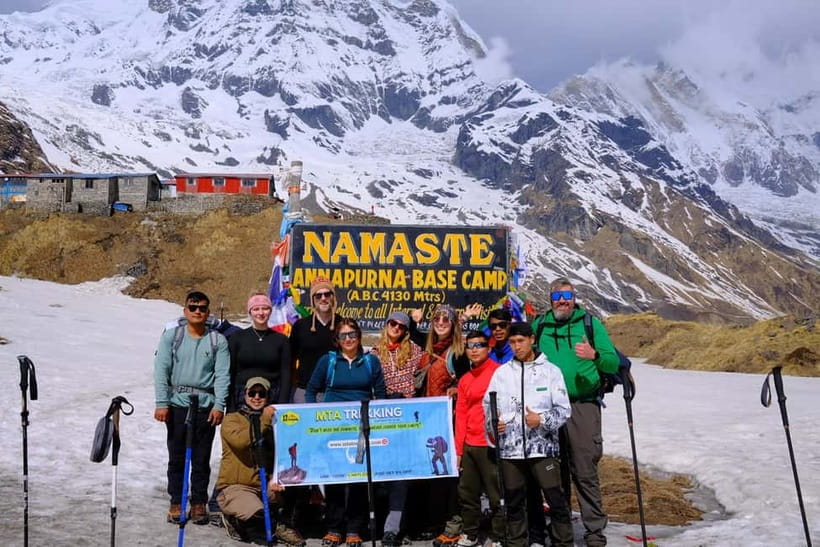
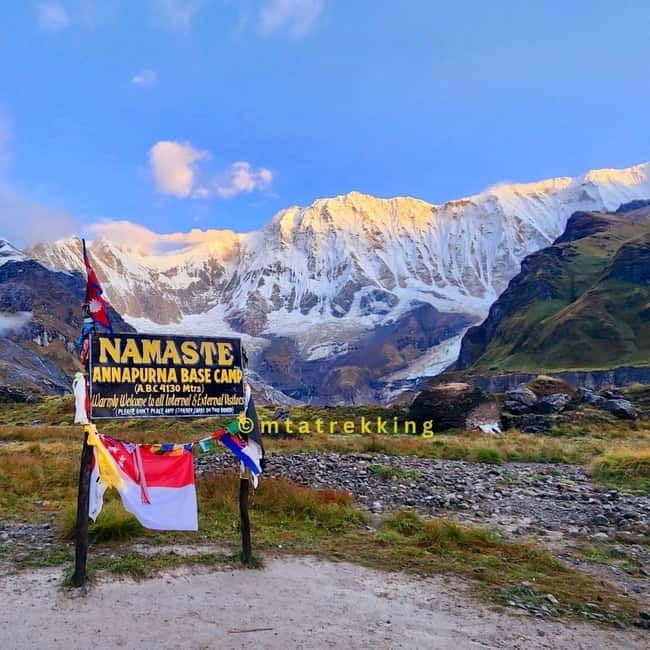
Annapurna rewards steady walkers. This 5-day trek from Pokhara packs terraced fields, Gurung villages, forest paths, alpine views, and a night at Annapurna Base Camp into a brisk Himalayan route. You reach 4,130 meters, the base of Annapurna, the world’s 10th-highest mountain peak.
I like the mix of scenery and culture, especially the shift from lower village trails to stark high mountain terrain. I also like the optional soak at Jhinu’s natural hot springs, a fine way to ease tired legs. The main caution is the pace: five days is short for this altitude, so you need reasonable fitness and must take symptoms of altitude sickness seriously.
The $320 price is appealing because it covers tea house lodging, permits, taxes, a registered guide, transport from Pokhara, and basic first aid. Still, check the meal option carefully, since meals are included only with the full-board choice. A porter costs another $20 per day, while showers, Wi-Fi, drinks, bottled water, laundry, rescue, and insurance cost extra.
Key points to know before you book
- 4,130-meter finish: The trek reaches Annapurna Base Camp after a quick climb through changing mountain zones.
- Jhinu hot springs: You can visit the springs near the start and again during the return, though the soak is optional.
- Private group format: You travel with an English-speaking guide rather than joining a large fixed group.
- Pokhara pickup included: Hotel pickup and return service cover hotels in Lakeside Pokhara and Pokhara International Airport.
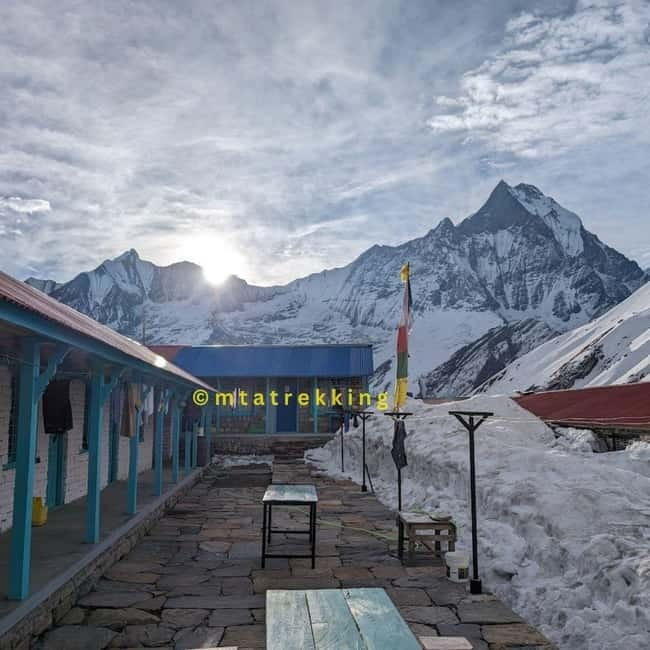
- Tea house nights: Simple mountain lodging gives you a practical base for early starts and long walking days.
- Porter service costs extra: A porter is available for $20 per day, so budget for that if you do not want to carry your main bag.
Why this short Annapurna route works
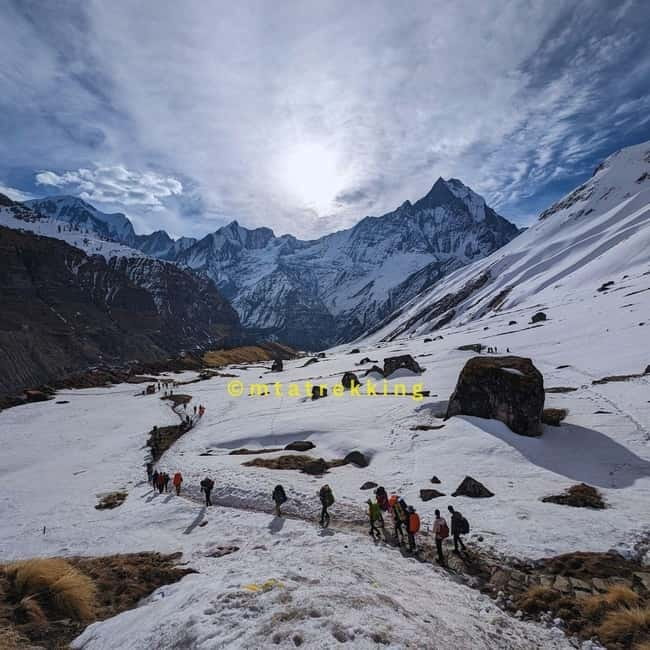
The Annapurna Base Camp trail is appealing because the scenery changes quickly. You start near Pokhara, a lakeside city with easy access to the mountains, then travel by private vehicle toward Siwai, the last road point described for this route. From there, your feet take over.
Lower sections pass through terraced rice fields, forest, and traditional villages. The route then becomes cooler and more rugged as you gain height. Gurung communities give the walk a human side, with local homes, mountain lodges, and a chance to see daily life away from Nepal’s cities.
This five-day plan is designed for people who want the main Annapurna Base Camp experience without committing to a longer trek. That efficiency is useful, but it leaves less room for slow mornings, weather delays, or a spare acclimatization day. You should treat the schedule as active and fairly demanding rather than a relaxed country walk.
More Natural Hot Springs in Nepal:
- Pokhara: 5 Day Annapurna Base Camp Trek & Natural Hot Spring
★ 4.9 · 44 reviews - Pokhara: 7-Day Annapurna Base Camp Trek & Natural Hot Spring
★ 5.0 · 11 reviews - Pokhara: Amazing 7-Day ABC Trek with Natural Hot Spring
★ 5.0 · 5 reviews
Day 1: Pokhara to Lower Sinuwa through Jhinu
Your morning begins with pickup at your Lakeside hotel or Pokhara International Airport. A private jeep or SUV takes about three hours toward the trailhead. The road journey saves time, though mountain roads can be tiring before the walking even starts.
The first walking section leads toward Jhinu and then onward to Lower Sinuwa. The schedule gives roughly five to six hours of walking, with Lower Sinuwa at about 2,300 meters. You pass through forest and village scenery, with frequent views opening across the hills.
Jhinu is best known here for its natural hot springs. Depending on timing and energy, you may have the chance to visit them. Since the first day already includes a long drive and a substantial walk, do not feel pressured to soak if reaching the lodge comfortably matters more.
Lower Sinuwa is a practical first overnight stop. Tea house accommodation is simple, and you should expect to pay separately for hot showers, Wi-Fi, drinks, mineral water, and laundry. The evening may offer sunset views, but mountain weather controls the show.
Day 2: Six hours toward Deurali
Day two takes you from Lower Sinuwa to Deurali, at around 3,200 meters. The expected walking time is about six hours, with forest paths and changing mountain scenery along the way.
This is where the trek begins to feel more serious. You are gaining altitude while walking for most of the day, so a steady pace matters more than speed. Your guide can help manage breaks and timing, a point praised in the feedback about guide Ramit, who was noted for handling walking times and rest stops well.
Deurali offers another tea house night and a higher, cooler setting. The plan includes sunset and sunrise opportunities, but clear weather is never guaranteed. Keep warm clothing accessible rather than buried at the bottom of your bag.
The stated itinerary sometimes gives six hours for this day, while the fuller description says approximately six hours as well. That is a useful estimate, not a guarantee. Trail conditions, rest breaks, group pace, and weather can alter the arrival time.
Day 3: Deurali to Annapurna Base Camp
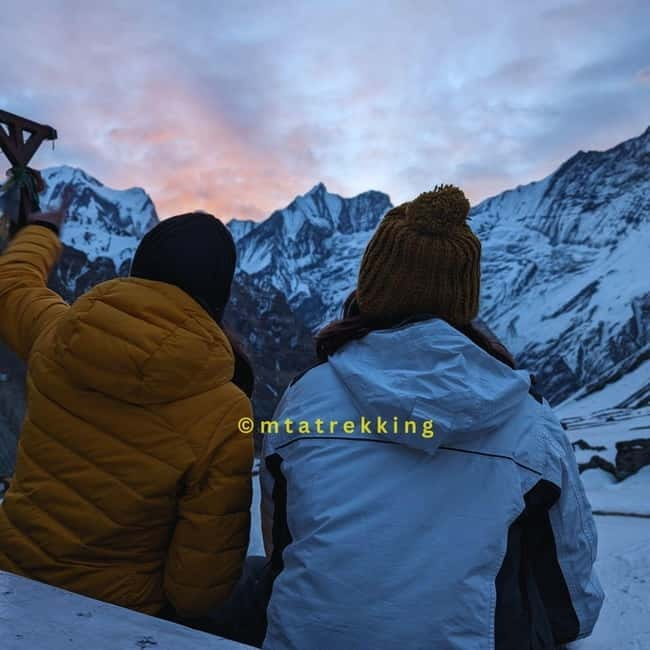
The third day is the high point of the trip, both literally and emotionally. You walk from Deurali toward Machhapuchhre Base Camp, then continue to Annapurna Base Camp at 4,130 meters. The detailed plan estimates about four hours, while the stop-by-stop schedule allows closer to six, so ask your guide for the day’s exact pacing.
Machhapuchhre is also known as Fishtail, and the detour to its base camp adds one of the route’s most memorable viewpoints. From there, the mountains feel close and severe. The final approach to Annapurna Base Camp brings you into the Annapurna Massif, with large peaks surrounding the open high-altitude setting.
The arrival is worth savoring, but you should not treat the altitude casually. Headache, nausea, unusual tiredness, and dizziness can signal a problem. The supplied information calls altitude sickness rare, but reaching 4,130 meters makes it a real possibility. Tell your guide immediately if you feel unwell.
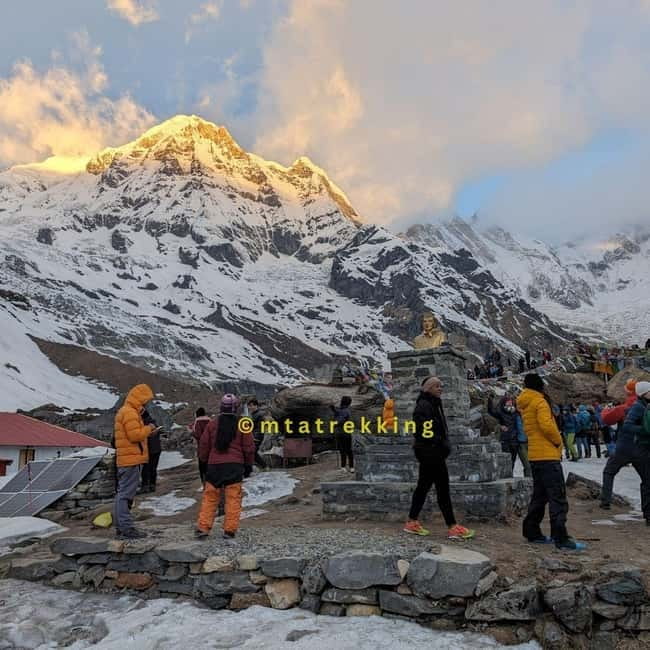
You spend the night at Annapurna Base Camp. That overnight stay is a major part of the experience because it allows you to see the area around sunset and sunrise, rather than arriving only for a quick photograph. One especially praised moment was sunrise in front of Annapurna’s south face. Clear conditions would make that an unforgettable start to the morning.
More Hot Spring Hikes in Nepal:
- From Pokhara: 5-Day Annapurna Basecamp Trek with Hot Springs
★ 4.9 · 26 reviews - Pkr/Kathmandu: 5-Day Annapurna Base Camp & Hot spring Trek
★ 5.0 · 6 reviews - Pokhara: 5-Day Trek to Annapurna Base Camp and Hot Springs
★ 5.0 · 4 reviews - POON HILL HOT SPRING – 10 Days Trek
★ 5.0 · 3 reviews
Day 4: Sunrise at base camp, then down to Bamboo
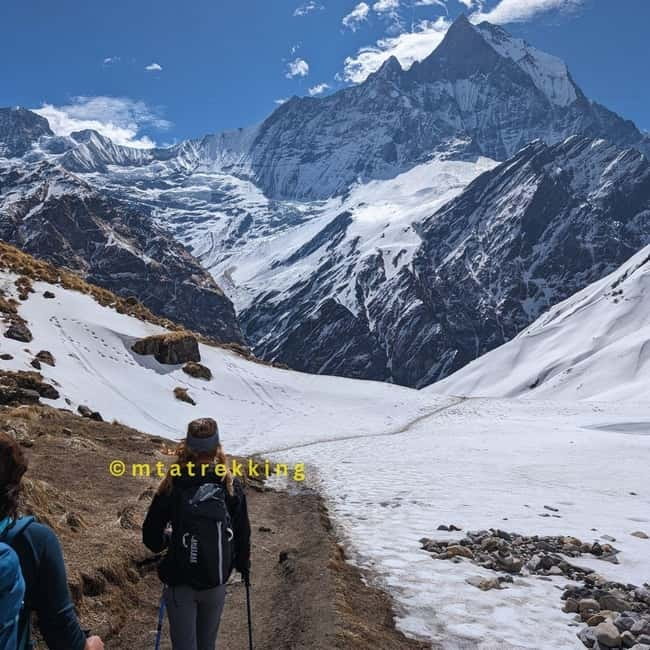
The fourth day begins among the high peaks before you descend toward Bamboo, at roughly 2,400 meters. The plan allows about six hours of walking, though downhill terrain does not always feel easy. Descending can be hard on knees and thighs, particularly after the high point of the trek.
This day gives you a second look at the route in changing light. You may notice details missed during the uphill push, including forest texture, distant ridges, and village paths. It is also a sensible night to rest well, since the next day combines more walking with a road transfer back to Pokhara.
Bamboo is a straightforward overnight stop. Tea house lodging keeps the route practical and affordable, but comfort is basic. Bring cash for personal expenses, since hot showers, drinks, Wi-Fi, and other small services are not included.
Day 5: Bamboo to Pokhara with a Jhinu stop
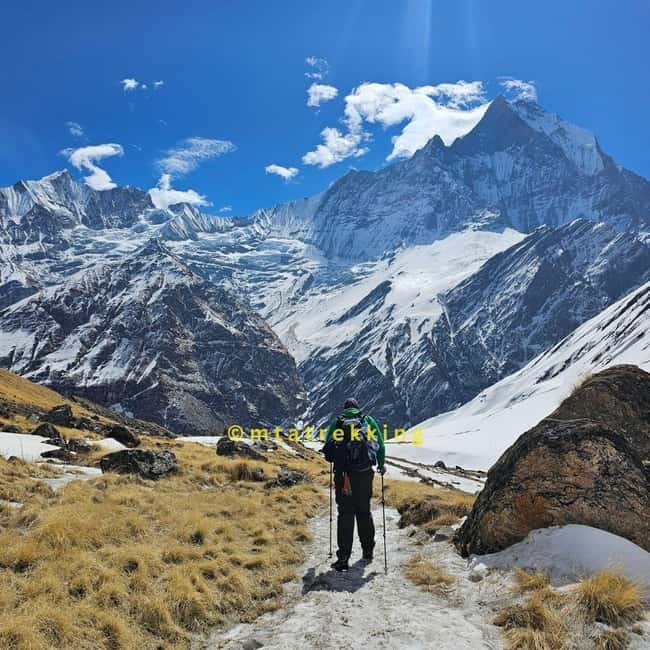
The final day takes you back toward Jhinu before the return drive to Pokhara. The walking portion is listed at about six hours, followed by roughly three hours in a jeep or SUV. That makes this another full day, not simply a short stroll and an easy ride.
The hot springs near Jhinu are optional. If your schedule, energy, and trail conditions allow, they offer a pleasant finish. If not, the return journey still completes the loop through the lower valleys and back to the city.
You arrive at Lakeside Pokhara, where the activity ends at your original meeting point. The return transfer is included, and luggage storage in Pokhara is available during the trek. That last detail is useful because you can leave unnecessary city clothing or larger bags behind.
Tea houses, food, and what the $320 covers
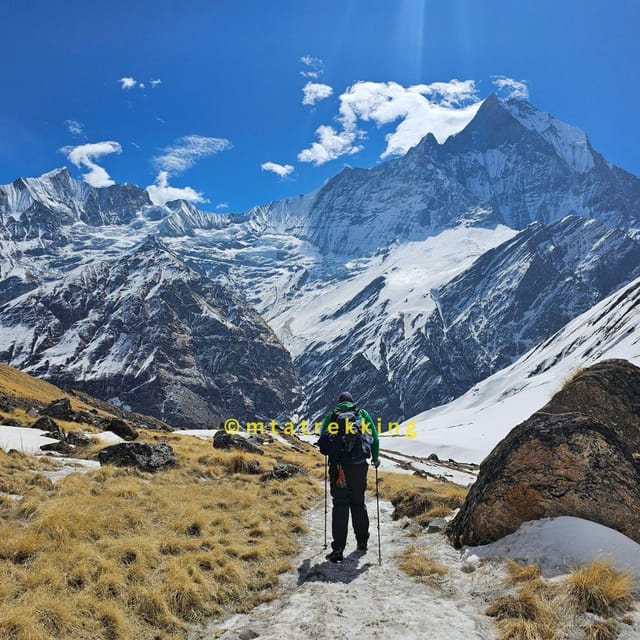
At $320 per person, this is a fair package for a private five-day trek if you value included transport and permits. The price covers tea house accommodation, private transport from Pokhara to Siwai and back, the Annapurna Conservation Area permit, government permits, TIMS, taxes, a registered English-speaking guide, and a first aid kit.
Meals need careful checking before payment. The details specify that you should choose the full-board option for meals to be included. If you select a different fare, food may not be part of the price. This is the sort of small booking detail that can change the final cost.
Tea houses are functional rather than luxurious. You get a place to sleep along the route, but personal comforts cost extra. Hot showers, Wi-Fi, drinks, mineral water, and laundry are specifically excluded. Carry enough cash for these items and for any food or services not covered by your selected package.
A porter is not included. The stated rate is $20 per day, so five days would add $100 if charged for the full trek. You may prefer that expense if you want to walk with only a light daypack. Rescue and travel insurance are also your responsibility, and neither should be treated as optional for a high-altitude trek.
The guide and private-group advantage
The guide can make a large difference on a route this compressed. The strongest personal praise went to Ramit, described as caring, helpful, and good at explaining the natural features and local points of interest. He was also credited with managing rest and travel times well.
A private group gives you more control than a large shared departure. You can discuss walking speed, rest stops, and the day’s condition with your guide. It does not remove the physical demands, but it can make the schedule feel less rigid.
English is the listed guiding language. If you need another language, confirm that before booking. The experience is also not designed for people with mobility impairments, wheelchair users, visually impaired people, pregnant women, people with altitude sickness, or people over 70.
Weather, altitude, and useful packing advice
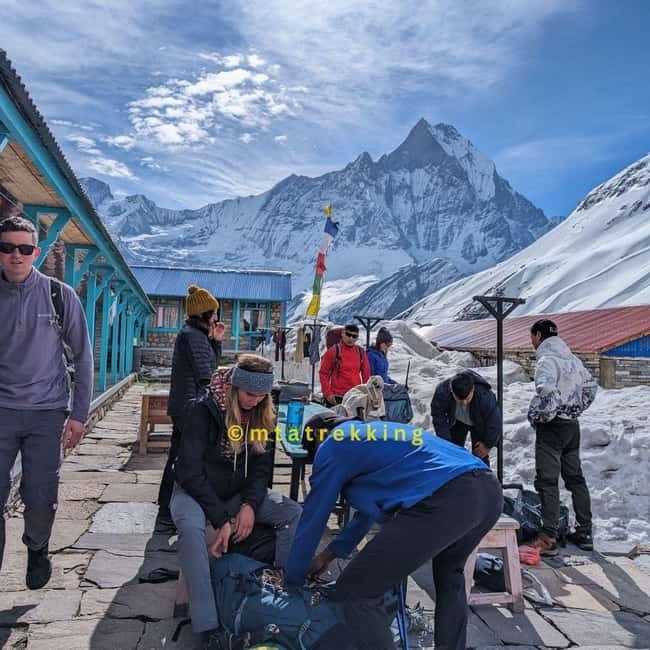
The best packing choices are practical. Comfortable shoes, comfortable clothing, spare clothes, cash, and a passport or accepted copy are specifically recommended. I would keep warm layers, rain protection, and personal medication easy to reach, especially during the higher sections.
June through August brings monsoon conditions, with heavy rain and changeable weather. Lower trails can become slippery, and leeches may appear. Long trousers tucked into gaiters and insect repellent can help reduce the nuisance.
The guide’s advice matters most when weather changes or altitude symptoms appear. Do not push toward base camp simply because it is the planned destination. A good trek is one where you return safely, even if the mountain requires a slower day or a change of plan.
The trail includes many scenic stops, but the walking time is the key fact. Day one may take five to six hours, day two about six hours, day three roughly four to six hours, day four about six hours, and day five about six hours plus the drive. You need to be comfortable walking for long stretches on uneven mountain paths.
Who should book this trek?
I would recommend this trip to an active first-time trekker who wants a clear goal and is comfortable with basic tea house lodging. The route offers a strong mix of mountain views, Gurung culture, village life, forest, hot springs, and a high-altitude finish.
It also suits experienced walkers who have only a short window in Nepal. The private format, Pokhara pickup, included permits, and return transport reduce planning work. You can focus on walking instead of arranging every road transfer and permit yourself.
I would be more cautious if you dislike early starts, long walking days, simple lodging, or unpredictable weather. The five-day format is efficient, but it does not offer much spare time. Anyone with a medical concern related to altitude should seek professional advice before booking.
The activity offers free cancellation up to 24 hours before departure and a reserve-now, pay-later option. Those policies help if your Nepal schedule is still moving, though they do not replace insurance for medical rescue or trip interruption.
Should you book the Annapurna Base Camp trek?
Book it if you want the shortest practical route to Annapurna Base Camp, prefer a private group, and appreciate having Pokhara transport and permits handled for you. The hot springs, Gurung villages, tea house nights, and sunrise at base camp give the trek more character than a simple mountain transfer.
Think twice if you want a slow acclimatization plan or hotel-level comfort. At $320, the package offers good value, but you must allow extra money for meals unless full board is selected, porter service, showers, drinks, Wi-Fi, laundry, insurance, and rescue.
For an active visitor with five days, this is a focused and rewarding choice. Ask about the exact meal package, porter needs, daily walking times, and weather before you go. Then keep your pace steady, listen to your guide, and let the mountains set the schedule when they need to.
FAQ
How long is the Annapurna Base Camp trek?
The activity lasts five days and four nights, including transport from Pokhara and the return journey.
What is the highest point of the trek?
The highest point is Annapurna Base Camp, at 4,130 meters or 13,550 feet.
Where does the trek start?
Pickup is available from hotels and locations in Lakeside Pokhara, as well as Pokhara International Airport.
Is transportation included?
Yes. Private transport from Pokhara to Siwai, described as the last road point, and back to Pokhara is included.
Are meals included?
Meals are included when you choose the full-board option. Confirm the selected package before booking.
Is a porter included?
No. Porter service is available at $20 per day.
Is accommodation included?
Yes. Accommodation in tea houses is included.
Can I visit the hot springs?
Yes. Jhinu is known for natural hot springs, and visiting them is optional.
What happens if I need to cancel?
You can cancel up to 24 hours in advance for a full refund.
More 5-Day Experiences in Nepal
- Pokhara: 5-Day Annapurna Base Camp Trek with Hot Spring
★ 5.0 · 3 reviews - Yellowstone, Grand Teton, and Hot Springs: Small Group 5-Day Tour
★ 5.0 · 2 reviews
Just added around Nepal
- 7 Days Annapurna Base Camp Trek from Pokhara with Hot Spring★ 5.0 · 2 reviews
- Unlimited Sauna Steam and Jacuzzi★ 5.0 · 2 reviews
- POON HILL HOT SPRING – 10 Days Trek★ 5.0 · 3 reviews
- Lower Mustang Jomsom Muktinath Hot Spring Tour in 4 WD Jeep★ 4.5 · 2 reviews
- Pokhara: 7-Day Annapurna Base Camp Trek & Hot Spring★ 4.0 · 3 reviews
- Pokhara: Amazing 7-Day ABC Trek with Natural Hot Spring★ 5.0 · 5 reviews
- Pokhara: 5-Day Annapurna Base Camp Trek with Hot Spring★ 5.0 · 3 reviews
- Pokhara: 7-Day Annapurna Base Camp Via PoonHill & Hot Spring★ 5.0 · 6 reviews
Hot Spring Hiking Tours, compared.
Mount Batur Sunrise Guided Hike and Natural Hot Spring
Read our review →
Mount Batur Sunrise Hike and Natural Hot Spring Option
Read our review →
Private Tour Mount Batur Sunrise Trekking and Natural Hot Spring
Read our review →
Mount Batur Sunrise Hike, Breakfast & Hot Spring
Read our review →
National Park Hike & Finnish Smoke Sauna Experience with Campfire Lunch
Read our review →
Mount Batur Sunrise Hike with Breakfast & Hot Spring
Read our review →
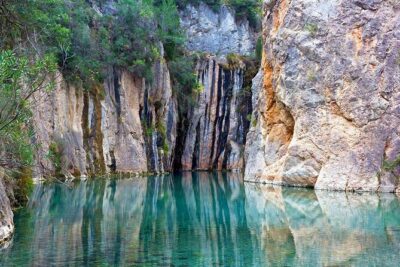
Montanejos Hiking Tour & Thermal Pools from Valencia
Read our review →Browse the lists this tour appears in