
Review · HOT SPRING HIKING TOURS
Pokhara: 7-Day Annapurna Base Camp Trek & Natural Hot Spring
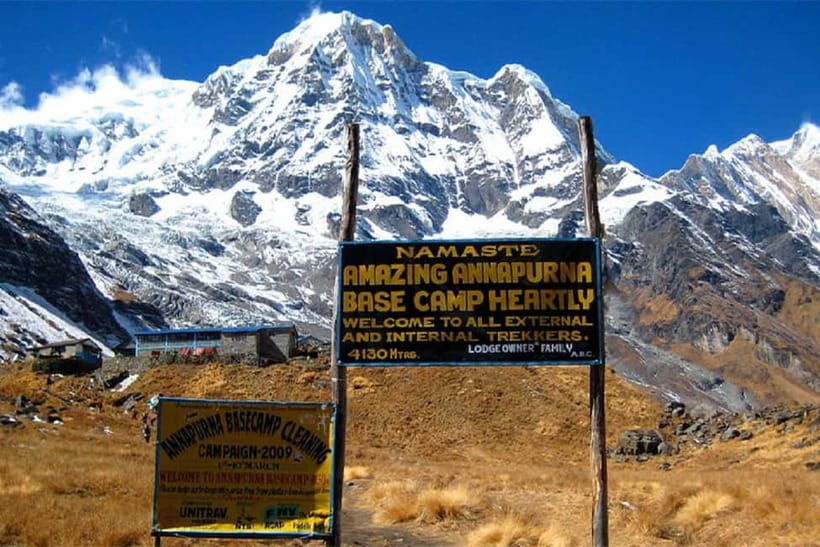
The mountains get serious quickly here. This seven-day trek takes you from Pokhara through Gurung villages, rhododendron forests, stone stairways, and the Annapurna Sanctuary to base camp at 4,130 meters. I especially like the carefully paced route and the final soak at Jhinu Danda, which gives tired legs a proper reward. The main consideration is the effort required: several days involve five to seven hours of walking, steep steps, and a major climb in altitude.
The private group format is another strong point. Guides such as Chandra, Bishnu Giri, Anil, Laxman, Sun, and Jeet Bahadur have been praised for encouragement, cultural stories, safety checks, and practical help with food and walking pace. Still, do not confuse seven days with an easy holiday. The route is short for a Himalayan trek, so the walking days are full and the return journey includes some road walking that can be dusty.
Key Points Before You Book
- Annapurna Base Camp at 4,130 meters: The high point is a dramatic mountain amphitheater surrounded by peaks, including Annapurna I and Machhapuchhre.
- A real mountain village route: Ghandruk and Chomrong bring you close to Gurung culture, stone houses, terraced fields, and tea house life.
- A demanding but focused schedule: You walk for roughly five to seven hours on most days, with steep climbs and descents.
- Hot springs at Jhinu Danda: The natural pools offer a welcome break after the long descent from the sanctuary.
- Private guide support: English, Hindi, and Nepali-speaking guides are available, with pickup from Pokhara hotels or the airport.
- Strong value at $181 per person: Permits, tea house lodging, guide costs, transport, and selected meals are included, but insurance and porter service cost extra.
What the Seven Days Really Feel Like
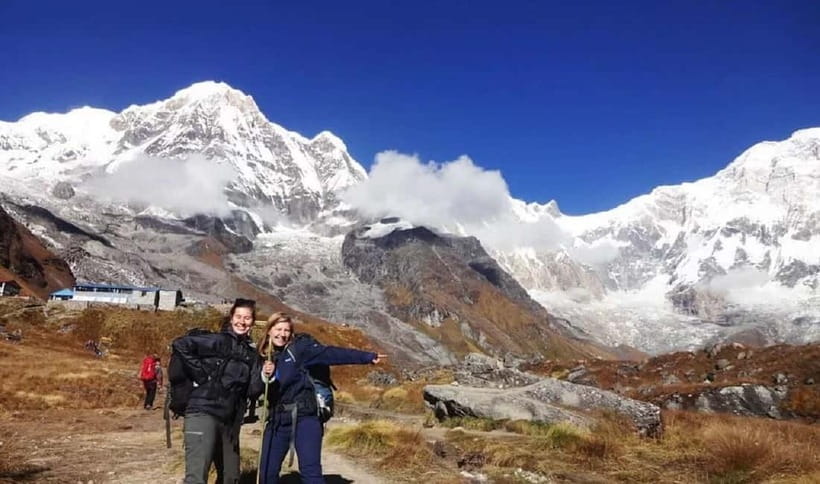
This is a compact Himalayan trek with a clear purpose: reach Annapurna Base Camp, sleep beneath the high peaks, then return by a different section of trail to Jhinu Danda. You do not spend days wandering around side valleys. Each morning leads toward the sanctuary, and each afternoon brings another village or lodge.
The scenery changes in a satisfying way. Lower sections pass through farmland and forest. Higher up, trees thin out and the trail becomes rockier and more exposed. By the time you reach base camp, you are walking inside a giant bowl of snow and ice rather than simply looking at mountains from a distant viewpoint.
Your guide matters here. Chandra has been praised for clear English, mountain information, flexibility, and attention to health. Bishnu Giri is noted for more than 20 years of experience, cultural stories, and careful advice at higher elevations. The guide can help you judge your pace, manage small problems, and keep the trip moving when your legs begin negotiating for a shorter day.
The tea houses are simple rather than luxurious. That is part of the experience, but it also means you should pack warm clothing, a sleeping bag if needed, cash, a flashlight, and a power bank. Meal inclusion depends on the option you select, so check that detail before paying.
More Natural Hot Springs in Nepal:
- Pokhara: 5 Day Annapurna Base Camp Trek & Natural Hot Spring
★ 4.9 · 44 reviews - Pokhara: Amazing 7-Day ABC Trek with Natural Hot Spring
★ 5.0 · 5 reviews - 5-Day Annapurna Base Camp Trek with Natural Hot Springs
★ 5.0 · 3 reviews
Day 1: Pokhara to Ghandruk, 1,940 Meters
The trip begins with about an hour of driving from Pokhara toward Nayapool, followed by roughly five to six hours of trekking to Ghandruk. Pickup is available from Pokhara Lakeside hotels or Pokhara International Airport, which makes the first morning easier to manage.
Ghandruk is an excellent opening stop because it feels like a proper mountain village rather than only a place to sleep. The route follows the Modi Khola area through villages and forest, and the change from Pokhara’s easygoing lakeside setting to stone paths and mountain farms is quick.
The day is not technically the highest or longest, but it sets the pattern: walk, climb, stop, eat, and repeat. Your first challenge is not altitude so much as getting used to hours on uneven trails.
The road sections deserve a practical note. One part of the transfer and approach can be dusty, and the route may include walking beside roads. A car or jeep for the road-heavy sections would be more comfortable, especially at the beginning and end of the trek.
Day 2: Ghandruk to Chomrong, 2,170 Meters
Expect five to six hours of walking between Ghandruk and Chomrong. This is where the famous stone steps begin to make their presence known. You will climb through forest and village paths, with views toward the Annapurna range and Machhapuchhre.
Chomrong is an important waypoint on the route to Annapurna Base Camp. It sits above the Modi Khola valley and gives you a useful sense of the mountains ahead. The village is also a good place to settle into the rhythm of tea house lodging before the trail becomes more remote.
The day includes both climbing and descending, so do not judge it only by the final altitude of 2,170 meters. Stone steps can be harder on knees than a smooth uphill trail. Trekking poles are useful, and they are included when needed according to the tour details.
For you, the main reward is the combination of village life and mountain views. You are not being rushed through a bus transfer from one photo stop to another. You are earning each change in scenery with your feet.
Day 3: Chomrong to Himalaya, 2,920 Meters
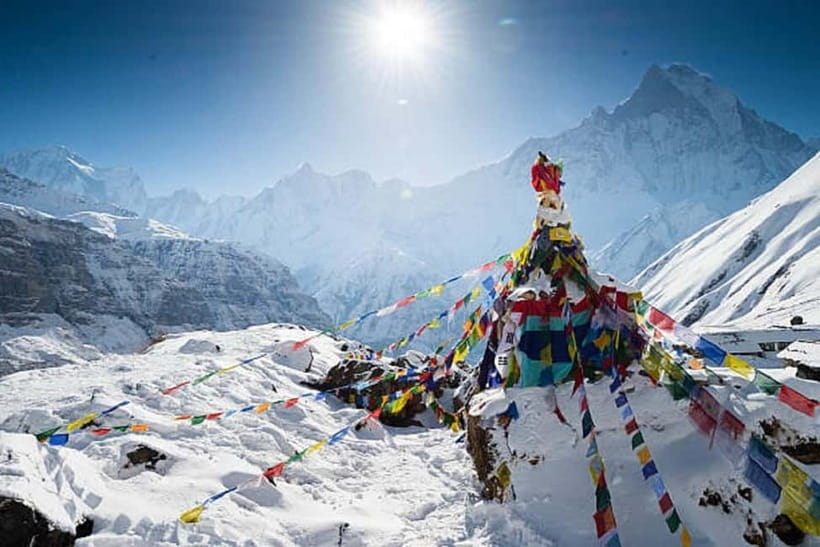
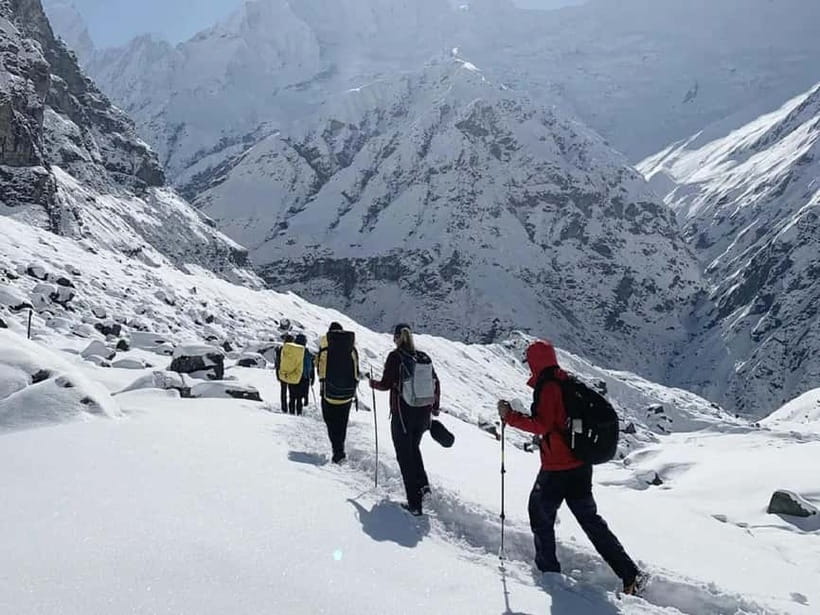
The route from Chomrong to Himalaya takes about six to seven hours. You first descend toward the river, then climb through bamboo and rhododendron forest. This up-and-down pattern can feel tougher than a steady climb, especially after the previous day.
The forest is one of the best parts of the middle section. Rhododendrons and bamboo create a shaded trail, while waterfalls and river sounds add variety to the walk. The route feels enclosed in places, then opens enough for glimpses of the surrounding peaks.
Himalaya is at 2,920 meters, so this is when you should pay closer attention to your body. Drink regularly, eat even if your appetite is lower, and tell your guide about headaches, unusual fatigue, or breathing problems. Your guide is there to watch your pace and health, not merely to point out the trail.
This overnight stop is practical rather than glamorous. You are positioning yourself for the high point on Day 4. Keep your evening simple, organize warm layers, and avoid treating the lodge as a late-night social club.
More Hot Spring Hikes in Nepal:
- From Pokhara: 5-Day Annapurna Basecamp Trek with Hot Springs
★ 4.9 · 26 reviews - Pkr/Kathmandu: 5-Day Annapurna Base Camp & Hot spring Trek
★ 5.0 · 6 reviews - Pokhara: 5-Day Trek to Annapurna Base Camp and Hot Springs
★ 5.0 · 4 reviews - POON HILL HOT SPRING – 10 Days Trek
★ 5.0 · 3 reviews
Day 4: Himalaya to Machhapuchhre Base Camp and Annapurna Base Camp
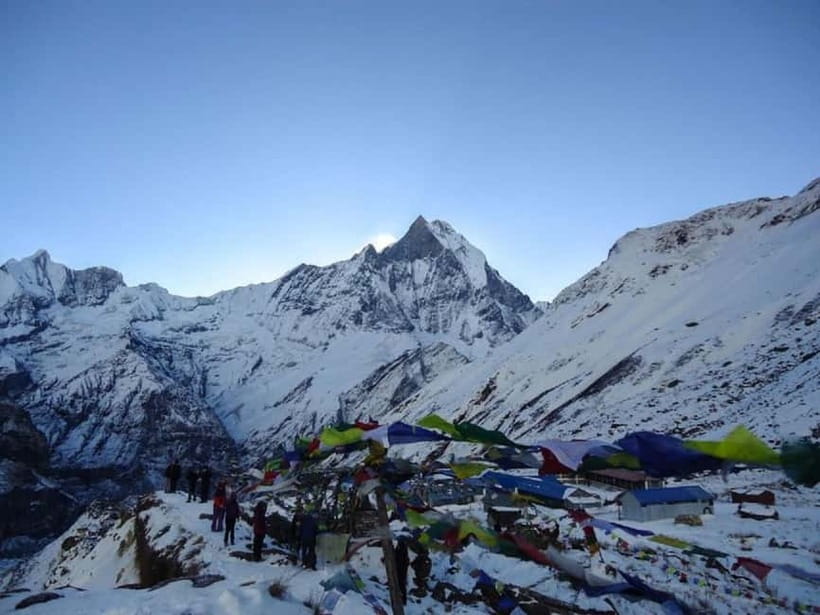
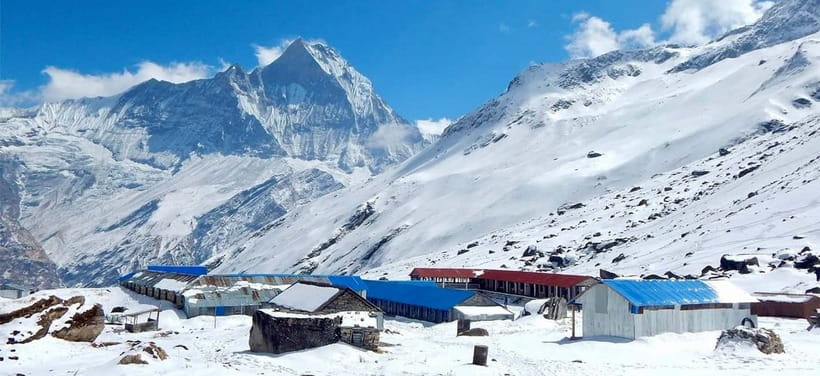
This is the big day. The walk from Himalaya through Machhapuchhre Base Camp to Annapurna Base Camp takes about six to seven hours, ending at 4,130 meters.
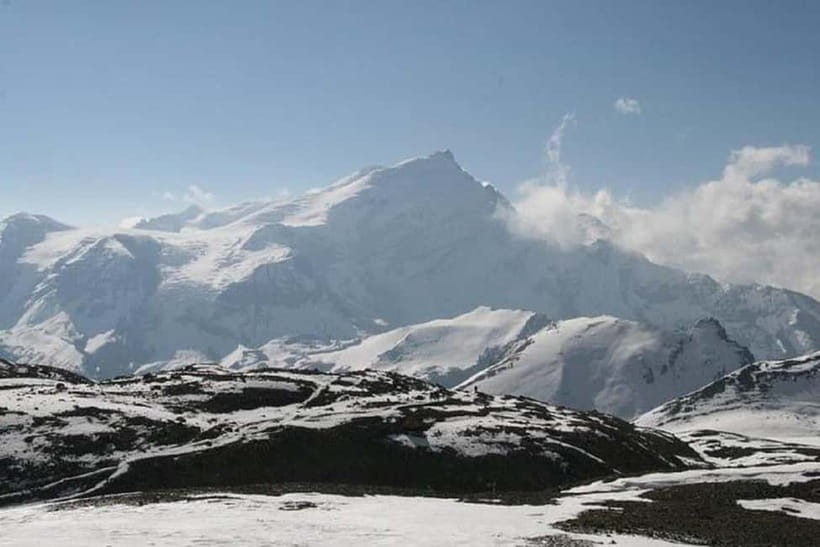
The forest gives way to the alpine zone, and the trail enters a glacier valley. The route feels more exposed and grand as the peaks rise around you. Machhapuchhre, also called Fishtail, is a major visual marker, while Annapurna I and other high summits form the huge mountain amphitheater around base camp.
Reaching Annapurna Base Camp is not just a matter of arriving at a sign. You have climbed from low valleys through villages, forests, river crossings, and high mountain terrain in only four days. The setting makes the effort worthwhile, but the altitude makes this the day when sensible pacing matters most.
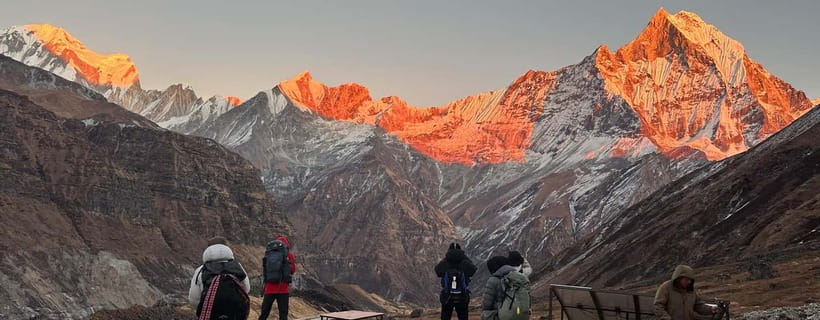
You may get sunrise or sunset views from the base camp area, depending on the schedule and weather. The route information promises stunning Himalayan views, but mountain weather is never guaranteed. Even with clear conditions, keep expectations flexible and focus on the scale of the sanctuary itself.
Sleeping at 4,130 meters can be cold and uncomfortable. This is where warm clothing, gloves, a jacket, and a sleeping bag become useful rather than theoretical packing advice. Your guide’s judgment is important if you feel unwell. Travel insurance with trekking and emergency rescue coverage is mandatory, and emergency rescue services are available if needed.
Day 5: Annapurna Base Camp to Bamboo, 2,335 Meters
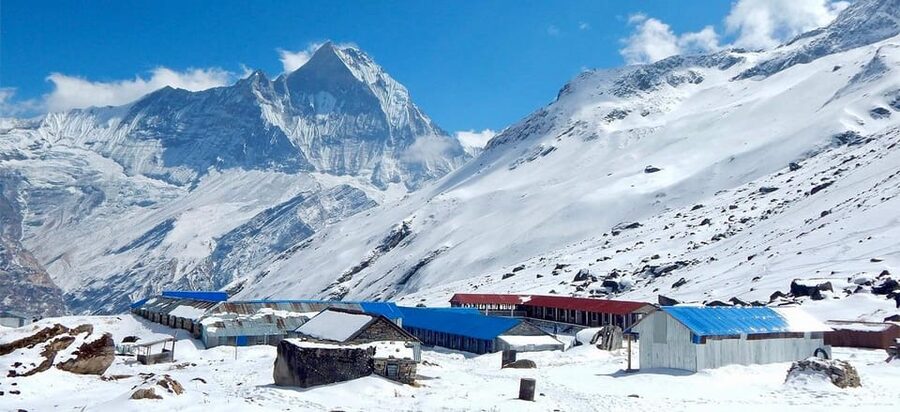
The return to Bamboo takes six to seven hours and is mostly a long descent. That sounds easier than going up, but downhill walking can punish tired knees and toes. Use trekking poles, shorten your stride, and do not race simply because the altitude is dropping.
The reward is the changing view. Looking back toward the Annapurna range gives you a different perspective from the approach. Waterfalls, forest, and the broad mountain valley return as you descend.
Bamboo at 2,335 meters feels lower and more comfortable than base camp, although you will still have a full walking day behind you. This is a good evening to eat well, recharge devices, dry clothing, and check how your body feels before the final two days.
One benefit of a private group is flexibility. Chandra has been praised for adjusting guest house choices to match progress, allowing a group to continue when it had energy or stop when it needed rest. That kind of judgment is more useful than a rigid timetable.
Day 6: Bamboo to Jhinu Danda and the Hot Springs
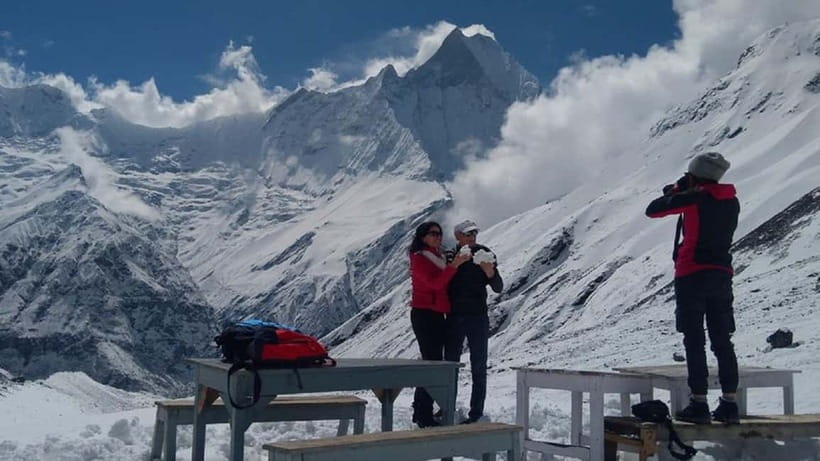
The walk to Jhinu Danda takes around five to six hours. You descend toward the river, passing through forest and village terrain before reaching the hot spring area at 1,610 meters.
The springs are the trip’s smartest bit of timing. After the high-altitude climb and the long descent, a warm soak gives you a chance to relax without adding another major sightseeing stop. Bring a towel and a change of clothes, both included on the suggested packing list for good reason.
Jhinu Danda also gives you a different view of the route. You are back among greener lower elevations, with a warmer feel and more village activity than at base camp. The hot spring is not a spa resort, so approach it as a simple natural bathing spot and a pleasant recovery break.
This day can still be tiring. The descent from Bamboo continues to test your knees, and the trail is not flat simply because you are lower. Keep water and snacks handy, since personal snacks and drinks are not included.
Day 7: Jhinu Danda to Nayapool and Back to Pokhara
The final trekking section takes about four to five hours, followed by roughly an hour of driving to Pokhara. The route ends at Nayapool before the return transfer.
This is a shorter walking day, but tired legs can make familiar steps feel surprisingly long. The road approach may be dusty, and one useful improvement would be arranging a car or jeep for road-heavy portions rather than walking beside traffic.
Back in Pokhara, luggage storage is available during the trek, so you do not need to carry your full travel kit into the mountains. Drop-off can be arranged at several Pokhara locations, including Lakeside hotels, Hotel Temple Tree, Hotel Barahi, Middle Path Spa, or the airport, depending on the selected option.
Guides, Comfort, and Tea House Life
The guide is the heart of this experience. You receive an English-speaking guide certified by the Nepal government, with Hindi and Nepali also available. Guide expenses, insurance, meals, lodging, salary, transportation, and equipment are covered.
Specific guides praised for this route include Chandra, Bishnu Giri, Anil, Laxman, Sun, and Jeet Bahadur. Chandra receives special praise for his English and mountain information. Bishnu is noted for cultural stories and long experience. Anil helped with both walking and food, while Jeet Bahadur brought humor and even took good selfies.
The accommodation is in simple tea houses or lodges. Expect function over comfort. You get a bed and a place to eat, but you should bring warm layers and not assume every lodge will provide every item you need.
Meals are included only with certain booking options, so confirm your package. Personal snacks and drinks are extra. A porter is also optional at $20 per day, which may be worthwhile if you want to carry only a daypack.
Is $181 Good Value?
At $181 per person, this is a low-cost way to arrange a major Nepal trek, provided the selected option includes the meals you want. The price covers round-trip transport, required permits, TIMS fees, tea house accommodation, a professional guide, guide expenses, trekking gear such as a stick or sleeping bag when needed, taxes, and a first aid kit.
That removes several costs that can otherwise complicate a trek. You do not have to arrange permits on your own, negotiate every transfer, or pay your guide separately for food and lodging.
The price does not cover travel insurance, emergency rescue, personal snacks and drinks, or a porter. Insurance is not a minor add-on at this altitude. Buy a policy that covers trekking and emergency evacuation, and carry proof of coverage.
The value is strongest for a fit visitor who wants a private guided trek without arranging every detail. It is less attractive if you expect hotel comfort, included porter service, or a fully vehicle-supported route.
Who Should Book This Trek?
I would recommend this route if you want a short, serious introduction to Himalayan trekking and you can manage several long walking days. It suits people who value mountain scenery, village contact, simple lodging, and a guide who can adjust the pace.
You should think twice if you dislike steep steps, basic tea houses, cold nights, or changing weather. The itinerary is compact, which means there is not much spare time if you need a slow recovery day.
January can be a good choice for quieter trails and tea houses, with clear skies possible in good weather, but it will be cold at base camp. Spring and autumn are often attractive periods for trekking, but this specific experience information does not guarantee conditions in any month. July is also possible, though weather can affect views and trail conditions.
Final Verdict: A Strong Seven-Day Himalayan Challenge
I would book this trek if I wanted the main Annapurna experience without committing to a much longer route. The journey gives you villages, forests, high mountain scenery, a night at base camp, and hot springs in one well-shaped week.
The best reason to choose it is the balance between scale and length. You reach 4,130 meters, but you also spend time in villages and forests instead of treating the mountains as a single viewpoint.
Book it with realistic expectations. Train for long days, bring proper warm and rain gear, arrange insurance, confirm whether meals are included, and consider a porter if your pack is heavy. If you can accept simple comfort and a few dusty road sections, this is a strong-value trek with the kind of finish your legs will remember: hot water at Jhinu Danda after the Annapurna Sanctuary.
FAQ
How high does the Annapurna Base Camp trek reach?
The highest overnight stop is Annapurna Base Camp at 4,130 meters, or 13,550 feet.
How many hours do you walk each day?
Walking times range from about four to seven hours per day. The longest days are generally Days 3, 4, and 5, each listed at six to seven hours.
Is transportation from Pokhara included?
Round-trip transportation between your hotel, Pokhara International Airport, and the trek starting point is included. Pickup is available from hotels in Pokhara Lakeside or the airport, depending on the selected arrangement.
Are meals included during the trek?
Meals are included depending on the option selected. Personal snacks and beverages are not included, so check your package and carry cash for extras.
Is a porter included?
No. A porter can be hired if needed for $20 per day.
What languages can the guide speak?
Live guiding is available in English, Hindi, and Nepali.
More 7-Day Experiences in Nepal
- Pokhara: 7-Day Annapurna Base Camp Via PoonHill & Hot Spring
★ 5.0 · 6 reviews - Pokhara: 7-Day Annapurna Base Camp Trek & Hot Spring
★ 4.0 · 3 reviews - 7 Days Annapurna Base Camp Trek from Pokhara with Hot Spring
★ 5.0 · 2 reviews - 7 Day Iceland with Reykjavik Northern Light | Blue Lagoon | Golden Circle ……
★ 5.0 · 5 reviews
Just added around Nepal
- 7 Days Annapurna Base Camp Trek from Pokhara with Hot Spring★ 5.0 · 2 reviews
- Unlimited Sauna Steam and Jacuzzi★ 5.0 · 2 reviews
- POON HILL HOT SPRING – 10 Days Trek★ 5.0 · 3 reviews
- Lower Mustang Jomsom Muktinath Hot Spring Tour in 4 WD Jeep★ 4.5 · 2 reviews
- 5-Day Annapurna Base Camp Trek with Natural Hot Springs★ 5.0 · 3 reviews
- Pokhara: 7-Day Annapurna Base Camp Trek & Hot Spring★ 4.0 · 3 reviews
- Pokhara: Amazing 7-Day ABC Trek with Natural Hot Spring★ 5.0 · 5 reviews
- Pokhara: 5-Day Annapurna Base Camp Trek with Hot Spring★ 5.0 · 3 reviews
Hot Spring Hiking Tours, compared.
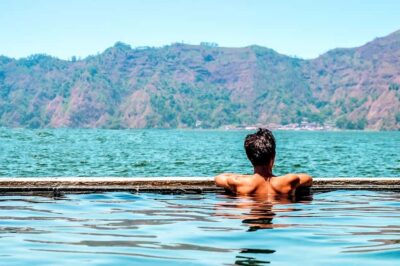
Mount Batur Sunrise Guided Hike and Natural Hot Spring
Read our review →
Mount Batur Sunrise Hike and Natural Hot Spring Option
Read our review →
Private Tour Mount Batur Sunrise Trekking and Natural Hot Spring
Read our review →
Mount Batur Sunrise Hike, Breakfast & Hot Spring
Read our review →
National Park Hike & Finnish Smoke Sauna Experience with Campfire Lunch
Read our review →
Mount Batur Sunrise Hike with Breakfast & Hot Spring
Read our review →
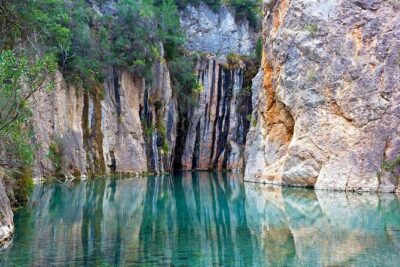
Montanejos Hiking Tour & Thermal Pools from Valencia
Read our review →Browse the lists this tour appears in