
Review · 7-DAY EXPERIENCES
Pokhara: 7-Day Annapurna Base Camp Via PoonHill & Hot Spring
Sunrise starts this Himalayan adventure. This seven-day private trek links Poon Hill, Ghorepani, and Annapurna Base Camp in one compact route, finishing with a soak at Jhinu Dada Hot Spring. I like the variety: you get sunrise at 3,210 meters and the huge mountain bowl at Annapurna Base Camp, 4,130 meters. I also like the practical support, with permits, transport, accommodation, and an English-speaking guide included. The main catch is simple: this is a demanding trek with long walking days and a rapid climb to high altitude.
You should also know that a porter costs extra, and meals are included only with the full package. That matters at $267 per person, a price that looks strong if your package includes food and transport, but needs a closer look before you pay. The route is private, and guides such as Mahesh, Prakash, and the local support teams have earned especially warm praise for care, route adjustments, and good communication.
Key points at a glance
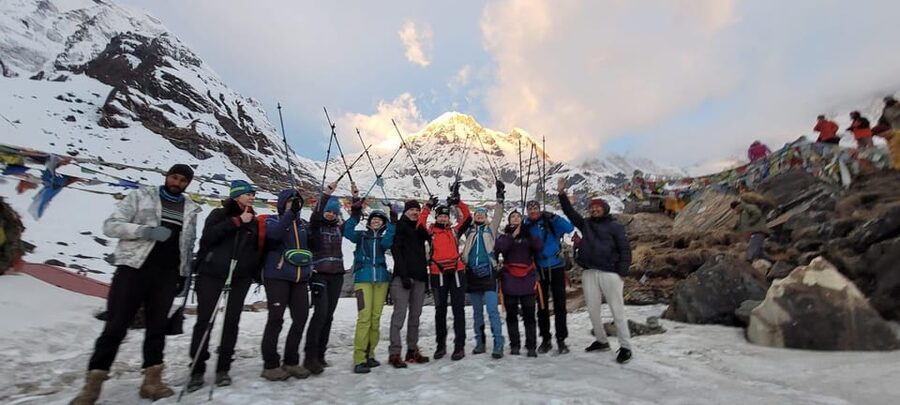
- Two major mountain viewpoints: Watch sunrise from Poon Hill at 3,210 meters, then reach Annapurna Base Camp at 4,130 meters.
- A real route through the hills: Walk through rhododendron and bamboo forests, villages, river valleys, and high mountain country.
- A useful final reward: Rest your tired legs at Jhinu Dada Hot Spring for about two hours before returning to Pokhara.
- Strong guide support: Mahesh and Prakash are specifically praised for answering questions, adjusting the pace, and looking after trekkers.
- Private group format: You are not tied to a large shared group, which can make pacing and daily decisions more personal.
- Good value, with conditions: Permits, guide costs, accommodation, and four-wheel-drive transport are covered, but porter service and personal costs are not.
Why this route works so well in seven days
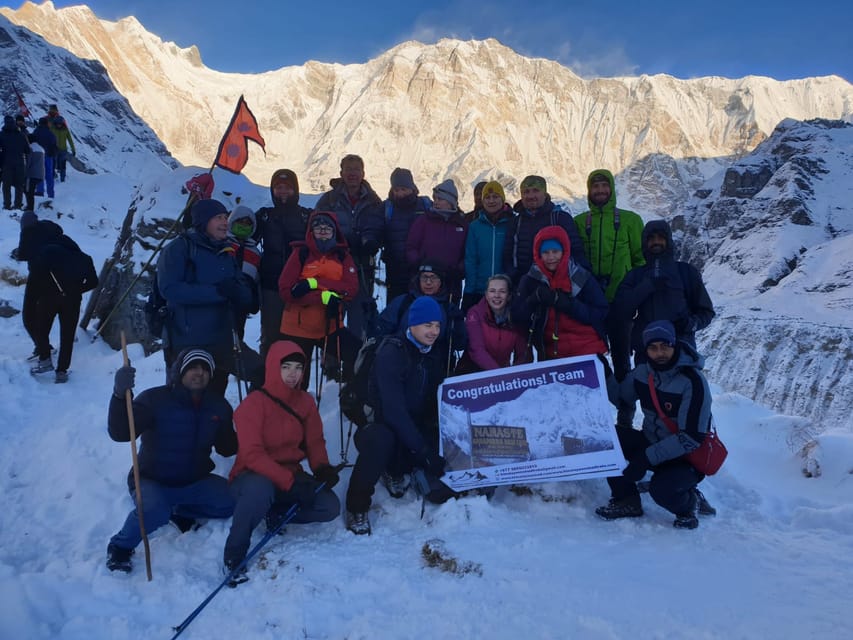
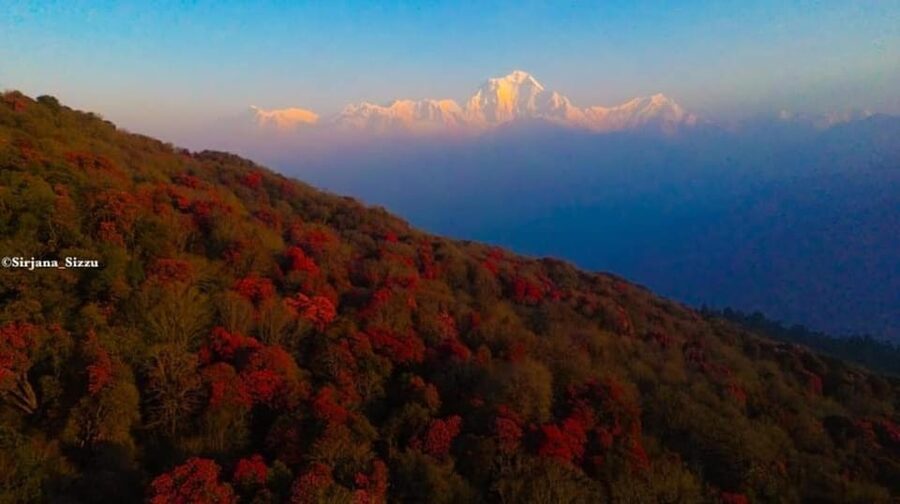
The clever part of this trip is its range. You do not simply walk up and back through one valley. The route begins with the famous Poon Hill sunrise, then crosses forests and villages before turning toward the Annapurna Sanctuary and its base camp.
That gives you two very different mountain experiences. Poon Hill is about a broad morning view across the Annapurna range. Annapurna Base Camp feels more enclosed and dramatic, with peaks rising around you in a great mountain amphitheater.
The schedule is tight. You spend five days gaining and reaching the base camp, then two days descending to the hot spring and Pokhara. Daily walking times range from about five to six hours, with the first day combining roughly three hours in a jeep and four hours on foot.
I would choose this route if you have limited time but still want a serious Himalayan trek. I would not choose it as a casual first walking holiday. The climb to 4,130 meters is a major physical challenge, and the itinerary gives you little spare time.
A few more places to soak around Nepal worth a look
- Pokhara: 7-Day Annapurna Base Camp Trek & Natural Hot Spring
★ 5.0 · 11 reviews - Pokhara: Amazing 7-Day ABC Trek with Natural Hot Spring
★ 5.0 · 5 reviews - Pokhara: 7-Day Annapurna Base Camp Trek & Hot Spring
★ 4.0 · 3 reviews
Day 1: Pokhara to Ulleri and Ghorepani
Your first morning begins with pickup in Pokhara, if you choose that option. The drive heads toward Nayapul, then continues by four-wheel-drive jeep through streams, small villages, and rhododendron forest toward Ulleri.
This road journey saves your legs for the higher sections of the trek. From Ulleri, you walk for about four hours to Ghorepani, at 2,840 meters. The day gives you an early taste of the route: mountain roads, forest, village life, and a clear change from Pokhara’s lakeside setting.
Ghorepani is your first overnight stop in a tea house. It is not a luxury stay, but it puts you in the right place for the early Poon Hill start. Bring a warm layer within easy reach, since the next morning begins before breakfast and the air can feel cold at altitude.
The first day is also a good test. You have already spent several hours in a vehicle before walking uphill. If your legs feel tired by the evening, take that as useful information and speak plainly with your guide.
Day 2: Poon Hill sunrise, Tadapani, and Chuile
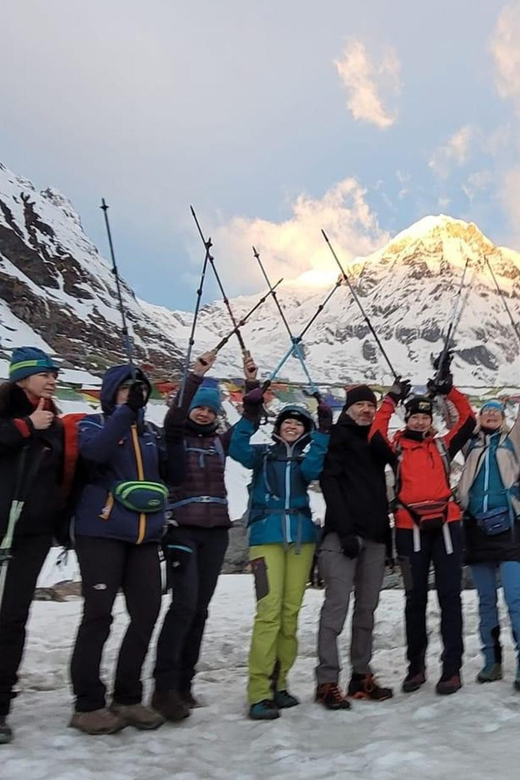
Day two delivers the route’s first big reward. You climb from Ghorepani to Poon Hill at 3,210 meters for sunrise and mountain views, then return to Ghorepani for breakfast before continuing toward Tadapani and Chuile.
The early climb is worth treating as a proper uphill walk, not a quick photo stop. The point is the view across the Annapurna range and surrounding peaks, with changing morning light across the mountains. Weather can affect what you see, so keep your expectations flexible. The sunrise is part of the appeal, but mountain weather makes no promises.
After breakfast, the route descends and continues through forest toward Tadapani and Chuile. This is a useful contrast with Poon Hill. You move from an open viewpoint into wooded paths and village sections, with the walking becoming less about one spectacular lookout and more about the steady rhythm of the trek.
The day takes around six hours. It is one of the more varied days, but also one of the more tiring because the sunrise climb comes before the main walk. Your guide can help set a sensible pace. Prakash and Mahesh are both specifically praised for patient care and for adapting the route to personal ability and expectations.
You spend the night at a hotel in the Chuile area. Accommodation on this trek is described as available during the route, with the overnight stays generally in tea houses or hotels. Expect useful mountain lodging rather than polished resort comfort.
Day 3: Chuile to Sinuwa beside the rivers
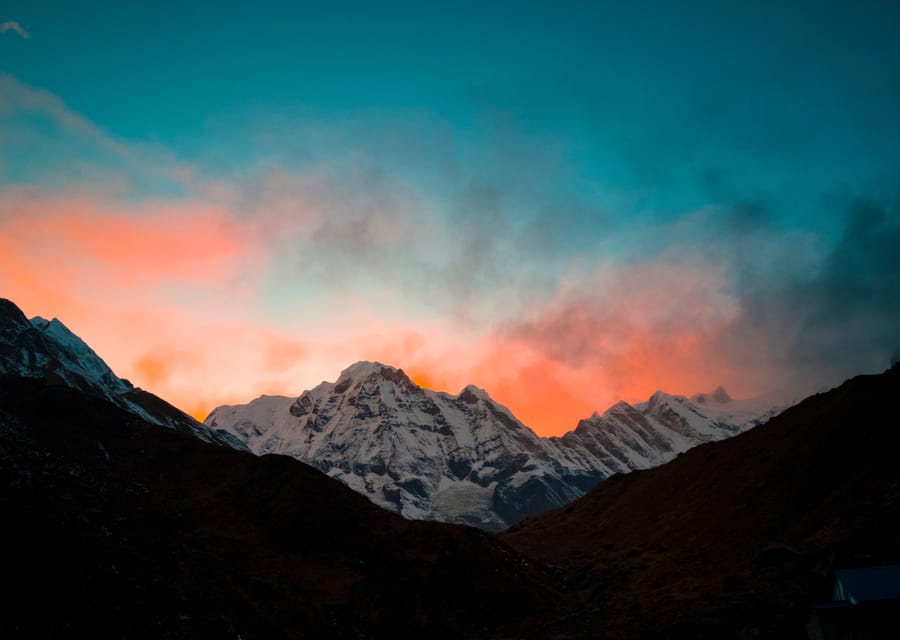
From Chuile, the trek turns more directly toward Annapurna Base Camp. The walk takes about five hours and includes the meeting point of the Kumrung and Modi Rivers.
The river connection gives this day a different feel. You are no longer just crossing between viewpoints and villages. The route begins to follow the water system leading farther into the Annapurna region, with the river acting as a steady companion.
Sinuwa sits at about 2,170 meters, lower than the previous high point at Poon Hill. That drop gives you some relief before the route climbs again. Still, do not mistake the lower altitude for an easy day. The trek continues to include uphill and downhill walking, and the cumulative effort begins to matter.
This is a good day to pay attention to your feet, clothing, and water supply. Personal costs such as bottled or boiled water, showers, battery charging, laundry, and phone calls are not covered. You should also remember that soft drinks, hard drinks, bar bills, and other extras come from your own pocket.
Same water, a different kind of day:
- Pokhara: 5 Day Annapurna Base Camp Trek & Natural Hot Spring
★ 4.9 · 44 reviews - 6 Hours Spa Package in Kathmandu (Massage, Sauna, Steam, Jacuzzi)
★ 5.0 · 43 reviews - From Pokhara: 5-Day Annapurna Basecamp Trek with Hot Springs
★ 4.9 · 26 reviews - Pkr/Kathmandu: 5-Day Annapurna Base Camp & Hot spring Trek
★ 5.0 · 6 reviews
Day 4: Sinuwa to Deurali through forest
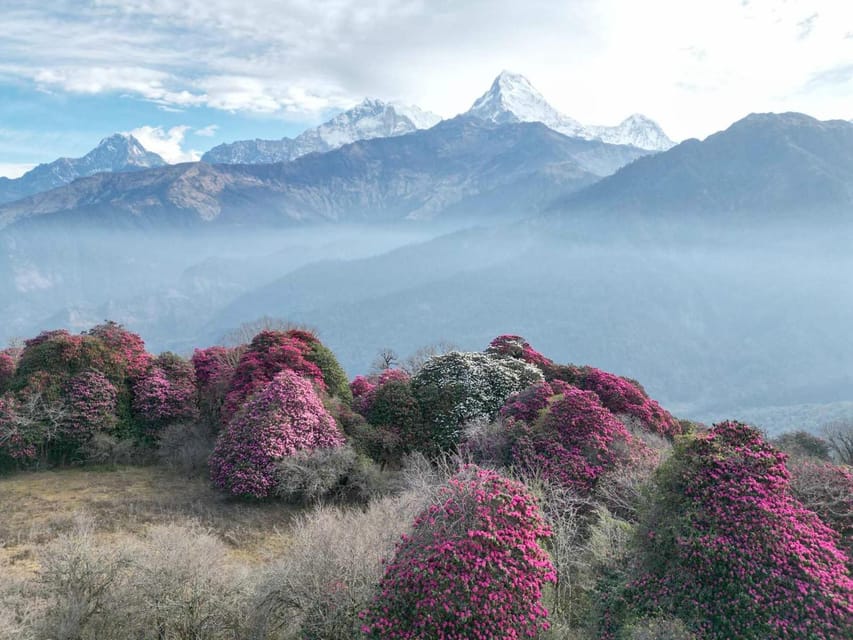
Day four covers roughly six hours from Sinuwa to Deurali, at 3,200 meters. The route passes through rhododendron and bamboo forests, with views toward Annapurna and Machhapuchhre.
The forest sections are important because they break up the climb. Instead of spending the entire day exposed on a high ridge, you move through changing vegetation and shaded paths before reaching the upper valley. You also pass Dovan on the way to Deurali.
This is where the trip starts to feel more serious. Deurali is already at 3,200 meters, and the next day takes you to 4,130 meters. Walk steadily, keep your guide informed about how you feel, and resist the temptation to race ahead simply because you can manage the first hour.
The advertised route includes an authorized English-speaking or local expert guide, and guide costs cover meals, accommodation, salary, equipment, insurance, and transport. That is valuable here. A good guide is not only there to point out mountains. The guide helps you manage the rhythm of a long day and deal with a route that gains altitude quickly.
Day 5: Deurali to Annapurna Base Camp at 4,130 meters
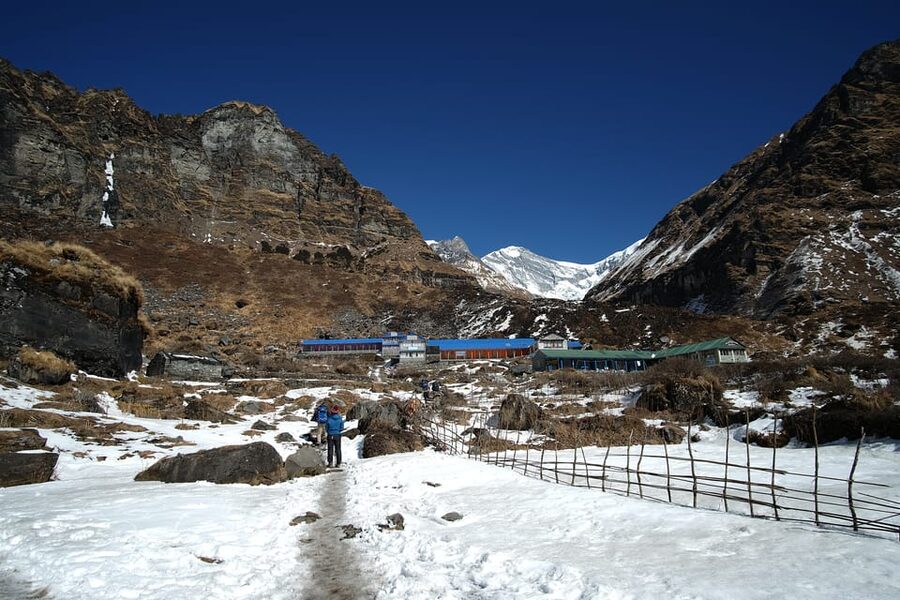
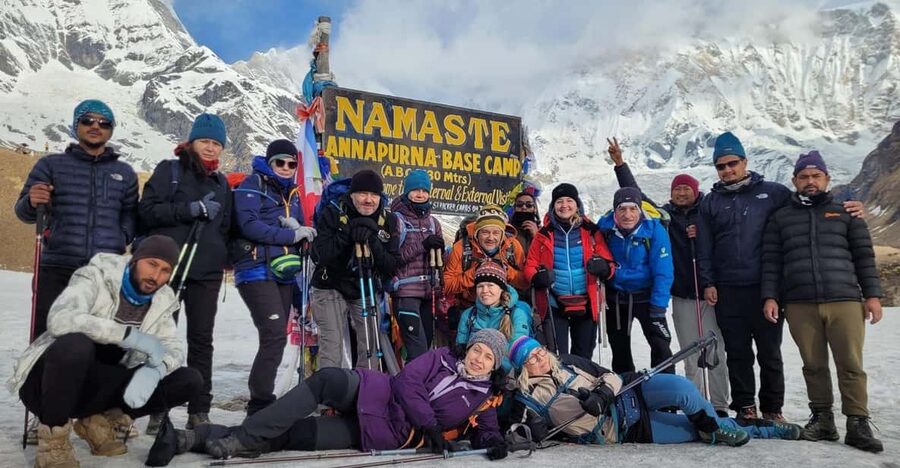
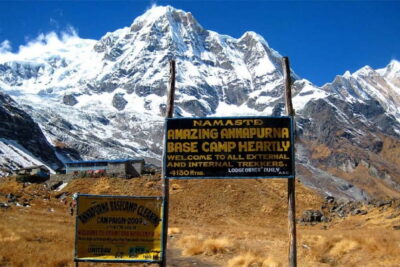
This is the central day of the trek. From Deurali, you walk for about six hours to Annapurna Base Camp, reaching 4,130 meters.
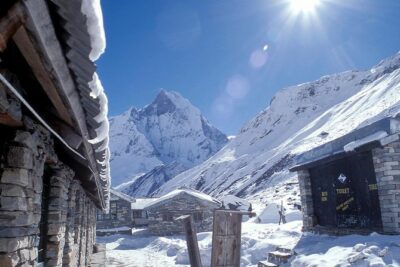
The reward is the setting. You arrive inside a dramatic mountain bowl surrounded by snow-covered peaks and glaciers. The experience is different from Poon Hill, where the view spreads outward. At base camp, the mountains feel closer and more enclosing.
You should treat this as a major achievement, but not as a casual sightseeing stop. The altitude is high, and the route has already included several demanding days. The provided information does not promise a separate acclimatization day, so this schedule suits people prepared for a compact, strenuous trek.
Your guide is an important part of this day. Specific guide names connected with this route include Mahesh and Prakash, with strong praise for their care and communication. A private group also gives you more room to discuss pace and how long to spend at the base camp.
The weather may shape the experience. Clear conditions can reveal the full mountain setting, while cloud can limit the view. Either way, reaching 4,130 meters is the physical high point of the journey.
Day 6: The long descent to Bamboo
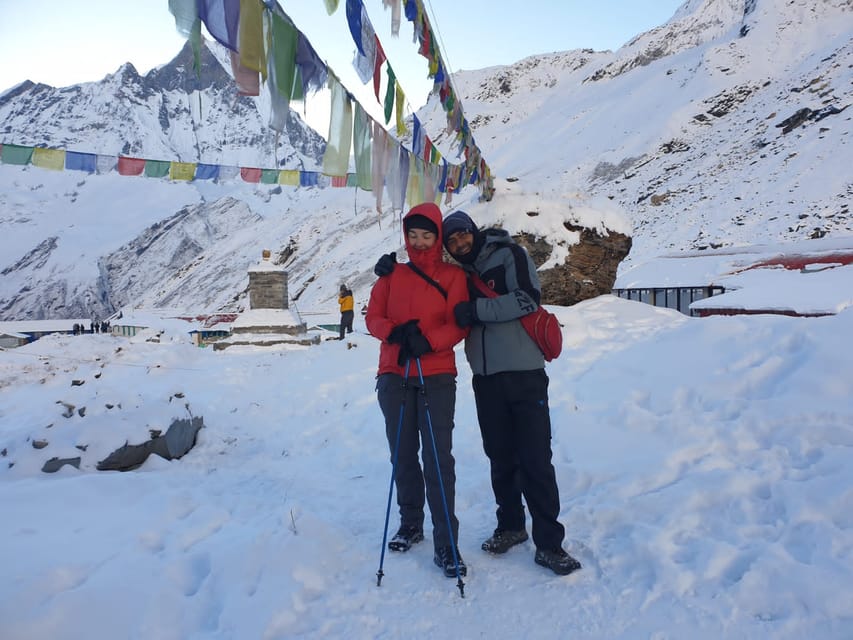
After your time at base camp, you retrace the route to Bamboo, at about 2,300 meters. The descent takes around six hours.
Going downhill is not automatically easy. Your knees and feet may feel the strain, especially after the high-altitude day. Trekking poles, comfortable shoes, and a properly packed day bag are useful choices, though the tour does not state that poles are supplied.
The return path lets you see familiar sections from a new angle. You move back through the mountain valley and toward thicker forest, with the air becoming warmer as you lose altitude. Bamboo provides a practical overnight stop before the final walk to the hot spring.
This night also gives you a chance to sort out anything needed for the last day. Keep swimwear or a change of clothes accessible if you plan to use Jhinu Dada Hot Spring. The hot spring visit is part of the final route, but the listing does not state what changing facilities are available, so pack simply and be prepared for basic conditions.
Day 7: Bamboo to Jhinu Dada Hot Spring and Pokhara
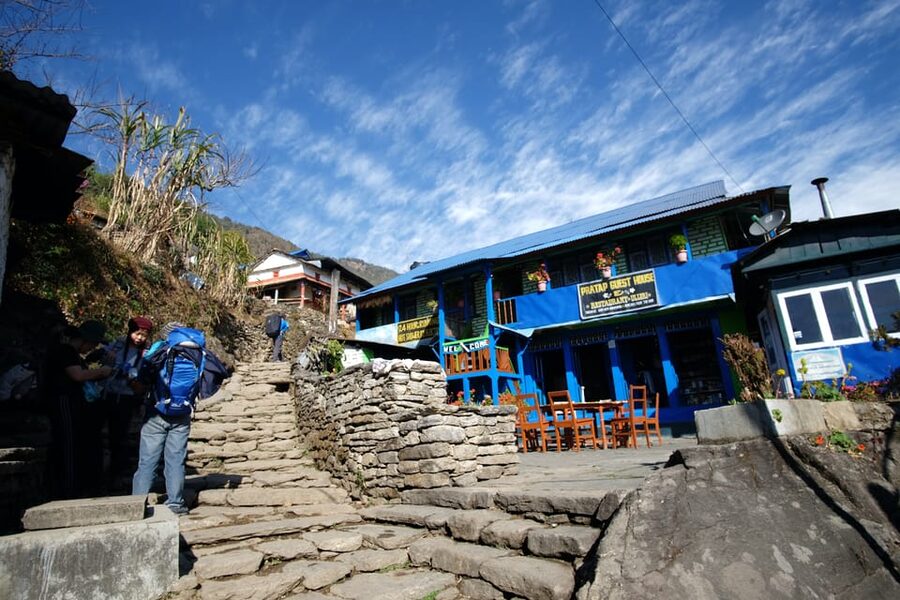
The final day combines about five hours of trekking, a hot spring stop, and roughly two and a half hours of driving. You descend from Bamboo to Jhinu Dada, at about 1,600 meters, then spend around two hours at the natural hot spring.
This is a smart ending. After several days of walking, warm water gives your muscles a welcome break before the road journey. It is not a replacement for rest, but it adds a pleasant, human touch to a demanding mountain route.
From Jhinu Dada, you trek for about 30 minutes to Samrung, where a jeep takes you back to Lakeside Pokhara. The return drive gives you time to look back on the high valleys, villages, forests, and mountain views without having to walk every final mile.
The transport arrangement matters. A four-wheel-drive jeep is included according to the itinerary and group size, but exact vehicle details can vary. Pickup and drop-off at your hotel are available, and you should wait in the lobby 10 minutes before the scheduled pickup time.
Guides, porters, and the level of service
The strongest part of this experience is the human support. Mahesh is praised for answering questions, adjusting the route to match ability, and taking care of the group. Prakash receives similar praise for his guidance and helpful manner. One private group also specifically appreciated porter support from Bishal and Avinesh.
There is an important distinction here: porter service is not included in the stated price. It is available for purchase. If you want to carry only a light daypack, arrange a porter before departure and confirm the additional cost.
The guide package is more generous. It includes the guide’s meals, accommodation, salary, equipment, insurance, and transport. Permits, required paperwork, and the Trekkers’ Information Management System fee are also included.
The tour offers English, Hindi, and Nepali-speaking guides. Since communication matters when you are tired or dealing with altitude, confirm your preferred language before setting out.
What $267 includes, and what it does not
At $267 per person, the price can be good value for a private seven-day trek. The included elements cover several expensive and important pieces:
- Hotel pickup and drop-off
- Four-wheel-drive transport as scheduled
- Trekking permits and required paperwork
- Accommodation during the trek
- Government taxes
- An authorized guide
- Guide-related expenses
- Meals for the full-package option
The key phrase is full package. Meals are not presented as automatic for every booking type, so confirm exactly what your selected package includes. Food costs can add up across seven days.
Porter service is extra. So are drinks, bottled or boiled water, showers, battery charging, laundry, phone calls, bar bills, personal gear, entrance fees during sightseeing, and travel or rescue insurance. International flights and the Nepalese visa are also your responsibility.
Travel and rescue insurance deserves special attention. It is not included, and this is a high-altitude trek. The tour information does not state what coverage you need, so check that your own policy covers trekking at the planned altitude before you go.
You also pay for any extra Pokhara nights caused by an early arrival, late departure, or early return unrelated to the scheduled plan. That is normal for a fixed itinerary, but it is worth budgeting for.
Who should book this Annapurna trek
I would recommend it to you if you want a compact route with maximum variety. In one week, you get a sunrise viewpoint, forest trails, river valleys, high mountain scenery, a base camp finish, and a natural hot spring.
It suits hikers who are comfortable with five to six hours of walking on several consecutive days. You should also be ready for the change from 2,170 meters at Sinuwa to 4,130 meters at base camp within a short period.
It is less suitable if you want a slow acclimatization schedule, short walking days, or hotel-style comfort. Pregnant women should not book this activity, according to the stated restrictions.
Bring your passport or ID card, comfortable shoes, sunglasses, sunscreen, a jacket, comfortable clothes, a sleeping bag, and trekking gear. Pack for changing conditions, and keep personal essentials easy to reach.
The booking terms are flexible: you can cancel up to 24 hours ahead for a full refund, and you can reserve now and pay later. Starting times depend on availability, so check the schedule before committing to flights or extra nights in Pokhara.
Should you book it?
Book this trek if you want Annapurna Base Camp but have only seven days, and if the combination of Poon Hill sunrise plus Jhinu hot spring appeals to you. The strongest reasons to go are the varied route, private format, included permits and transport, and careful guide support from people such as Mahesh and Prakash.
Before paying, confirm three things: whether your price includes all meals, how much a porter costs, and what insurance coverage you need. If you are fit, prepared for high altitude, and willing to accept basic mountain accommodation, $267 can offer solid value. If you need a gentler pace, more rest days, or more comfort, choose a longer and less compressed Annapurna plan instead.
FAQ
How long is the Annapurna Base Camp trek?
The trek lasts seven days, beginning and ending in Pokhara.
What is the highest point on the route?
Annapurna Base Camp is the highest point, at 4,130 meters. Poon Hill reaches 3,210 meters.
Does the trek include Poon Hill sunrise?
Yes. You climb to Poon Hill on day two for sunrise and mountain views before continuing toward Tadapani and Chuile.
Is the tour private?
Yes. The experience is organized as a private group.
What languages can the guide speak?
Guides are available in English, Hindi, and Nepali.
Is accommodation included?
Yes. Available accommodation during the trek is included.
Are meals included?
Breakfast, lunch, and dinner are included with the full-package option. Confirm your selected package before booking.
Is a porter included?
No. Porter service is available for purchase but is not included in the stated price.
Is transportation from Pokhara included?
Hotel pickup and drop-off are included, along with four-wheel-drive transport according to the schedule and group size.
Can I cancel the booking?
You can cancel up to 24 hours in advance for a full refund. You can also reserve now and pay later.
Just added around Nepal
- 7 Days Annapurna Base Camp Trek from Pokhara with Hot Spring★ 5.0 · 2 reviews
- Unlimited Sauna Steam and Jacuzzi★ 5.0 · 2 reviews
- POON HILL HOT SPRING – 10 Days Trek★ 5.0 · 3 reviews
- Lower Mustang Jomsom Muktinath Hot Spring Tour in 4 WD Jeep★ 4.5 · 2 reviews
- 5-Day Annapurna Base Camp Trek with Natural Hot Springs★ 5.0 · 3 reviews
- Pokhara: 7-Day Annapurna Base Camp Trek & Hot Spring★ 4.0 · 3 reviews
- Pokhara: Amazing 7-Day ABC Trek with Natural Hot Spring★ 5.0 · 5 reviews
- Pokhara: 5-Day Annapurna Base Camp Trek with Hot Spring★ 5.0 · 3 reviews
7-Day Experiences, compared.
7-Day Annapurna Base Camp Trek & Natural Hot Spring
Read our review →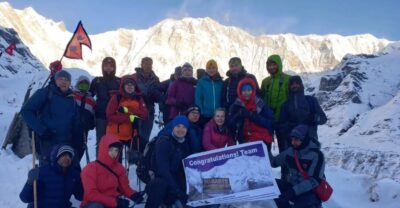
7 Day Iceland with Reykjavik Northern Light | Blue Lagoon | Golden Circle ……
Read our review →
7Day Serengeti Migration (Ndutu), Crater, Hot Springs & City Tour
Read our review →
7 Day Iceland with Reykjavik Blue Lagoon Snæfellsnes | Golden Circle | South….
Read our review →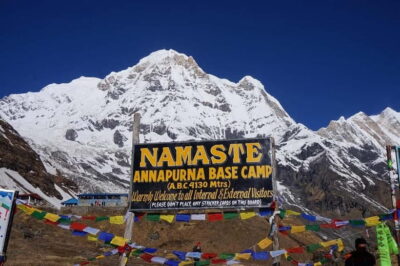
7 Days Annapurna Base Camp Trek from Pokhara with Hot Spring
Read our review →Browse the lists this tour appears in