
Review · THERMAL BATH TOURS
National Roman Museum and Diocletian Thermal Baths Walking Tour
Rome’s quieter museum deserves your afternoon. The National Roman Museum pairs superb Roman art with a striking second stop at the Baths of Diocletian, giving you a fuller picture of ancient Rome than ruins alone can provide. I especially like the chance to see the Boxer at Rest, Livia’s frescoed rooms, and the peaceful mosaics without the crush found at Rome’s biggest sights. I also like the guide-led context, which helps turn statues and floor patterns into stories rather than disconnected objects. The main drawback is the $323.21 price per person, especially if your main interest is the museum and you do not need a private guide.
This is a strong choice for anyone who wants ancient art explained at a human pace. The museum is close to Republic Square, the route is convenient, and the Baths of Diocletian add Michelangelo, Roman engineering, and social history to the visit. Allow up to three hours, and remember that one guide was reported as late and short on time, so punctuality and tour length may vary.
Key points to know before booking
- See Rome’s best ancient art away from the main crowds: Palazzo Massimo is often calm compared with the Vatican Museums and Colosseum.
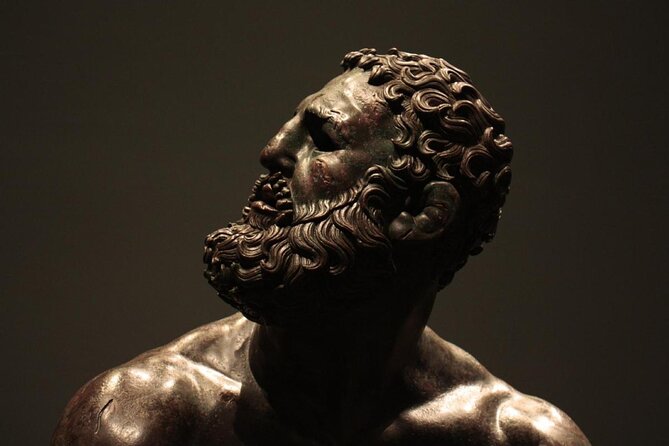
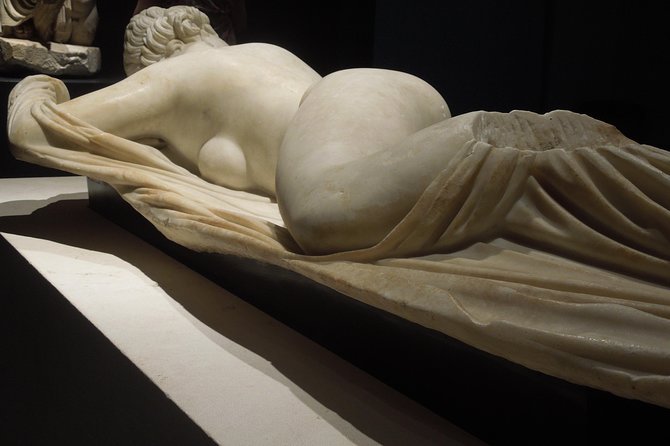
- Expect major sculpture highlights: The Boxer at Rest, Discus Thrower, and Sleeping Hermaphrodite are central reasons to come.
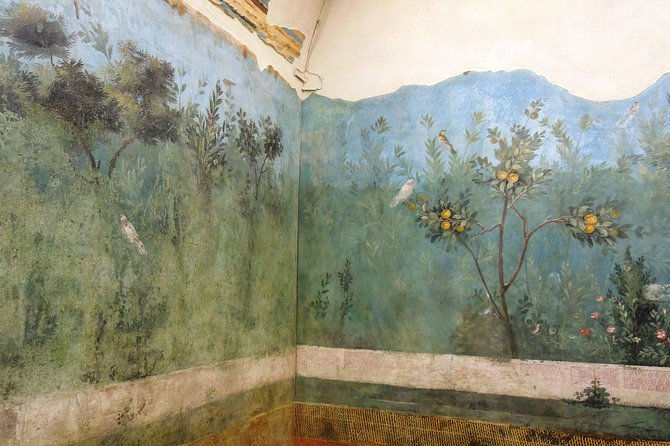
- Livia’s rooms are a special treat: Painted walls and garden frescoes show Roman domestic decoration at its finest.
- The Baths of Diocletian add scale: This enormous complex once included gyms, libraries, and a swimming pool for up to 3,000 people.
- Michelangelo reused the bathhouse: The Basilica of St. Mary of the Angels occupies part of the ancient structure.
- The private format suits focused questions: Guides including Matteo, Mattia, Serena, and Damiano have been praised for bringing art and architecture to life.
Why Palazzo Massimo is worth your Rome time
Rome’s famous ruins show walls, arches, roads, and temples. Palazzo Massimo shows how Roman art looked when it was new, colorful, polished, and used in daily life. That makes this museum a useful companion to the Forum and Colosseum, not just another stop on a long list of museums.
The collection covers the development of Roman artistic culture from the second century BC through the fifth century AD. Across four floors, you will find sculptures, mosaics, frescoes, coins, jewelry, and goldsmith work. The range matters because Roman art was not one fixed style. It changed with Greek influence, imperial fashion, private wealth, and religious life.
I like the setting for another reason: you can study important objects without the constant pressure found at Rome’s busiest museums. Several visitors described the museum as lightly visited and peaceful. That quiet is valuable when you are looking closely at a marble face, a tiny coin, or a mosaic made from hundreds of colored pieces.
The museum is only a few steps from Republic Square, so the meeting point is easy to reach by public transportation. You begin at the Palazzo Massimo alle Terme ticket office at Largo di Villa Peretti 2. Your guide meets you there, provides the entry ticket, and takes you past the regular line.
More Thermal Baths in Italy:
- Chianciano Terme: Theia Thermal Pools Entrance Ticket
★ 4.4 · 185 reviews - Milan: De Montel Thermal Bath Entrance Ticket
★ 4.6 · 89 reviews - Montecatini Terme Thermal Pool Entrance Ticket
★ 3.5 · 84 reviews
The first hour: sculpture, frescoes, and Roman daily life
The tour normally begins with the museum’s classical art collection. A guide can give you a route through the four floors and explain why particular objects matter, which is helpful in a museum with more material than you can absorb in one visit.
The Boxer at Rest is one of the major highlights. Unlike the idealized athletes often associated with Greek and Roman sculpture, this bronze figure shows strain, fatigue, and the marks of a hard life. Details such as the body position and facial expression make it easier to think about ancient sport as something physical and painful, not simply graceful.
The Discus Thrower gives you a different view of the classical body. It represents movement and balance, while the Boxer at Rest feels grounded and worn. Seeing the two in one visit lets you compare different ideas of strength, beauty, and public display.
The Sleeping Hermaphrodite adds another layer. Its reclining pose appears calm from one direction, while another viewpoint reveals the figure’s sexual ambiguity. A good guide can help you approach the work through Roman taste, mythology, and the long history of its interpretation without reducing it to a quick label.
The collection also includes mosaics and frescoes that often reward closer attention than the larger statues. Look for the precision of the floor designs and the small details that suggest wealth, household habits, and decorative fashion. The art is not only about emperors and gods. It also gives you clues about how Roman elites wanted their homes and public spaces to feel.
Coins, jewelry, and gold work provide a useful change of scale. After looking at monumental sculpture, you can see how Roman power and status appeared in objects small enough to hold. These displays help connect politics, money, craftsmanship, and personal adornment.
Livia’s frescoed rooms and the power of Roman interiors
The decorated rooms associated with Empress Livia are among the most memorable parts of Palazzo Massimo. Their frescoes show how Roman interiors could open onto an imagined natural world, with painted plants, gardens, and carefully arranged decoration.
These rooms are valuable because they preserve something the ruins often lose: color. At the Forum, you may see brick, stone, and fragments of marble. Here, you get a better sense of the finished interiors that surrounded wealthy Romans.
I would give the frescoes proper time rather than treating them as a quick passage between sculptures. The paintings help explain why the museum matters. Roman art was not limited to statues in plazas. It filled dining rooms, villas, baths, and private spaces with images designed to impress and entertain.
A guide can also connect the rooms to broader Roman customs and social life. That context was one of the most praised parts of the experience. Serena, for example, was credited with linking the museum’s history and architecture to present-day Rome, while Damiano was praised for explaining Roman and Greek sculpture, mosaics, and frescoes with real enthusiasm.
The Baths of Diocletian: ancient Rome at an enormous scale
If you choose the Baths of Diocletian portion, the tour continues to one of Rome’s largest ancient building complexes. The baths were built in 298 AD and could accommodate up to 3,000 people at once. This was not simply a place to wash. The complex included gyms, libraries, and a swimming pool, making it part of Roman social and cultural life.
That scale changes the way you think about the Roman Empire. A statue can show you an individual body. The baths show you infrastructure, organization, and the resources needed to operate a huge public facility. You begin to picture crowds moving through a carefully designed civic center rather than a single room with hot water.
The tour helps explain Roman bathing customs and the social role of the baths. This is especially useful if you have already seen Roman ruins but still find their daily purpose unclear. Here, the architecture gives you a better sense of how people met, exercised, relaxed, and conducted parts of public life.
The Baths of Diocletian are also a lesson in reuse. Ancient Rome was not preserved as a frozen display. Later generations changed its buildings, adapted its spaces, and gave old structures new purposes. That story continues inside the Basilica of St. Mary of the Angels.
More Museums in Italy:
- Hellisheiði Geothermal Exhibition: Entry and Audio Tour
★ 4.6 · 88 reviews - Geothermal Energy Exhibition Entry Ticket
★ 4.5 · 34 reviews - Full Day Ice Museum and Chena Hot Springs Tour
★ 4.4 · 32 reviews - Fire & Ice: Chena Hot Springs, Ice Museum + Aurora Adventure
★ 5.0 · 30 reviews
Michelangelo’s basilica inside the ancient bathhouse
Part of the bath complex was transformed by Michelangelo in 1561 for the Basilica of St. Mary of the Angels. This is one of the tour’s most unusual features because you are not simply looking at an ancient site beside a later church. The church occupies and reshapes part of the bathhouse itself.
The contrast is striking. Roman engineering created the huge bath complex, while Renaissance design worked within those ancient walls. Your guide can point out which architectural elements belong to the bathhouse and how Michelangelo used the existing structure.
This stop works best for people who enjoy layers of history. You can stand in a Christian basilica while reading the surviving scale and geometry of an imperial bath. The building is not only beautiful. It shows how Rome repeatedly built its future inside its past.
Several strong accounts of the tour singled out this church as a surprise. The bath complex can be difficult to grasp from a basic description, but seeing its size and then entering a church formed from its spaces makes the connection much clearer.
What the guide adds to the experience
The guide is the main reason to consider paying for this tour rather than visiting the museum alone. Ancient art can be impressive without explanation, but a strong guide gives you the story behind a pose, the purpose of a fresco, and the reason a building was reused.
The praised guides include Matteo, Mattia, Serena, and Damiano. Matteo was repeatedly described as friendly, enthusiastic, and especially good at explaining Roman-era art. Mattia was praised for setting a comfortable pace and allowing time for photographs. Damiano, who works at a university in art, was singled out for making Roman and Greek works feel alive.
That does not mean every tour will be identical. One account described a guide arriving late, appearing tired, and ending the museum portion sooner than expected. If you want a long, slow museum study session, say so early and keep an eye on the schedule.
The private format is a major advantage if you have specific interests. You can ask about sculpture, mythology, architecture, mosaics, or Roman domestic life instead of following a fixed lecture. The supplied details also mention group discounts and an English-language option, but the activity information identifies the booked experience as private, with only your group participating. Confirm the exact format and price for your date before paying.
Is $323.21 per person fair value?
At $323.21 per person, this is an expensive museum visit. The price is easier to justify if you are booking a private tour for people who care about ancient art and want a specialist guide. It is harder to justify if you only want quick entry and a short overview.
The value comes from several parts working together:
- Skip-the-line entry saves you from waiting at the museum entrance.
- A private guide can adjust the pace and answer questions.
- The tour covers both Palazzo Massimo and the Baths of Diocletian.
- The guide supplies the context that makes the art easier to understand.
- The museum is generally calmer than Rome’s most famous collections.
The price may work particularly well for a small family group, several friends, or a couple who would otherwise book separate guiding. Children must be accompanied by an adult, and most people can participate. Hotel pickup and drop-off are not included, so you must make your own way to Largo di Villa Peretti and back from the meeting point.
For a budget-conscious visit, you should compare the cost with a regular museum entry and a self-guided visit. The guided experience is about interpretation and convenience, not simply admission. If you already know Roman art well, you may prefer exploring independently. If Roman sculpture and architecture feel hard to place, the guide may be worth the premium.
Timing, meeting point, and pace
Plan on two to three hours. The stated itinerary gives about one hour to Palazzo Massimo and one hour to the Baths of Diocletian, with the remaining time allowing for the transition and guiding.
Meet at the Palazzo Massimo ticket office at Largo di Villa Peretti 2, near Republic Square. The tour ends back at the meeting point according to the provided details, although the description also says you bid farewell at the Baths of Diocletian. Because those details do not fully match, confirm the exact end point before the day of the tour.
The route is near public transportation, which makes the start practical for a morning or afternoon in central Rome. There is no hotel transfer, so build in enough time to reach the ticket office. Arriving early is sensible, especially since the guide’s punctuality affects a short tour more than it would a full-day outing.
Do not expect unlimited time in every room. The itinerary is compact, and the museum alone can reward much longer than an hour. If you want photographs, tell your guide. Mattia was praised for accommodating a guest who took plenty of pictures, but that kind of flexibility depends on the actual schedule.
Who should book this tour?
I would recommend it most strongly to:
- First-time Rome visitors who want more than the Colosseum and Forum.
- People who enjoy sculpture, mosaics, frescoes, coins, and Roman interiors.
- Couples or families who prefer a private guide to a large group.
- Visitors who want to avoid the city’s most crowded museums.
- Anyone interested in how ancient Roman buildings were reused by later Rome.
- History fans who want to connect art with everyday Roman life.
It may not suit you if you dislike museums, prefer to move quickly, or mainly want ancient ruins in the open air. The statues are a major focus, and one person found that emphasis less appealing than the mosaics and frescoes. The Baths of Diocletian add architectural drama, but the experience still begins with a serious art collection.
Should you book the National Roman Museum and Baths tour?
Book it if you want a focused, private introduction to Roman art and you value a guide who can explain what you are seeing. Palazzo Massimo is a smart alternative to Rome’s packed headline museums, and the combination with the Baths of Diocletian gives the visit real range: intimate frescoed rooms, famous sculpture, enormous public architecture, and a Renaissance church built into an ancient complex.
I would hesitate only because of the price and the limited time. At $323.21 per person, you should care about the subject and use the guide actively. Ask questions, request time with the objects that interest you, and confirm whether the Baths and exact end point are included in your booking.
Free cancellation is available if you cancel at least 24 hours before the start time. Changes or cancellations made less than 24 hours ahead are not accepted for a refund.
FAQ
Where does the tour begin?
It begins at the Palazzo Massimo alle Terme ticket office at Largo di Villa Peretti 2, Rome, close to Republic Square.
How long does the experience last?
The tour lasts approximately two to three hours. The listed itinerary allows about one hour at Palazzo Massimo and one hour at the Baths of Diocletian.
Is admission included?
Admission to the National Roman Museum, Palazzo Massimo is included. The itinerary lists admission to the Baths of Diocletian as free.
Is this a private tour?
The activity details identify it as a private tour with only your group participating. The overview also refers to private or small-group choices, so confirm the exact option when booking.
Is the tour offered in English?
Yes. The experience is offered in English.
Can I cancel for a full refund?
Yes, if you cancel at least 24 hours before the experience start time. Cancellations or changes made less than 24 hours before the start time are not accepted for a refund.
More Walking Tours in Italy
- Rotorua: Hell’s Gate Outdoor Mud Spa & Guided Walk
★ 4.7 · 1,140 reviews - Rotorua: Hell’s Gate Geothermal Walk
★ 4.4 · 217 reviews - Hell’s Gate Geothermal Walk
★ 4.5 · 120 reviews - From Krakow: Slovakia Treetop Walk, Zakopane & Thermal Spa
★ 4.7 · 110 reviews
Just added around Italy
- Thermal Baths natural hot spring and Greek Temple of Segesta★ 5.0 · 34 reviews
- Saturnia Thermal Spring Small Group Day Trip from Rome with Lunch★ 5.0 · 13 reviews
- Private Full-day Cascate del Mulino Hot Springs from Rome★ 5.0 · 31 reviews
- from Civitavecchia: Saturnia natural hot springs experience★ 4.0 · 9 reviews
- Day with Thermal Pool, SPA Access, Lunch & Massage★ 4.5 · 2 reviews
- Florence: Day Trip to the Saturnia Thermal Baths★ 4.7 · 32 reviews
- Saturnia: Terme di Saturnia Hot Spring Pools Park Day Ticket★ 4.3 · 60 reviews
- Rome to Saturnia ; Thermal Springs Day Trip with Lunch★ 4.3 · 6 reviews
Thermal Bath Tours, compared.

Széchenyi Spa Day Ticket with Optional Upgrades
Read our review →
Zakopane, Thermal Springs, Cable Car, Local Tasting
Read our review →



Krakow to Zakopane: Funicular, Tasting and Thermal Baths Day Trip
Read our review →
Rudas Turkish Bath or Spa Day Pass & 3-Course Meal
Read our review →Browse the lists this tour appears in