
Review · WALKING TOURS
Rotorua: Hell’s Gate Geothermal Walk
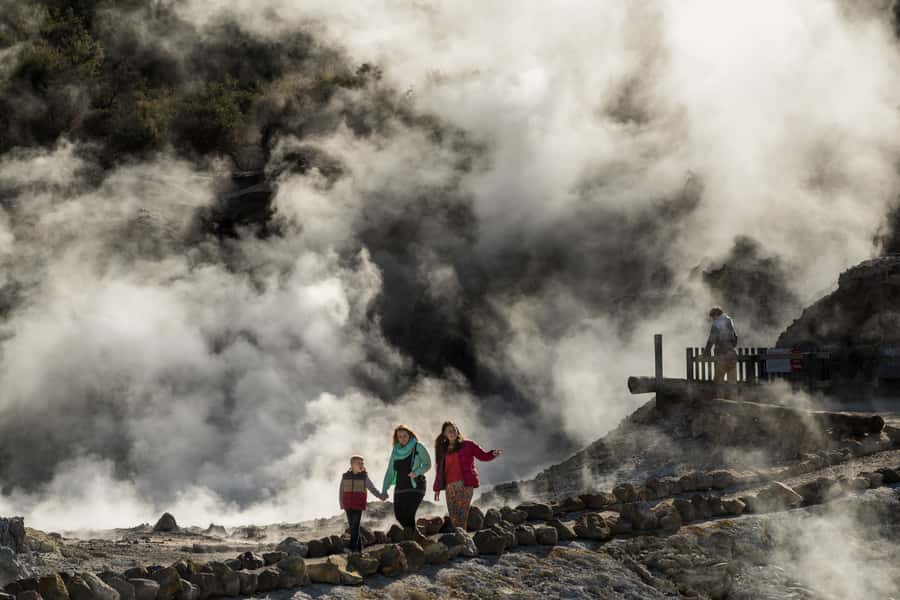
The earth here is genuinely alive. Hell’s Gate gives you a close look at Rotorua’s most active geothermal park, from bubbling mud and steaming fumaroles to hot lakes and sulfur deposits. I especially like the contrast between the harsh geothermal plain and the green bush walk, plus the chance to learn about Māori carving after the walk. The sulfur smell is strong, and it can cling to jewelry, so remove valuable gold and silver before entering.
I also like the choice between a self-guided route and a local guide. The map and written notes are enough for a good visit, but a guide adds context, humor, and meaning to what might otherwise look like a series of hot pools. The main caution is safety: this is an active, very hot geothermal area, and the reserve is not suitable for people with mobility impairments.
What makes Hell’s Gate worth your time
- New Zealand’s largest active mud volcano gives the walk a dramatic centerpiece, with boiling mud and sulfurous steam close to the marked path.
- The Southern Hemisphere’s largest hot waterfalls provide one of the reserve’s most unusual sights, especially when mist rises around the falls.
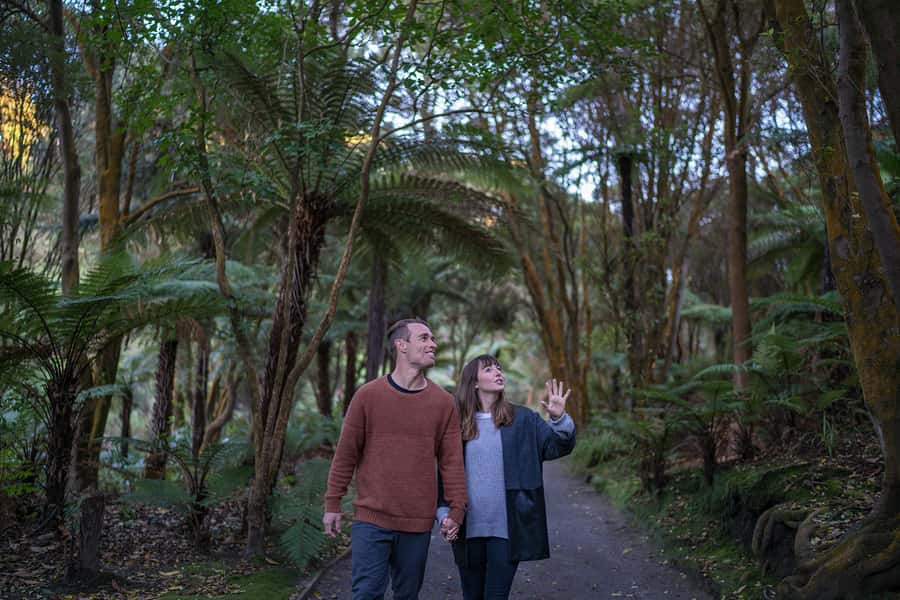
- A green bush section breaks up the geothermal plain, creating a striking contrast between native vegetation and steaming ground.
- The self-guided 2-kilometer route is easy to follow, thanks to the supplied map and descriptions.
- Guided walks add local stories and geological detail, with tours scheduled at 10:30 AM and 2:30 PM when available.
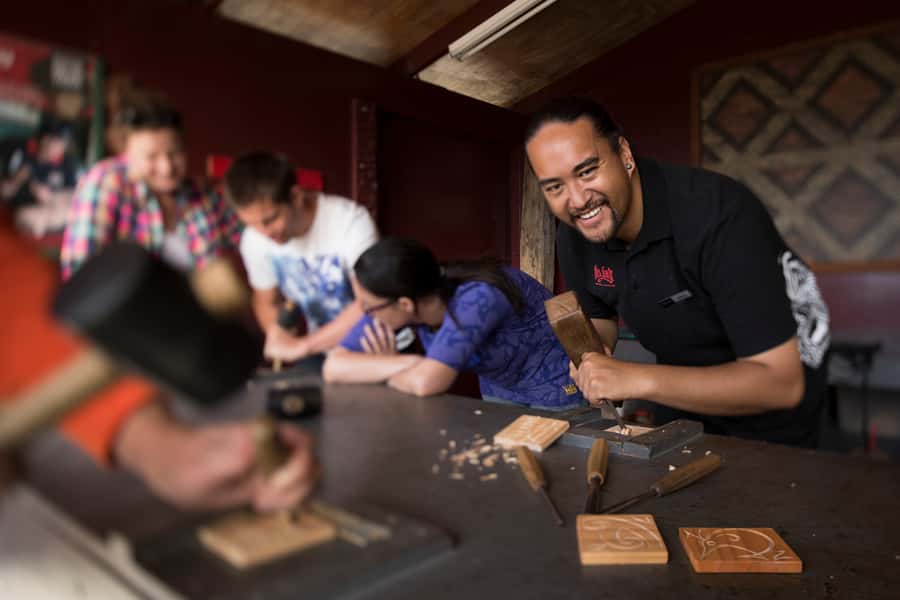
- Māori carving may be included after the walk, although the activity depends on availability and children must be at least 12 to take part.
Reaching Hell’s Gate from Rotorua
Hell’s Gate is about a 15-minute drive from central Rotorua, making it a simple addition to a day in town. From Rotorua, take State Highway 30 east. About five minutes past the airport, turn right toward Whakatane, then continue for 3 kilometers to the reserve.
That short drive matters because you do not need to give up a full day for this visit. The geothermal walk itself takes about an hour, though you should allow extra time if you join the guided tour, stop for photos, visit the cafe, or take part in carving or the mud foot pool if those activities are running.
You will need to arrange your own transport to the reserve. The meeting point is at Hell’s Gate Geothermal Reserve and Mud Spa, outside Rotorua’s city center. Check the exact start time before setting out, particularly if you want the guided walk rather than the independent route.
More Walking Tours in Rotorua:
- Rotorua: Hell’s Gate Outdoor Mud Spa & Guided Walk
★ 4.7 · 1,140 reviews - Hell’s Gate Geothermal Walk
★ 4.5 · 120 reviews - From Krakow: Slovakia Treetop Walk, Zakopane & Thermal Spa
★ 4.7 · 110 reviews
Choosing between the self-guided and guided walk
You receive a map for the reserve, and the self-guided route is quite manageable. The walk covers about 2 kilometers, with signs and descriptions explaining the geothermal features along the way. I would choose this option if I had limited time, wanted to move at my own pace, or preferred stopping often for photographs.
The written material covers the main pools and formations, though some people may find it a little brief. It gives you enough to understand what you are seeing, but it cannot respond to questions or connect each feature to Māori stories and local geology.
The guided tour is offered at 10:30 AM and 2:30 PM, subject to availability. The guided experience is listed as 1.5 hours, while the walk itself takes about an hour, so plan around the longer time if you book a tour. Guides named in visitor feedback include Liam, T, and Luke. Liam was praised for his warmth and humor, while T was remembered for combining information with a playful style. Luke was also described as engaging and well informed.
Those details point to the main value of the guide: not simply identifying a pool, but explaining why it behaves as it does and how geothermal activity shapes the plants, water, and ground around it. I would pick the guided option if this is your first geothermal visit or if you want more than photographs.
The first geothermal sights: steam, mud, and sulfur
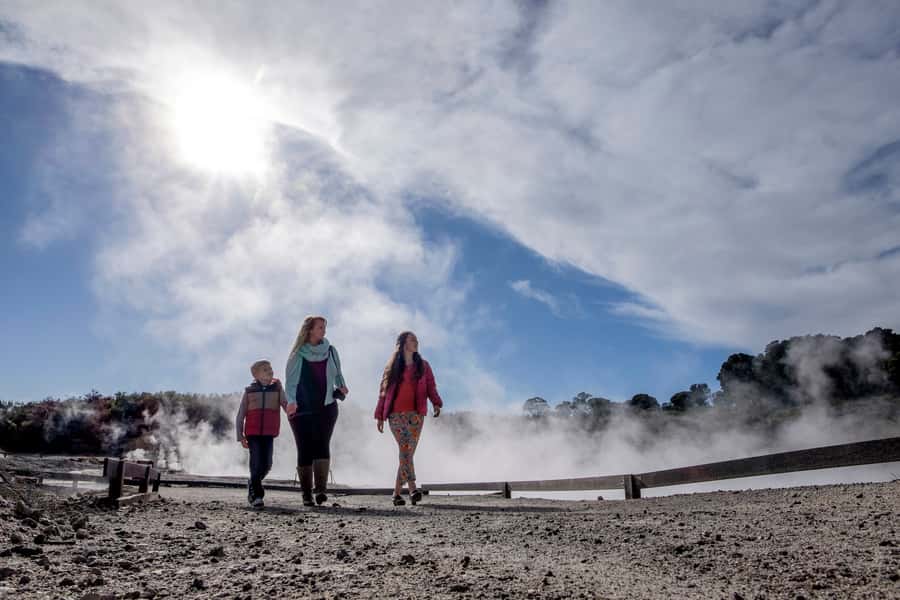
The walk brings you into the heart of an active geothermic field. You can expect steaming fumaroles, hot water lakes, sulfur crystals, mineral deposits, and pools that look calm from a distance but remain extremely hot.
Some water temperatures exceed 100 degrees Celsius. That is a useful reminder to stay on the marked route and keep children close. The fencing and paths are there for good reason, and the boiling mud is not a harmless puddle. One visitor felt that some fencing could be higher, so do not treat the path as a casual stroll with no need for care.
The smell is part of the experience. Sulfur produces the familiar rotten-egg odor, and it can be pungent. I would not call it unbearable, but you should expect it from the moment you reach the active areas. Young children may find the smell difficult, and anyone sensitive to strong odors should know that it is not something you can avoid by moving quickly through the reserve.
Rain can actually improve the atmosphere. The park operates in all weather, and rain adds steam, sheen, and changing patterns to the pools. Bring weather-appropriate clothing rather than assuming a sunny Rotorua forecast will hold. A rain cape is available to buy onsite, but it is not included.
New Zealand’s largest active mud volcano
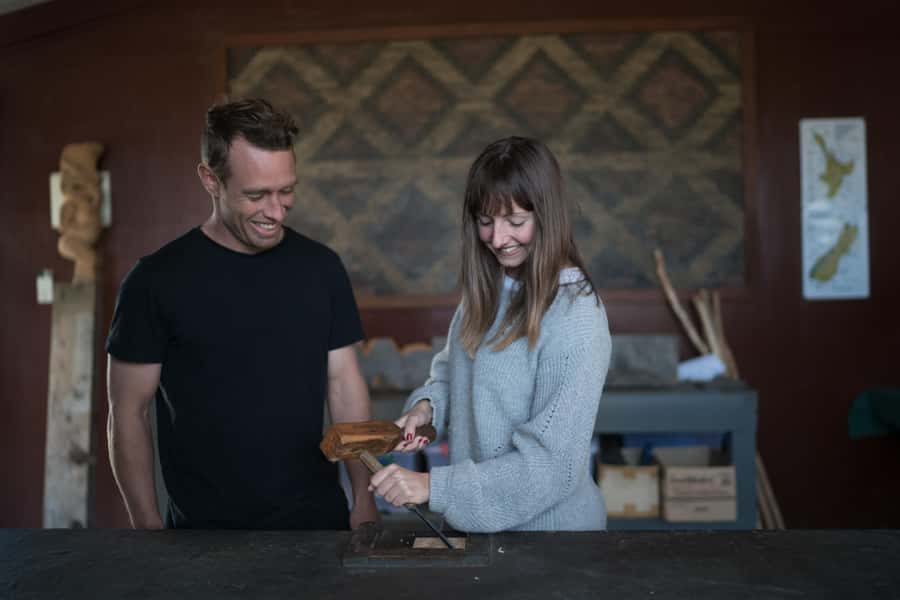
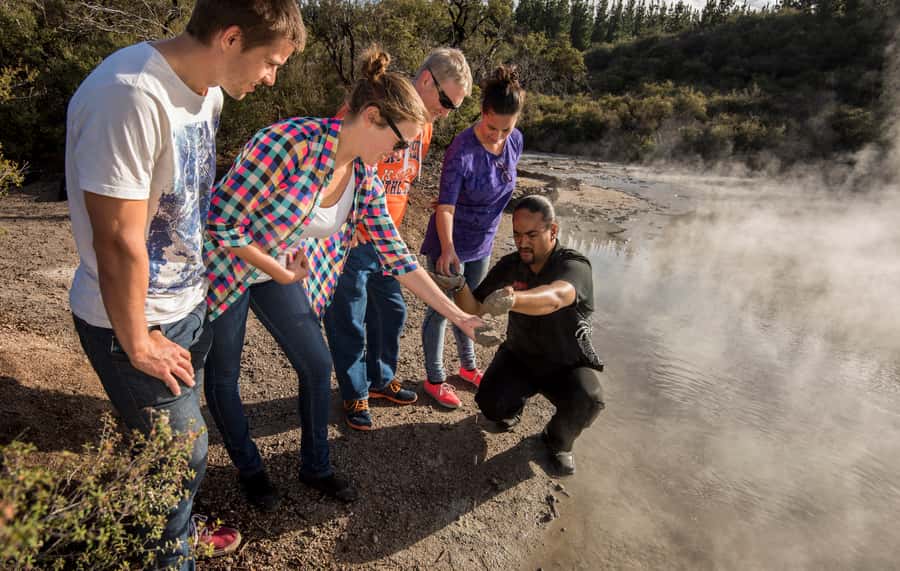
The mud volcano is one of the reserve’s main reasons to visit. Instead of the clear, dramatic plume of a geyser, you see thick mud bubbling and shifting. It is a slower spectacle, but it gives you a strong sense of the pressure and heat below the surface.
Hell’s Gate also has erupting waters and hot pools, though you should not expect a geyser show on the scale of some other geothermal attractions. One important point from the experience details is that this site does not have a hot water geyser. If a towering geyser is your main goal, check the features carefully before choosing Hell’s Gate.
What you do get is variety. The reserve combines bubbling mud, steaming vents, hot lakes, crystals, mineral deposits, and waterfalls. That mix makes the walk feel less repetitive than a route focused only on pools.
A few more places to soak around Rotorua worth a look
- Rotorua: Wai-O-Tapu Geothermal Park Entry Ticket
★ 4.6 · 2,601 reviews - Rotorua Rafting: Kaituna River Rafting Experience-Free Sauna
★ 4.9 · 401 reviews - Polynesian Spa Rotorua: Deluxe Lake Spa Hot Spring Bathing
★ 4.5 · 358 reviews - Polynesian Spa Rotorua: Deluxe Lake Spa Hot Spring Bathing
★ 4.5 · 227 reviews
The hot waterfalls and the bush walk
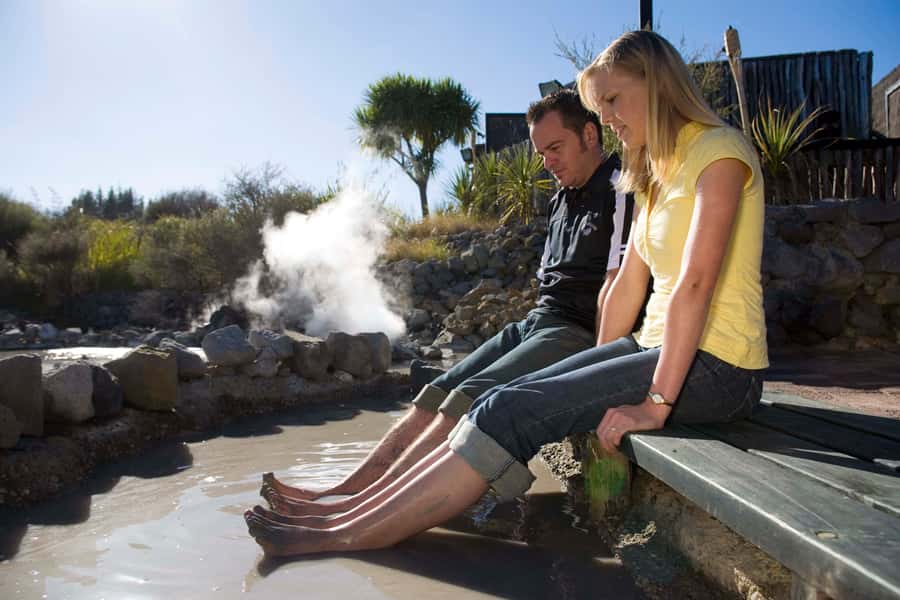
The hot waterfalls are one of Hell’s Gate’s most memorable features. They are described as the largest hot waterfalls in the Southern Hemisphere, and the sight is unusual because the water itself is part of the geothermal story rather than an ordinary forest stream.
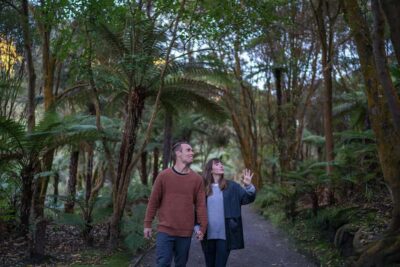
The waterfall section also helps explain why the reserve feels so different from a standard geothermal park. One moment you are looking at bare, mineral-stained ground and sulfur deposits. Soon after, the route reaches a vegetated area and bush walk. The contrast is sharp and photogenic, with green growth beside steam and hot water.
This change of scenery is one of the best reasons to complete the full route rather than turning back after the first pools. The walk is generally easy to follow, and several people found the 2-kilometer distance comfortable. Still, the reserve specifically says it is not suitable for people with mobility impairments, so do not assume that an easy path means full accessibility.
Land coral and the details worth noticing
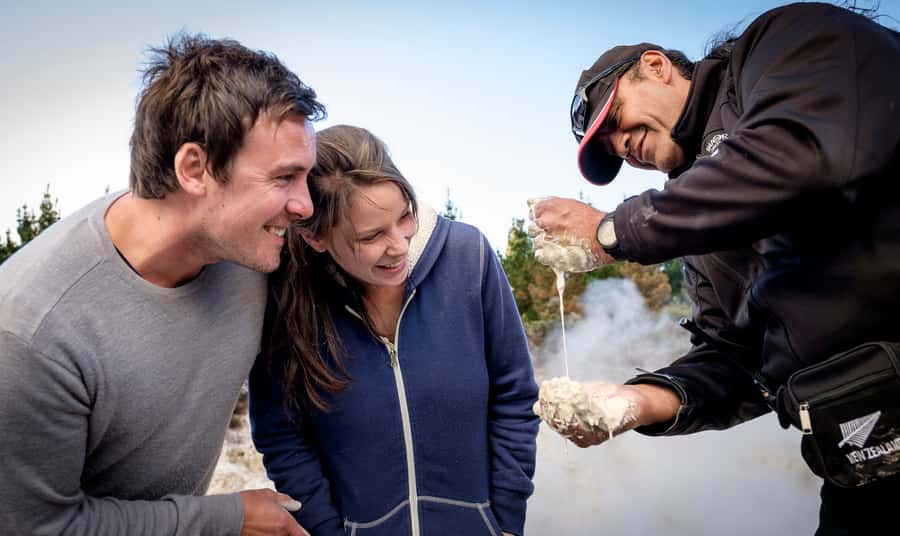
Hell’s Gate includes examples of land coral, another reminder that geothermal conditions can create formations unlike those found in an ordinary forest or stream. Your guide or the supplied material can help you spot details that are easy to miss when you are focused on the larger pools.
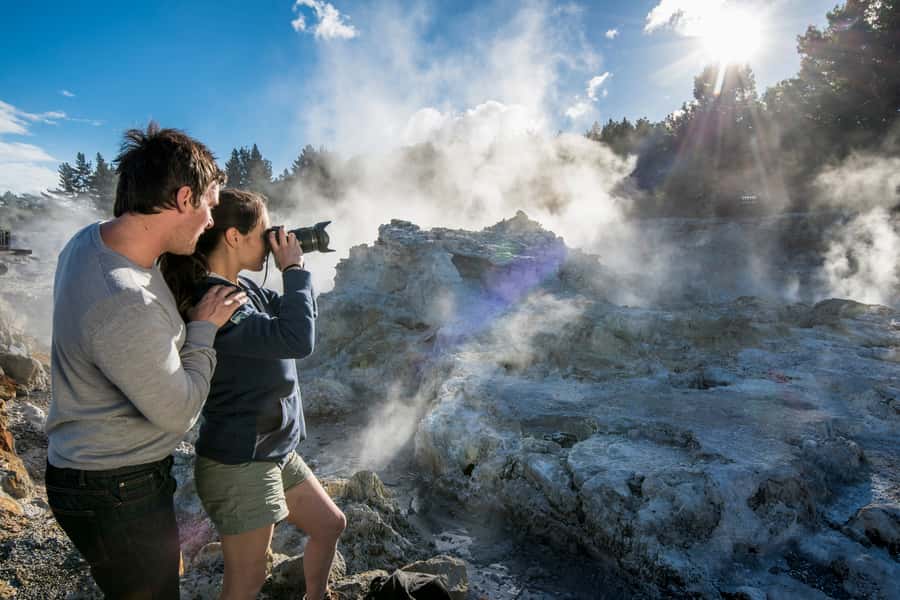
Look for color and texture rather than expecting every feature to erupt or move dramatically. Sulfur crystals, mineral deposits, steaming vents, and changing water surfaces reward a slower pace. The best visit is not a race through the reserve. Give yourself time to read the signs, listen to the bubbling mud, and take photographs from the safe viewing points.
The geothermal features also affect plant life. A good guide can explain why some areas support vegetation while others remain bare and hot. This was one of the more praised parts of the guided experience, since the reserve is not only about volcanoes and unusual smells. It is also about how plants survive around heat, minerals, and constantly shifting ground conditions.
Māori carving and the mud foot pool
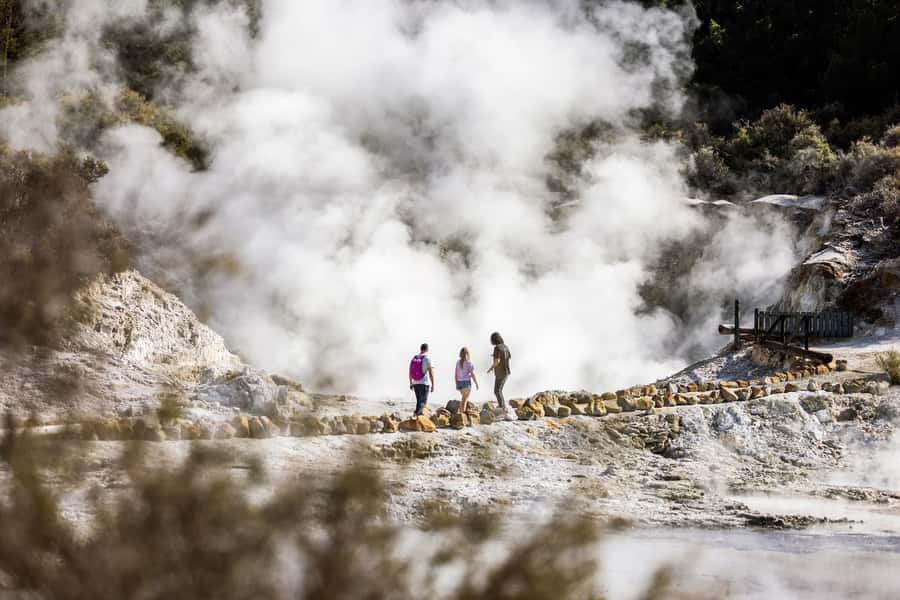
A complimentary Māori carving activity may follow the walk. It gives the visit a cultural element that a purely geological attraction would lack, and it can be a pleasant way to finish after an hour on the path. Children must be at least 12 years old to participate in carving.
The carving activity is subject to availability, so do not book the visit solely for that feature. Some people found it a memorable bonus, while the main attraction remains the geothermal reserve itself.
A mud foot pool may also be available. The activity details say it is subject to availability, so ask onsite rather than assuming it is part of every visit. The same applies to other optional elements connected with the mud spa.
If you wear jewelry, remove it before entering the geothermal area. Sulfur fumes and residue can tarnish gold and silver. This is an easy precaution and one that the reserve could explain more clearly before the walk begins.
Food, facilities, and timing
The site has a cafe, and coffee can be welcome after the walk, especially in wet or cool weather. Food choices are available onsite, which makes Hell’s Gate easier to fit into a half-day outing rather than treating it as a quick stop between meals.
Bring comfortable shoes, sunglasses, sunscreen, water, and clothing suited to the forecast. The walking route is outdoors and runs in all weather. A rain cape can be purchased onsite if needed, but I would rather arrive prepared than depend on the shop.
Smoking and drones are not allowed. Keep your camera or phone ready, but do not step beyond barriers for a better angle. The combination of boiling water, unstable geothermal ground, and sulfur fumes calls for ordinary care.
Is the $26 price good value?
The stated price is $26 per person, but the activity information also says the entry ticket is not included. Because those details do not match neatly, confirm exactly what your booking covers before paying. This is particularly important if you expect the carving or mud foot pool to be included.
For the walk alone, the value depends on what you want from Rotorua. You are paying for access to a highly active geothermal area, a marked route, interpretation, and the chance to see features such as the mud volcano and hot waterfalls. The self-guided format keeps the visit flexible, while the optional guide can make the geology and Māori connections much clearer.
I think it is good value for a short, unusual outing if you are already driving near the airport or Whakatane turnoff. It is less compelling if you have only one geothermal visit available and your priority is a large geyser display, since Hell’s Gate does not have a hot water geyser.
Free cancellation up to 24 hours before the activity and reserve-now, pay-later booking can help if your Rotorua plans depend on weather. Still, remember that rain does not close the park. In fact, steam and wet surfaces can make the geothermal scenes more atmospheric.
Who will enjoy this walk most?
I would recommend Hell’s Gate to adults, older children, photographers, and anyone curious about the forces beneath Rotorua. The route is short enough for a busy itinerary, but varied enough to feel like more than a quick photo stop.
Choose the guided walk if you want stories, explanation, and a lively personality. Choose self-guided if you have less time or prefer quiet observation. The map is useful, and the path is easy to follow, though the written explanations may not satisfy anyone looking for detailed science.
Families should consider the sulfur smell and the hot ground before booking. Children taking part in the carving must be at least 12, and all children need close supervision near the geothermal features. People with mobility impairments should choose another Rotorua activity.
Should you book Hell’s Gate?
Book it if you want a compact geothermal walk with strong variety: bubbling mud, hot waterfalls, sulfur deposits, bush, land coral, and Māori carving when available. I especially recommend joining the 10:30 AM or 2:30 PM guided tour if your schedule allows, since the explanations add real value.
Skip it if a major geyser eruption is essential, if strong sulfur smells bother you, or if you need an accessible route. Before booking, confirm the entry price, guided-tour availability, and whether carving or the mud foot pool will be operating. For most visitors who want to see Rotorua’s geothermal side without committing a full day, Hell’s Gate is a worthwhile and memorable choice.
FAQ
How long does the Hell’s Gate geothermal walk take?
The geothermal route takes about 1 hour to complete and covers roughly 2 kilometers. The guided tour is listed as 1.5 hours, so allow extra time if you join one.
Where is Hell’s Gate located?
Hell’s Gate is about a 15-minute drive from central Rotorua. Take State Highway 30 east, turn toward Whakatane about five minutes past the airport, and continue 3 kilometers to the reserve.
Are guided tours available?
Guided walks are available in English at 10:30 AM and 2:30 PM, subject to availability. You can also complete the route independently with the supplied map.
Does Hell’s Gate have a geyser?
No. The experience information specifically notes that there is no hot water geyser at Hell’s Gate. The reserve does have boiling pools, erupting waters, fumaroles, mud, hot lakes, and hot waterfalls.
What should I bring?
Bring comfortable shoes, sunglasses, sunscreen, water, and weather-appropriate clothing. The activity runs in all weather, and a rain cape can be purchased onsite.
Is the Māori carving activity included?
A complimentary Māori carving activity is listed, but it is subject to availability. Children must be at least 12 years old to take part.
Can children visit Hell’s Gate?
Children can visit, but the sulfur smell may be difficult for very young children. Children must be at least 12 years old to participate in Māori carving, and everyone should stay on the marked paths near the hot pools and mud.
Is Hell’s Gate suitable for people with mobility impairments?
No. The experience is listed as unsuitable for people with mobility impairments.
Just added around Rotorua
- Whakarewarewa: Self-Guided Geothermal Trails★ 4.5 · 41 reviews
- WAI-O-TAPU Geothermal, Rotorua – Group Day Tour Ex Auckland★ 4.3 · 4 reviews
- Private Tour Waiotapu Geothermal Shore Excursion up to 8 passengers★ 5.0 · 6 reviews
- Whaka Geothermal Trails Self-Guided Tour★ 3.5 · 44 reviews
- Lake Rotoiti Guided Hot Pools Kayak Trip★ 5.0 · 23 reviews
- Polynesian Spa Rotorua: Family Hot Pools and Freshwater Pool★ 3.5 · 14 reviews
- Wai Ariki Hot Springs and Spa Restorative Journey (2hrs)★ 4.5 · 73 reviews
- Lake Rotoiti Evening Kayak Tour including Hot Springs, Glowworm Caves and BBQ Dinner★ 5.0 · 60 reviews
Walking Tours, compared.
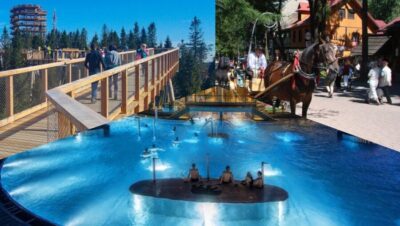

Kinabalu Park & Poring Hot Spring & Canopy Walk
Read our review →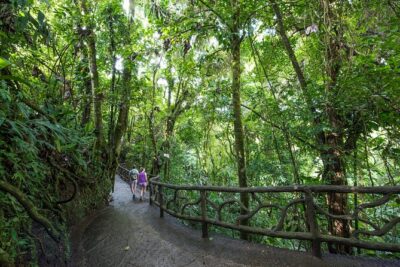
Arenal Hanging Bridges, Guided Walk, Hot Springs Optional
Read our review →
Seven Rila Lakes Snowshoe Walk & Thermal Spring Pools
Read our review →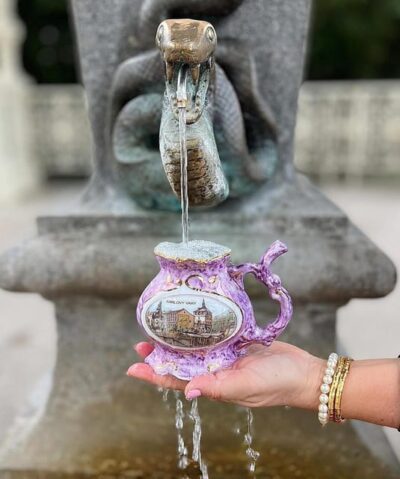
Karlovy Vary: Mineral Hot Springs Tasting and Walking Tour
Read our review →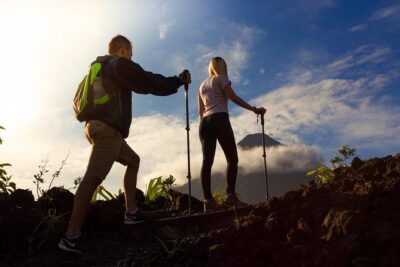
Arenal Volcano Expeditions Walk with Optional Hot Springs
Read our review →Browse the lists this tour appears in