
Review · WALKING TOURS
Philadelphia: Walking Tour of Colonial Nonsense
Founding history needs a little mischief. Philadelphia’s Colonial Nonsense tour adds humor and human flaws to the city’s famous landmarks, pairing the Liberty Bell and Independence Hall with stories about bad behavior, political gossip, and the ordinary people behind the Revolution. I especially like the story-first approach and the compact route through Old City and Society Hill. I also like that the tour covers about 1.5 miles in two hours, giving you a useful introduction without taking up a full day.
The main drawback is that most major sights are viewed from outside. Your $39 fee pays for the guide and walking tour, but not museum or attraction entry, food, drinks, or transportation. If you want to go inside Independence Hall, the Liberty Bell Center, or the Betsy Ross House, you will need separate plans and possibly separate admission.
Key things to know before you book

- Colonial Philadelphia with an edge: Expect stories about flawed Founding Fathers, questionable behavior, and legends that do not hold up.
- About 1.5 miles on foot: The route lasts two hours, so comfortable shoes matter more than fancy clothes.
- Major landmarks are exterior stops: You see the Liberty Bell and Independence Hall from outside, with time for photographs and explanation.
- Franklin gets plenty of attention: The route includes his grave, Franklin Court, and his print shop.
- Elfreth’s Alley is the main street visit: This historic lane offers a change of pace from monuments and political sites.
- Fayge is especially praised: The strongest comments describe her as personal, entertaining, thoughtful, and well prepared to answer many questions.
Why this Philadelphia tour takes a different route through the past

Philadelphia’s historic center can feel polished and ceremonial. Independence Hall, the Liberty Bell, and the names of famous founders often come wrapped in tidy national myths. This tour takes a less reverent approach.
The central idea is simple: the people who shaped the United States were not marble statues. They could be generous, petty, funny, cruel, brilliant, and inconsistent. The familiar story about George Washington and the cherry tree becomes a useful example of how Americans turn complicated people into easy symbols.
I like this angle because it gives you a way to look at the landmarks without treating every famous figure as a hero without faults. The tour promises affection as well as sass. That balance matters. You are not signing up for a lecture that only mocks the past, but you should expect jokes and gossip alongside the dates and political events.
The tour also brings attention to people outside the most famous names. The guide discusses the people who shaped Philadelphia and the regular people living through the colonial period. That makes the route feel less like a parade of Founding Fathers and more like a walk through a city where many different lives overlapped.
More Walking Tours in the USA:
- Hot Springs NP Self Guided Driving and Walking Audio Tour
★ 4.5 · 14 reviews - Philadelphia Walking Tour: A Lot of Colonial Nonsense
★ 5.0 · 6 reviews - Rotorua: Hell’s Gate Outdoor Mud Spa & Guided Walk
★ 4.7 · 1,140 reviews
Starting near Market Street and Benjamin Franklin’s grave
The stated starting location is 522 Arch Street, with meeting instructions directing you to meet out front on Market Street. Because those details use different street references, I would confirm the exact meeting spot before setting out. Arriving a few minutes early is wise, especially if you are unfamiliar with Philadelphia’s grid.
The first stop is Benjamin Franklin’s grave, used as a photo stop. It is a fitting opening because Franklin appears several times later in the walk. You begin with the man himself, then follow his public work, printing, and place in the city’s civic life.
The grave also sets the tone. Franklin is remembered as a printer, inventor, writer, diplomat, and statesman, but this experience is interested in the person behind the polished list of achievements. I would expect the guide to use the stop as a quick introduction rather than a long cemetery visit, since the full route includes many locations.
Seeing the Liberty Bell and Independence Hall from outside
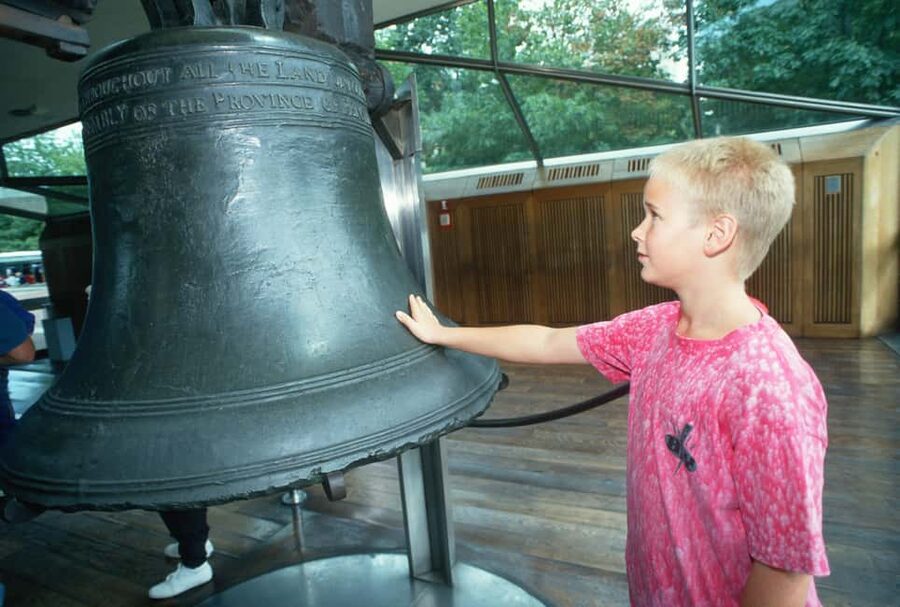
The Liberty Bell and Independence Hall are the route’s most famous sights. Both are photo stops, and the tour focuses on their exteriors rather than admission visits.
That distinction is important. You get the guide’s explanation and the chance to see the buildings as part of the walking route, but the $39 price does not include entry to museums or attractions. The tour is therefore best viewed as an orientation to the historic district, not a replacement for a full Independence Hall visit or a dedicated Liberty Bell stop.
The benefit is efficiency. You can hear how these sites fit into the Revolution and the city’s political story without spending the entire morning inside one attraction. If you have already seen the Liberty Bell or have limited time, this format lets you revisit the landmarks while adding context and humor.
If these are your main reasons for coming to Philadelphia, plan extra time before or after the walk. The tour will not provide the full indoor experience.
Washington Square Park and the city’s less peaceful stories
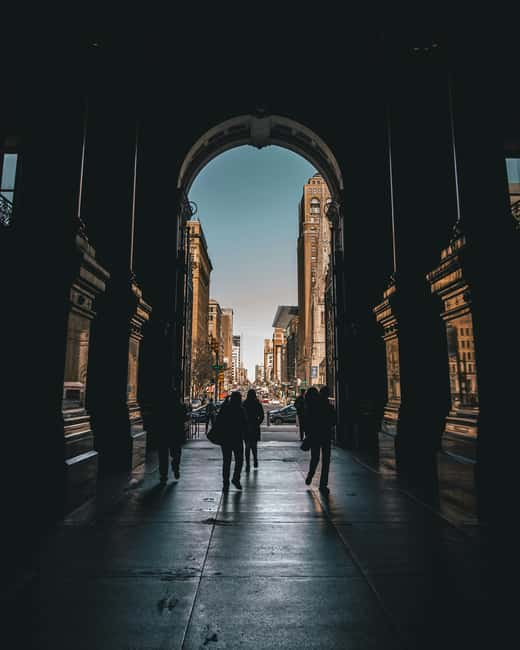
Washington Square Park is one of William Penn’s five original parks. Today it offers trees, paths, memorials, and a calm pause in the middle of the historic district. The tour uses the park for a different purpose as well, pointing toward the less peaceful stories connected with the site.
This is one of the route’s useful shifts in mood. The square may look serene, but the guide’s stories remind you that colonial and revolutionary Philadelphia was not simply a picturesque town filled with noble ideals. Political conflict, violence, inequality, and personal ambition were part of the setting too.
I would pay close attention here if you prefer history that links physical places to human behavior. The park is not just a place to take a photograph. It becomes a setting for asking who was remembered, who was ignored, and how later generations chose to tell the city’s story.
Same water, a different kind of day:
- Northern Lights & Chena Hot Springs Tour
★ 4.5 · 1,278 reviews - Hoover Dam & Hot Springs Kayak Tour with Lunch & Expert Guide
★ 5.0 · 318 reviews - Chena Hot Springs Day Tour
★ 5.0 · 264 reviews - Lake Yellowstone Half Day Kayak Tours Past Geothermal Features
★ 5.0 · 211 reviews
Carpenter’s Hall, the First National Bank, and civic Philadelphia
The walk continues to Carpenter’s Hall and includes a stop at the First National Bank. These locations broaden the tour beyond the two most famous landmarks.
Carpenter’s Hall is tied to the colonial political world and the events leading toward revolution. The First National Bank points to the financial and institutional side of the new country. Together, they help show that independence was not only a matter of speeches and battlefield courage. It also involved money, trade, organization, and arguments over how a new government should work.
The guide’s behind-the-scenes stories are likely most useful at stops like these. A building can look quiet and formal today, but the decisions connected with it involved competing interests and strong personalities. The tour’s focus on gossip and poor behavior gives you a reason to look past the stonework and ask what people wanted from one another.
Because the route is moving, do not expect a long indoor examination of each building. The value is the connection between several sites, not a detailed architectural study.
Franklin Court and Benjamin Franklin’s printing world
Franklin Court brings the walk back to Benjamin Franklin. The stop includes Franklin’s print shop, giving you a more practical view of his career.
Franklin’s public image often emphasizes inventions and clever sayings. A printing shop makes his work more tangible. Printing shaped how news, opinions, arguments, and political ideas moved through the city. It also helps explain why Franklin mattered as a communicator, not just as a statesman.
This part should appeal to you if you enjoy the working side of history. Instead of seeing Franklin only as a famous name, you can consider the tools and trade that helped him build influence. The stop also fits the tour’s larger point: national change came through everyday occupations and city institutions as much as through grand speeches.
The available information does not promise entry into every Franklin Court building, so I would treat this as a guided stop around the site and print shop area unless the guide says otherwise. The route is designed for explanation and photographs rather than a full museum visit.
Elfreth’s Alley brings colonial Philadelphia down to street level
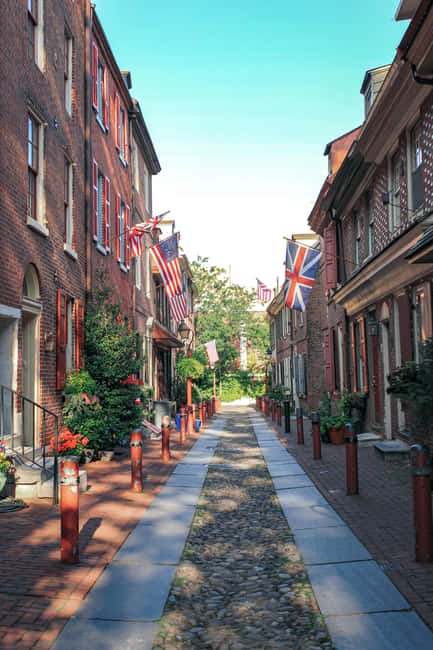
Elfreth’s Alley is the clearest residential section of the walk. Unlike the grand civic buildings, this narrow historic street shifts attention toward houses and daily life.
You visit the alley as part of the route, and it offers a welcome change after the monuments and political sites. The street helps you picture Philadelphia as a lived-in place rather than only the setting for famous events. Its value is visual and human: you are looking at the scale of an old neighborhood, not simply a national symbol.
I would slow down here and listen for details about the people who lived in the city, since the tour specifically aims to include ordinary residents. The walk’s human focus makes Elfreth’s Alley more than a quick photograph.
Keep in mind that the route is still moving. You should not assume that visiting the alley includes entry into private homes or a separate house museum. The attraction is the street itself and the stories attached to it.
Betsy Ross’s house and the final stop
The tour finishes at the Betsy Ross House, which is listed as a photo stop. Betsy Ross is closely tied to one of the country’s best-known flag stories, but the tour’s broader style suggests you will hear a more careful version of the story than a simple patriotic legend.
That makes this a fitting final location. The experience begins by questioning familiar myths and ends near another figure whose popular image has been shaped by tradition. You get one last chance to consider the difference between what people believe, what can be documented, and what later generations want to remember.
The activity ends back at the meeting point according to the practical details, while the route description places the finish at the Betsy Ross House. Since those details do not perfectly match, confirm the end point with the operator if you have a timed reservation, dinner booking, or museum visit afterward.
What $39 buys you, and what it does not
At $39 per person, this is a reasonable price if you want a guided introduction to several major sites in a short period. You are paying for two hours of live English-language guiding, a planned route, historical explanation, and the kind of personal storytelling that is hard to get from a map or audio guide.
The value is strongest if you want context. You see the exteriors of the Liberty Bell and Independence Hall, walk through Washington Square Park and Society Hill, visit Elfreth’s Alley, and connect Franklin-related sites with the city’s political story. That is a lot of ground for two hours.
The price is less appealing if you expect attraction admission. Entry fees are not included, and the major landmark stops are exterior visits. Food, drinks, and transportation to the start are also separate.
I would compare this tour with the cost of an ordinary guided walk, then ask what kind of history you prefer. If you like dates, formal speeches, and architectural detail, another tour may suit you better. If you want personality, gossip, and a guide who challenges neat patriotic stories, $39 offers a fair exchange.
The activity allows free cancellation up to 24 hours before departure for a full refund. You can also reserve now and pay later, which helps if your Philadelphia schedule is still shifting.
Walking comfort, weather, and the right pace
The route covers about 1.5 miles, but the distance is only part of the issue. You will stop often, listen, take photographs, and move between streets, parks, and historic sites. Comfortable walking shoes are a must.
Check the forecast and dress for the weather. The tour takes place outdoors, and the information provided does not promise indoor shelter at each stop. Rain, heat, or cold could affect how pleasant the two hours feel.
I would choose this experience early in a Philadelphia visit. It can help you understand the layout of Old City and Society Hill before returning to the places you want to enter. It also works well on a first day when you want a lively introduction rather than a long museum session.
The tour is offered in English. The guide can be contacted about accommodation requests, but you should raise those needs before booking rather than assume every request can be handled on the day.
Who will enjoy this tour most
I would recommend it to you if you:
- Like history told through personalities and unusual details
- Want a short route through Philadelphia’s major colonial sites
- Prefer humor and skepticism to formal patriotic storytelling
- Are comfortable walking 1.5 miles outdoors
- Want to see the famous landmarks before choosing which ones deserve an indoor visit
- Enjoy asking questions and discussing the human side of historical events
Families with older children may appreciate the lively stories, though the experience is not described as a children’s tour. History fans who want a serious, detailed visit inside every attraction should use this as an introduction, then book separate entries.
The guide matters here. Fayge receives especially strong praise for being personable, thoughtful, entertaining, and able to answer many questions. She is also praised for discussing what regular people were doing during the period, not only what famous leaders decided. If Fayge leads your departure, that personal approach appears to be one of the tour’s biggest strengths.
Should you book Philadelphia’s Colonial Nonsense tour?
Book it if you want Philadelphia’s famous landmarks with less ceremony and more personality. The route gives you Franklin, the Liberty Bell, Independence Hall, Washington Square Park, Carpenter’s Hall, Elfreth’s Alley, and Betsy Ross’s house in two hours, while making room for gossip and uncomfortable details.
Skip it if your priority is entering the attractions or receiving a technical lecture on architecture. You will need separate admission plans, and the walk itself stays focused on exterior views, storytelling, and photographs.
For most first-time visitors, I see this as a useful opening walk rather than a complete history day. It gives you the city’s basic shape, challenges a few comfortable myths, and helps you decide where to spend more time afterward.
FAQ
How long does the tour last?
The tour lasts two hours.
How far does the tour walk?
The route covers about 1.5 miles and involves a moderate amount of walking.
What language is the tour conducted in?
The live tour is conducted in English.
Where does the tour start?
The stated starting location is 522 Arch Street, with instructions to meet out front on Market Street. Confirm the exact meeting point before departure because both street references are provided.
Where does the tour finish?
The route description places the final stop at the Betsy Ross House. The practical details also say the activity ends back at the meeting point, so confirm the exact end point if your schedule is tight.
Do I enter the Liberty Bell and Independence Hall?
No entry is included. The tour visits the exteriors of the Liberty Bell and Independence Hall as photo stops.
Are attraction entry fees included in the $39 price?
No. Museum and attraction entry fees are not included. Food, drinks, and transportation to the starting point are also separate.
Can I cancel for a full refund?
Yes. You can cancel up to 24 hours in advance for a full refund. Reserve now and pay later is also available.
Just added around the USA
- Yellowstone Lake & Hot Springs / 3 Hour Morning or Twilight Tour★ 5.0 · 94 reviews
- Yellowstone, Grand Teton, and Hot Springs: Small Group 5-Day Tour★ 5.0 · 2 reviews
- Philadelphia Walking Tour: A Lot of Colonial Nonsense★ 5.0 · 6 reviews
- Natural Indoor Hot Spring and Spa Utah Crater Soak & Swim★ 4.5 · 20 reviews
- Spa Service: Hot Stone Body Massage with Private Sauna★ 4.5 · 13 reviews
- Secret Desert Hot Springs: 4-Hour Private Adventure★ 5.0 · 2 reviews
- Hot Springs Hop Scavenger Hunt★ 4.5 · 10 reviews
- Hot Springs NP Self Guided Driving and Walking Audio Tour★ 4.5 · 14 reviews
Walking Tours, compared.


Kinabalu Park & Poring Hot Spring & Canopy Walk
Read our review →
Arenal Hanging Bridges, Guided Walk, Hot Springs Optional
Read our review →
Seven Rila Lakes Snowshoe Walk & Thermal Spring Pools
Read our review →
Karlovy Vary: Mineral Hot Springs Tasting and Walking Tour
Read our review →Browse the lists this tour appears in