
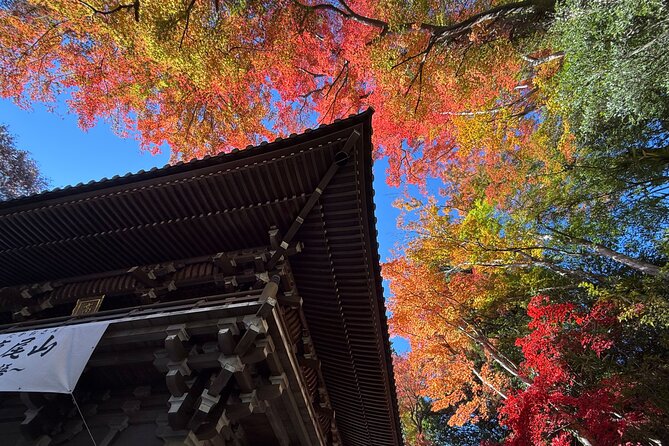
Review · JAPANESE ONSEN TOURS
Samurai Guide Sho’s Mt. Takao Hike, Temple & Onsen from Shinjuku
Tokyo has a mountain day hiding in plain sight. Samurai Guide Sho’s Mt. Takao experience pairs a well-managed train journey with a 1.5-hour forest hike, Yakuo-in Temple, mountain snacks, and a tattoo-friendly hot spring. I like the small group size, capped at five, and Sho’s calm help with Shinjuku Station, Suica cards, transfers, and route changes. The main catch is cost: the $117.27 tour price does not include train fare, the chairlift, the onsen, or food.
This is not a sword show or a costumed photo stop. Sho wears an indigo haori and frames the day as quiet training, with time for reflection, nature, and shared conversation. The steady pace and quieter route options have earned especially strong praise, though you should be comfortable with an uphill hike and extra walking.
Key points to know before you book
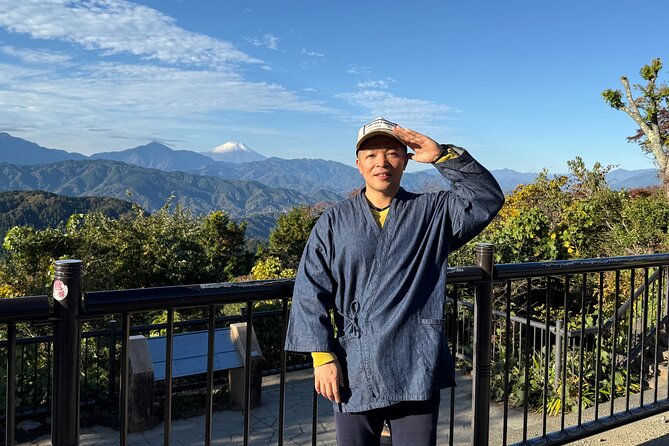
- Small-group mountain outing: The tour has a maximum of five people, which allows Sho to adjust the pace and offer personal help.
- Shinjuku transport support: Sho handles the maze of Shinjuku Station, Suica use, transfers, and alternate routes if trains are delayed.
- A real uphill walk: The main hike takes about 1.5 hours and requires moderate fitness. Sneakers are fine, but comfortable shoes are essential.
- Mt. Fuji is weather-dependent: Clear conditions may reveal Fuji from Ōmiharashidai Viewpoint, but the view is never guaranteed.
- Chairlift or downhill walk: The return lift costs ¥490, but crowds may mean a 30 to 40-minute walk instead.
- Onsen with a practical extra: The tattoo-friendly hot spring costs ¥1,800 and includes two towels. You may also choose to relax or eat there without bathing.
Why this Mt. Takao day works well from Tokyo
Mt. Takao gives you a useful change of pace without requiring a full day of long-distance travel. From Shinjuku, the train ride to Takaosanguchi takes about an hour and ten minutes, putting a wooded hiking area within easy reach of the city.
What makes this outing different is the combination of practical help and gentle theme. Sho has more than 20 years of experience with railways and mountaineering. His modern-samurai idea uses a Suica card rather than a sword, which is a playful way to describe his role as your guide through Tokyo’s transport system and the mountain paths.
I like that the experience does not depend on a performance. The samurai angle is quiet. You walk, listen, learn about the area and Japanese railway customs, and share the day with a very small group. Sho also takes one photo with your own camera, described as a simple record of finishing the route rather than a staged souvenir session.
The tradeoff is that the tour requires you to pay several costs on the day. The listed price is $117.27 per person. Train fare for the round trip is ¥1,000, the lift is ¥490, and the onsen is ¥1,800. Food and drinks cost extra. That means the advertised price is not the complete cost of the day, so budget for at least ¥3,290 more before snacks, meals, or beer.
More Hot Spring Hikes in Japan
- Full Day Hiking Tour at Mt.Takao including Hot Spring
★ 5.0 · 52 reviews - Kyoto: Hike and Hot Springs in Kurama
★ 5.0 · 49 reviews - Traverse Outer Rim of Hakone Caldera and Enjoy Onsen Hiking Tour
★ 5.0 · 30 reviews
Meeting Sho at the Suica Penguin in Shinjuku
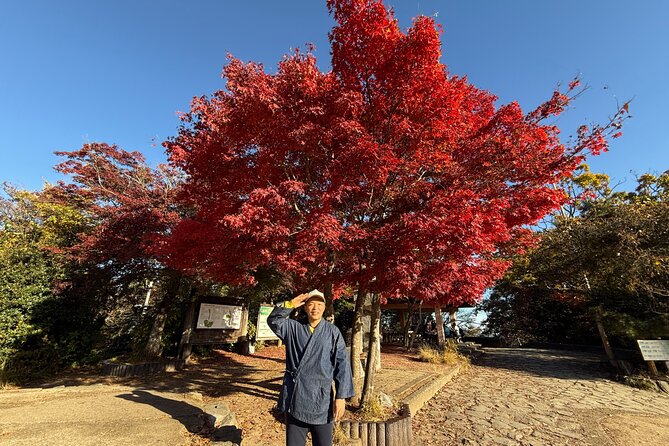
The meeting point is the Suica Penguin statue near JR Shinjuku Station’s New South Gate. Search for Suica Penguin Statue in Google Maps, and arrive ready for a 9:30 a.m. start.
This is a smart place to meet, since Shinjuku can be confusing even when you know Tokyo well. Sho’s railway background is one of the strongest reasons to choose this tour. He assists with ticket purchasing, Suica use, the correct platforms, and transfers. If a train is delayed or a service is suspended, he can suggest another route instead of leaving you to puzzle it out alone.
You still need to bring your own train fare. The transport part is not a private vehicle transfer. You ride public trains with Sho, which gives the trip a more local feel and lets you see how the city opens into western Tokyo.
The return is also designed around the same meeting point, with the day ending in Shinjuku at about 5 p.m. That timing leaves room for an evening meal or another Tokyo plan, though delays, weather, crowds, and the group’s walking speed can affect the schedule.
Riding the train to Takaosanguchi
The train ride takes roughly 1 hour and 10 minutes. It is not just dead time before the hike. Sho can explain railway use and history along the way, while making sure nobody misses a transfer or gets turned around in the station.
This support is especially useful if you are still learning Tokyo’s rail system. Shinjuku is large, and a small mistake at the beginning can cost time and energy. Here, the railway portion becomes part of the experience rather than an obstacle.
The limitation is simple: this is a group public-transport outing, not a private car tour. You should expect normal train travel and the need to follow Sho’s instructions through the station. The benefit is that you learn a useful Tokyo skill while heading toward the mountain.
Hiking the Waterfall Training Path
The central physical challenge is about 1.5 hours of uphill hiking. The route uses an old trail associated with monk training and passes a waterfall. The setting gives the samurai theme some substance, since the focus is on discipline, quiet effort, and moving through the mountain rather than rushing to a viewpoint.
Sho selects the route according to weather, crowd levels, and the group’s condition. If a path is busy, he may switch to a less crowded option. He also adjusts the pace so the hike feels manageable for the whole group. This flexibility received the clearest praise in the feedback, with strong approval for the calm rhythm and uncrowded winter routes.
You do not need specialist hiking gear. Sneakers are acceptable, but do not treat this as a flat city walk. Bring water, light snacks, rain gear, and clothing suitable for the season. Winter requires proper cold-weather protection. You should also take responsibility for your own health, injuries, and belongings.
The tour suits someone with moderate physical fitness. It may not suit you if you want a completely relaxed sightseeing day with little exertion. There is a genuine climb, followed by additional walking around the summit, temple, and transport areas.
More Onsen Tours in Tokyo
- From Tokyo: Private Tour to Fuji/Hakone – Onsen, Art, Nature
★ 5.0 · 116 reviews - Mt. Fuji, Hakone Private Tour from Tokyo – Onsen, Arts and Nature
★ 5.0 · 79 reviews - Mt. Fuji 5th, Oshino Hakkai, Onsen Full-Day Trip From Tokyo
★ 4.5 · 50 reviews - Tattoo-friendly open-air Onsen & drink
★ 5.0 · 25 reviews
Reaching Ōmiharashidai Viewpoint and Mt. Fuji
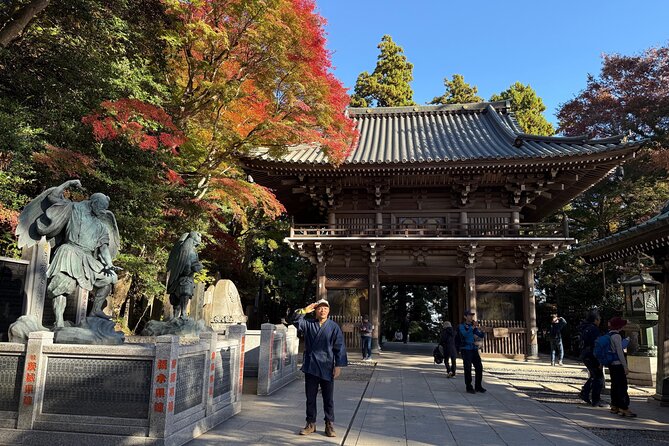
After the climb, you spend about 30 minutes at Ōmiharashidai Viewpoint near the summit of Mt. Takao. On a clear day, Mt. Fuji may appear in the distance. The view depends heavily on weather, so you should see it as a possible reward rather than a promise.
The summit stop is also a practical rest point. Depending on crowds and conditions, Sho may guide you toward mountain food. Local snacks can include dango, and later at Yakuo-in you may find treats such as matcha ice cream. Food availability can change, especially in light rain or busy periods, so keep a snack in your bag.
A clear Fuji view can become the visual high point of the day, but the hike itself remains worthwhile when clouds cover the mountain. The path, waterfall, fresh air, and slower pace provide the main experience. This is a good reason not to book solely for a Fuji photograph.
Visiting Yakuo-in Temple
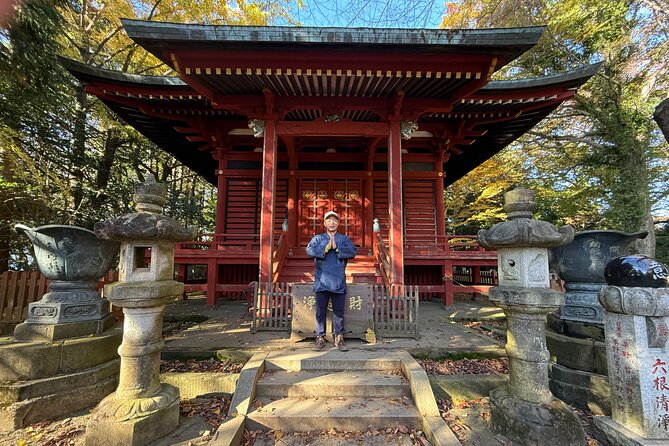
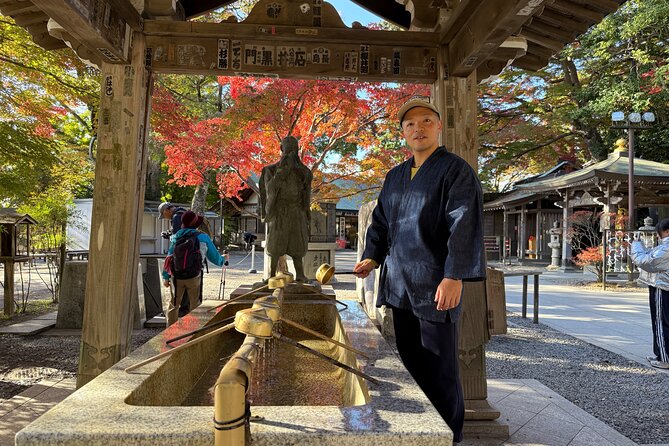
The walk continues to Yakuo-in Yuki-ji Temple, where you have about 30 minutes. Sho explains prayer customs and helps you approach the temple respectfully. That guidance matters because it lets you take part without guessing when to bow, where to offer a prayer, or how to behave around the religious spaces.
The temple stop also fits the tone of the day. Rather than rushing through a famous site, you have time to pause after the climb and understand what you are seeing. The samurai theme feels most natural here, though it remains a framing device rather than a historical reenactment.
You may find dango, matcha ice cream, charms, and other small purchases around the temple grounds. Some shops there may accept cash only, so carry some yen even if you normally use a credit card or Suica. The tour price does not cover personal food, drinks, or temple purchases.
Descending by chairlift, if the crowds allow
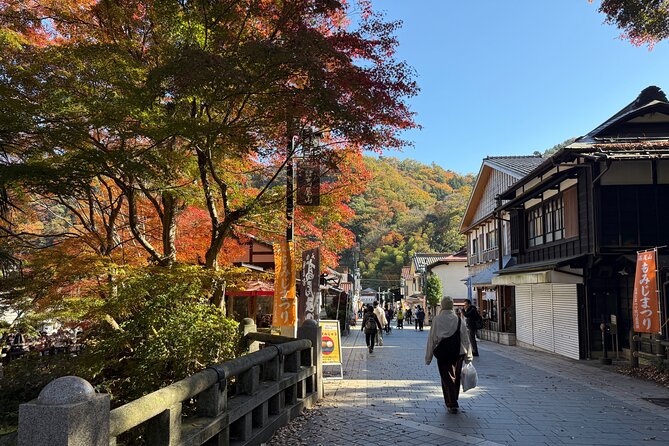
The planned descent is by chairlift from Yamagami Station and takes about 20 minutes. After an uphill walk, the ride gives your legs a break and offers a gentle breeze on the way down. The lift costs ¥490 per person and is not included.
This part is not guaranteed. During cherry blossom season, autumn foliage season, or other busy periods, the wait may be too long. In that case, the group walks down Trail No. 1 at a relaxed pace, usually 30 to 40 minutes.
That change is worth understanding before you book. The downhill walk is shorter than the main ascent, but it still adds effort after several hours outside. Sho’s crowd-based planning is useful, but you should not assume the lift will always be available.
Ending at a tattoo-friendly onsen
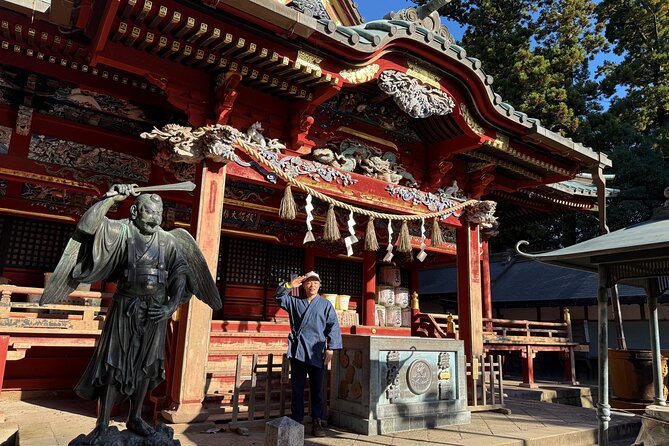
The final major stop is TAKAO36SAUNA, where you have about 1.5 hours. The facility offers a tattoo-friendly hot spring, which removes a common concern for many visitors who may otherwise be unable to use traditional Japanese bathing facilities.
Onsen entry costs ¥1,800 and includes two towels. You may choose not to bathe. In that case, you can relax or enjoy food at the facility instead, so the stop is not wasted if soaking is not your preference.
The site also has an on-site brewery with draft craft beer, including seasonal selections. Beer is available only to people aged 20 and over under Japanese law. Food and drinks are extra, so check your budget before ordering freely.
Bring a change of clothes for after the bath. Although two towels are included, the preparation advice also recommends bringing a towel, water, snacks, and rain gear. The most useful item after a hike and hot spring is probably dry clothing, especially in cooler weather.
If the hot spring is closed, the plan changes to a nature-focused museum, though that replacement may also be closed. In severe weather, the hiking plan can change to a round-trip cable car ride, Yakuo-in, a nature museum, and the onsen if possible. Light rain does not automatically cancel the day, but mountain food facilities may close.
What the $117.27 price really buys you
The price makes the most sense if you value guidance rather than simply transport and admission. You are paying for a small group, a railway professional who can manage Shinjuku and delays, a Mt. Takao guide who changes the route when needed, and help with hot spring customs and local food.
The cost is less attractive if you are already comfortable navigating Tokyo trains and hiking Mt. Takao alone. You would still need to pay for transport, the lift if used, the onsen, and food, but you could arrange the day independently.
The small group is important. With no more than five people, Sho can monitor pace, explain details, and help with ticket or transfer questions. The feedback repeatedly highlights smooth transport, friendly communication, and a relaxed hike. One winter outing was especially quiet, with routes that avoided the busiest areas.
You should also know that the tour accepts reservations until 7 a.m. on the day, subject to availability. It offers free cancellation up to 24 hours before the start time. Poor weather may lead to a date change or a full refund if the experience is canceled.
Who should choose this experience
I would recommend this outing if you want nature, a temple, and a hot spring without planning every train and trail detail yourself. It is particularly useful for first-time visitors who find Shinjuku Station intimidating or who want help using a Suica card.
It also suits solo visitors and couples who prefer a small group rather than a large bus tour. Sho’s calm approach and ability to explain railway customs make the day feel personal without turning it into a theatrical show.
You should think twice if you dislike uphill walking, want a guaranteed Mt. Fuji view, or prefer a low-cost independent day. You should also be comfortable with schedule changes caused by weather and crowds. The tour is for people aged 18 and over because of the hot spring policies.
Should you book Samurai Guide Sho’s Mt. Takao hike?
Book it if you want a carefully guided day with transport help, a real mountain walk, temple customs, and a tattoo-friendly onsen. The best parts are Sho’s steady pace, his ability to avoid crowded routes, and the reassurance of having a railway expert beside you from Shinjuku to the mountain and back.
Skip it if you only want a cheap hike or if you are happy to manage trains, tickets, food, and temple etiquette on your own. Also allow for the extra ¥3,290 in listed transport and onsen costs, plus food. For the right visitor, this is a thoughtful way to leave central Tokyo for a day without giving up practical support.
FAQ
Where does the tour begin?
It begins at the Suica Penguin statue near JR Shinjuku Station’s New South Gate. Search Suica Penguin Statue on Google Maps to find the meeting point.
What time does the tour start and finish?
The start time is 9:30 a.m. The experience is scheduled to finish back in Shinjuku at about 5 p.m.
How long is the hike?
The main uphill hike takes about 1.5 hours. Additional walking is required around the summit, temple, and transport areas.
Do I need hiking equipment?
No specialist hiking gear is required. Sneakers are fine, but comfortable shoes are important. Bring water, light snacks, rain gear, and suitable seasonal clothing.
Is Mt. Fuji guaranteed?
No. Mt. Fuji may be visible from Ōmiharashidai Viewpoint when the weather is clear.
What costs extra?
Round-trip train fare costs ¥1,000 per person, the chairlift costs ¥490, and onsen admission costs ¥1,800. Personal food and drinks are also extra.
Can people with tattoos use the hot spring?
The planned hot spring is tattoo-friendly. Bathing is optional, and people who do not bathe may relax or eat at the facility.
What happens in bad weather or large crowds?
In light rain, the tour may continue, though some mountain food facilities may close. Severe weather can replace the hike with a cable car ride, temple and museum visits, and time at the hot spring. If the chairlift is too crowded, the group walks down Trail No. 1 for about 30 to 40 minutes.
More Hot Spring Hikes in Tokyo
- Bali: Mount Batur Sunrise Guided Hike and Natural Hot Spring
★ 4.8 · 9,284 reviews - Mount Batur Sunrise Hike and Natural Hot Spring Option
★ 5.0 · 1,927 reviews - Private Tour Mount Batur Sunrise Trekking and Natural Hot Spring
★ 5.0 · 431 reviews - Mount Batur Sunrise Hike, Breakfast & Hot Spring
★ 5.0 · 316 reviews
Just added around Tokyo
- Japanese Head Onsen and Scalp Massage Retreat in Tokyo★ 4.5 · 2 reviews
- Tokyo Local Tattoo Friendly Public Bath Experience★ 5.0 · 4 reviews
- Mt Fuji Small Group 1 Day Tour Kawaguchi and Yamanaka with Pickup★ 5.0 · 4 reviews
- Mt. Fuji Tours to Lake Kawaguchi and Yamanaka Onsen English Guide★ 4.5 · 4 reviews
- Mt. Fuji to Lake Kawaguchi, Lake Yamanaka and Onsen Day Tour★ 4.5 · 3 reviews
- Onsen Spa in Tokyo and Asakusa Bar Hopping with Local Guide★ 5.0 · 3 reviews
- Tattoo-friendly open-air Onsen & drink★ 5.0 · 25 reviews
- Private Tour to Snow Monkey, Zenkoji Temple & Hot Springs Nagano★ 4.0 · 2 reviews
Japanese Onsen Tours, compared.
Himeji Castle, Arima Onsen & Mt. Rokko Day Tour
Read our review →
Private Tour to Fuji/Hakone – Onsen, Art, Nature
Read our review →
All-Day Pass to Yunomori Sathorn Onsen Bath and Spa
Read our review →
Mt. Fuji, Hakone Private Tour from Tokyo – Onsen, Arts and Nature
Read our review →
From Fukuoka: Mount Aso, Kurokawa Onsen, and Shrine Tour
Read our review →
Private Nagano 1-Day Tour:Snow Monkeys,Zenko-ji,Obuse,Sake,Onsen
Read our review →Browse the lists this tour appears in