
Review · JAPAN HOT SPRINGS
Wellness in Saitama: Takedera Blowing Zen Meditation & Hot Spring
Quiet begins just outside Tokyo. This six-hour Saitama outing pairs Takedera’s bamboo forest with the rare art of suizen, or blowing Zen meditation, before sending you to a hot spring by Miyazawa Lake. I like the small maximum group of six and the personal instruction from shakuhachi musician Mr. Aoyama. I also like that the experience reaches a less touristy corner of Japan without requiring you to arrange several trains and local transfers yourself.
The main drawback is the price: $224.45 per person is a serious half-day expense, especially since lunch costs extra. The spa also has a strict no-tattoo rule, so check that detail before booking. If you want temples, quiet nature, unusual cultural practices, and a long soak more than a packed sightseeing schedule, this is a thoughtful choice.
Key Points to Know Before You Go
- Takedera means Bamboo Temple: The temple combines Shinto and Buddhist traditions with a peaceful bamboo forest in Hanno City.
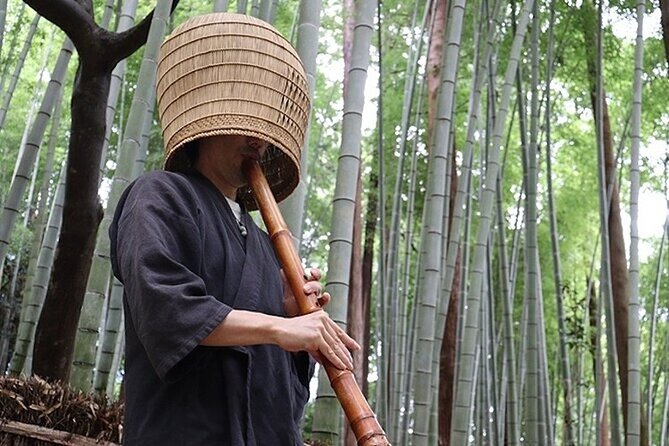
- Suizen is unusually rare: Mr. Aoyama introduces you to the shakuhachi and the Zen practice of controlled breathing through the flute.
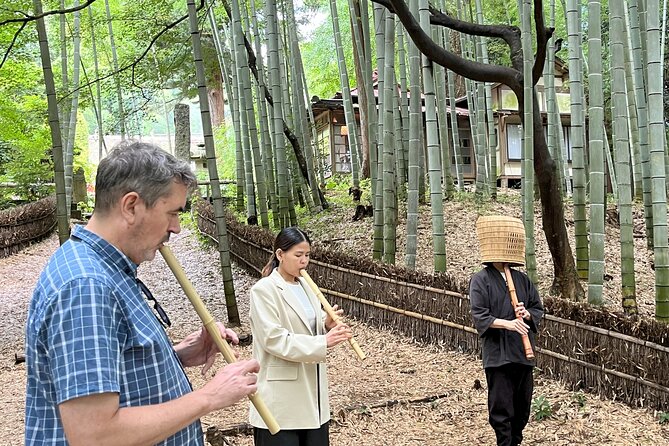
- The group is capped at six: That allows for a more personal temple visit and instruction than a standard coach excursion.
- The spa comes after the spiritual portion: Kirari Spa Villa is about 15 minutes from Takedera by car and includes admission to its many pools.
- Lunch is optional: A vegetarian meal with seasonal vegetables, herbs, and a bamboo theme is available around 12:30 PM for an added fee.
- Tattoos are not permitted at the spa: This is a firm facility rule, not a minor suggestion.
Why This Saitama Half-Day Trip Feels Different
Saitama sits beside Tokyo, yet parts of it feel far removed from the capital’s traffic and crowds. Hanno City gives you a chance to see a quieter side of the region, one shaped by forests, temples, local traditions, and outdoor hot springs.
This experience has a clear rhythm. You begin at Hanno Station at 10:00 AM, visit Takedera, learn a traditional musical meditation practice, and then spend the afternoon at Kirari Spa Villa. It is not a tour that tries to cram in five temples and three viewpoints. Instead, it gives each part enough time to register.
I especially like the contrast between the two main stops. Takedera asks you to slow down and pay attention to breathing, sound, and trees. The spa lets you relax in a more familiar Japanese way, with warm water and several pools. One part is active mindfulness. The other is simple comfort.
The experience is limited to six people, which matters here. Suizen requires instruction and patience. A large group would make it harder to hear the flute, follow breathing guidance, or ask questions. A small group also suits the temple setting, where quiet is part of the appeal.
A few more places to soak around Japan worth a look
- From Osaka: Himeji Castle, Arima Onsen & Mt. Rokko Day Tour
★ 4.6 · 339 reviews - Osaka: Nara and Uji Day Trip with Deer Park and Hot Spring
★ 4.4 · 302 reviews - From Tokyo: Private Tour to Fuji/Hakone – Onsen, Art, Nature
★ 5.0 · 116 reviews
Arriving at Takedera, the Bamboo Temple
Your day begins with a meeting at Hanno Station, at 1 Minamimachi, Hanno, Saitama. Round-trip transportation to Takedera is included, so you do not need to build the temple visit around unfamiliar local connections.
Takedera translates as Bamboo Temple, and the name tells you what gives the site its character. The grounds include a bamboo forest, with the temple preserving a blend of Shinto and Buddhist traditions. That combination is an important part of the visit. You are not simply stopping for a quick photograph in a grove. The setting connects the natural surroundings with Japanese spiritual practice.
A priest leads the temple introduction and explains the sanctuary’s long history. This is useful because the site’s meaning can be easy to miss if you arrive alone, take a few pictures, and leave. The guided explanation gives structure to the visit and helps you understand why the temple feels different from a standard sightseeing stop.
Expect a peaceful setting rather than a grand collection of buildings. The appeal here is the relationship between the temple and the forest. Bamboo filters the light, softens the sound around you, and creates a strong sense of separation from Tokyo. I would plan to walk slowly and leave room for silence.
You should also be ready for some walking through the temple grounds and bamboo forest. The activity asks for a moderate level of physical fitness, so it is not designed as a completely seated outing. The walking is part of the experience, especially when you use it to settle your breathing before the flute lesson.
Learning Suizen with Mr. Aoyama
At about 11:15 AM, you meet Mr. Aoyama for the suizen session. He is a musician with a background in yoga and meditation, and he introduces you to the shakuhachi, the traditional Japanese bamboo flute.
Suizen is often translated as blowing Zen meditation. The practice uses the act of playing the flute as a way to focus the mind and control the breath. It is not just a short music demonstration. You learn basic blowing techniques, then connect those techniques to breathing and concentration.
The shakuhachi is not an easy instrument to play. The supplied experience notes make that clear, and that difficulty is part of its value. You may not produce a polished melody quickly. The goal is less about performance and more about noticing breath, posture, patience, and sound.
That makes this session a good fit for curious beginners. You do not need to arrive as a musician or meditation expert. You only need enough patience to accept that the first sounds may be airy, uneven, or completely absent. A little humility is useful here.
After the basic lesson, you walk through the bamboo forest while continuing to work on calm breathing. This is one of the strongest parts of the program because the practice does not stay in a room or become a technical lesson alone. The forest gives you a quiet place to apply what you have just learned.
Mr. Aoyama’s background in music, yoga, and meditation also suits the unusual mix of the activity. You are not simply handed a flute and told to figure it out. The instruction connects the instrument to a broader mindfulness practice.
This is also the portion that most clearly separates the outing from a regular temple tour. Many people visiting Japan will see a shrine, temple, or bamboo grove. Far fewer will try a shakuhachi while learning about suizen in a forest setting.
Optional Vegetarian Lunch Around 12:30 PM
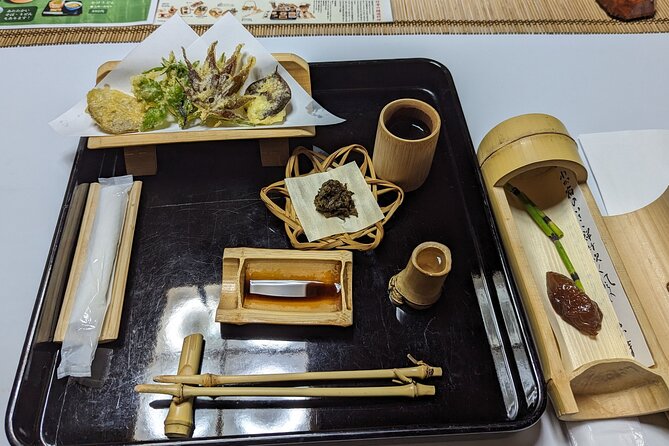
Lunch at Takedera is optional and costs extra. It features seasonal vegetables and herbs, with a bamboo theme that fits the setting.
The available information does not provide a full menu, so you should not book this expecting a specific dish. What is clear is that the meal is vegetarian and designed to match the temple visit. If you enjoy food that reflects place and season, the add-on makes sense. If you prefer to control your budget or have particular dietary needs, you may choose to skip it.
The timing, around 12:30 PM, makes lunch a natural bridge between the meditation session and the spa. It also keeps the day from feeling rushed. At $224.45 before the optional meal, though, the total cost rises quickly. I would treat lunch as a pleasant enhancement, not an essential part of the booking.
Same water, a different kind of day:
- Mt. Fuji, Hakone Private Tour from Tokyo – Onsen, Arts and Nature
★ 5.0 · 79 reviews - Tokyo: Mount Fuji 5th Station & Onsen Day Trip
★ 4.3 · 75 reviews - From Fukuoka: Mount Aso, Kurokawa Onsen, and Shrine Tour
★ 4.6 · 72 reviews - Private Nagano 1-Day Tour:Snow Monkeys,Zenko-ji,Obuse,Sake,Onsen
★ 5.0 · 71 reviews
From Takedera to Kirari Spa Villa
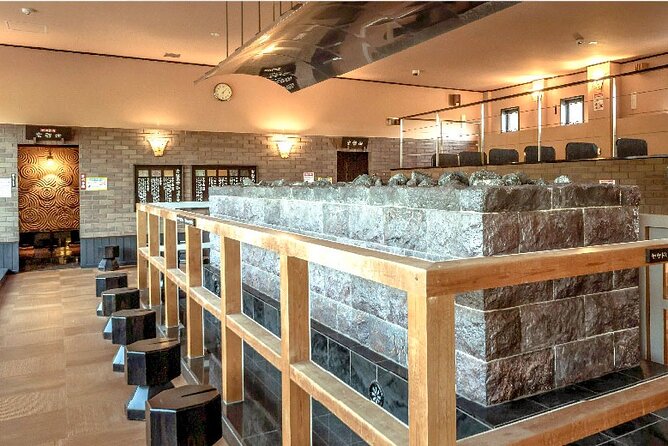
After Takedera, Kirari Spa Villa is about 15 minutes away by car. This short transfer keeps the afternoon easy. You do not have to shift from a quiet temple into a complicated public transportation journey while carrying your day’s belongings.
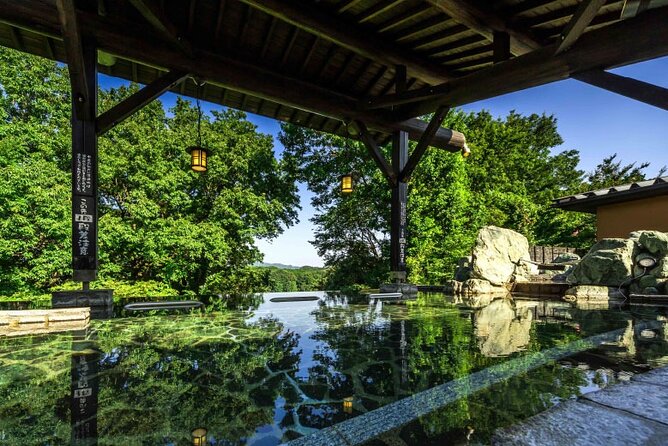
Kirari Spa Villa is one of Saitama’s popular spa facilities and has a broad selection of pools. Admission is included, which helps justify part of the tour cost. After the concentration required for suizen, the hot spring provides a less demanding way to spend the rest of the afternoon.
The spa is not presented as a guided cultural visit. Your English-speaking guide departs after dropping you at Kirari Spa Villa, so you should be comfortable enjoying the facility on your own. That arrangement gives you privacy and freedom, but it also means the final part of the day is not accompanied sightseeing.
You can use the spa time to rest at your own pace. The change from bamboo, breath, and flute practice to warm water is intentional. It gives the outing a satisfying physical finish rather than ending immediately after the temple activity.
There is one important restriction: tattoos are strictly prohibited at this spa. This is the kind of rule that can ruin an otherwise well-planned day if you discover it too late. If you have a tattoo, confirm the facility’s policy before paying, since the stated condition is firm.
Transportation, Timing, and Group Size
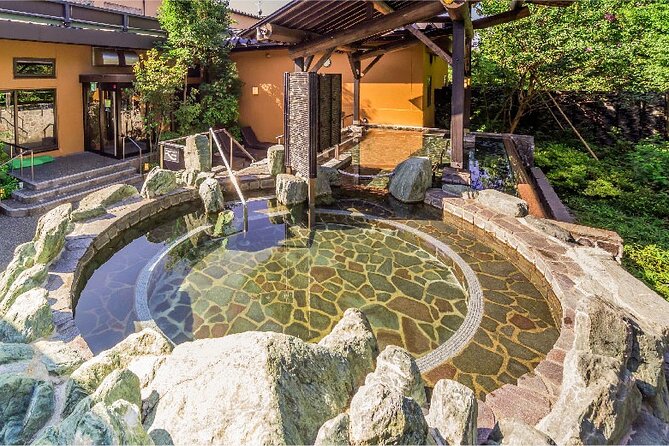
The schedule begins at 10:00 AM at Hanno Station and runs for about six hours. The tour includes transportation to and from Takedera, then a one-way transfer from Kirari Spa Villa to Hanno Station.
The transportation package is valuable because the two attractions are not simply next door to the station. You are paying for a coordinated route, not just entrance tickets. The guide also handles the movement between the temple and spa, leaving you free to focus on the experience.
The guide service ends after the drop-off at Kirari Spa Villa. From there, the transfer returns you to Hanno Station. Keep that handoff in mind when planning the rest of your day. You will have independent spa time, and you should be prepared to follow the facility’s procedures without an accompanying guide.
The maximum group size is six. That is a major advantage for the suizen lesson, where an instructor needs to give attention to breathing and flute technique. It also helps preserve the quiet atmosphere at Takedera.
The activity is often booked about 11 days ahead, so last-minute availability may be limited. Confirmation arrives within 48 hours of booking, subject to availability. If you are arranging a tight Japan itinerary, give yourself room for that confirmation before locking in other plans.
Is $224.45 a Fair Price?
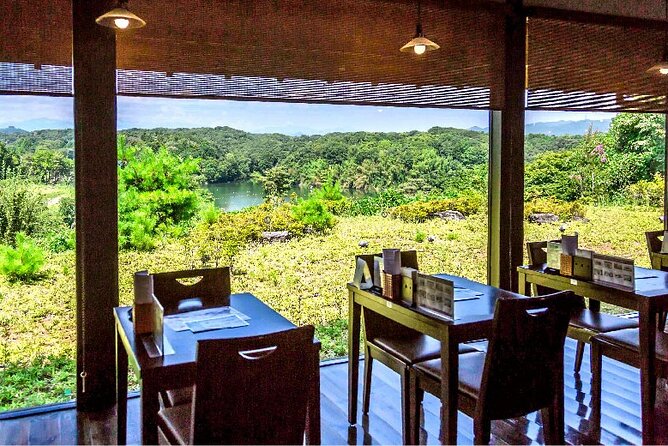
At $224.45 per person, this is not a bargain outing. The price makes more sense if you value the unusual cultural activity, small group size, private transportation elements, temple introduction, spa admission, and English-language support.
You are getting more than a short meditation class. The package combines a guided temple visit, a rare musical practice, transfers, a substantial afternoon at a spa, and transport back toward Hanno Station. For someone who would otherwise need to arrange the route independently, the convenience has real value.
Still, the price may feel high if your main goal is simply to visit a hot spring. You could potentially spend less by choosing a spa alone, but you would lose the Takedera visit and the suizen instruction. The same is true if you only want a bamboo forest walk. This experience earns its cost through the combination.
Lunch is not included, so budget for that separately if you want the vegetarian meal. The small group and specialist instruction are the strongest reasons to pay a premium.
Who Should Book This Experience?
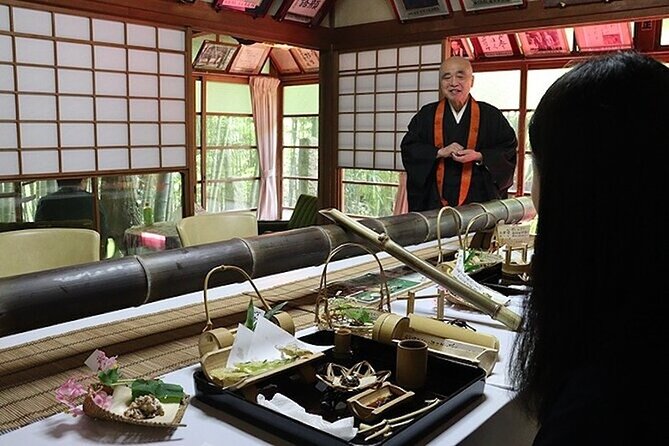
I would recommend it to you if you want an unusual cultural experience close to Tokyo and prefer a slower day over a checklist of sights. It is particularly well suited to people interested in meditation, traditional music, Japanese temples, bamboo forests, and hot springs.
It also works well for repeat visitors to Japan who have already seen major Tokyo sights and want a quieter nearby outing. The experience reaches a less touristy area and gives you a cultural practice that many people in Japan may never try themselves.
You should think twice if you dislike group activities, cannot meet the moderate fitness requirement, or want a fully guided spa visit from start to finish. The last portion is independent after the spa drop-off.
This is also not a strong choice if you have a tattoo and cannot use the facility under its stated rules. Confirm before booking rather than hoping the restriction will be flexible.
Should You Book Takedera and Kirari Spa Villa?
Book it if the idea of learning to control your breath through a shakuhachi appeals to you more than another standard temple tour. The combination of Takedera’s bamboo forest, Mr. Aoyama’s personal instruction, and a hot spring afternoon gives the day a clear purpose and a memorable shape.
Skip it if you are seeking the lowest-cost way to visit a spa, or if you want a packed sightseeing schedule. At $224.45 plus optional lunch, this is a carefully focused experience, not a budget excursion.
For the right person, the best part is the sense of calm created by the full sequence: temple, bamboo, breath, music, and warm water. That is a rare package so close to Tokyo.
FAQ
Where does the experience begin?
You meet at Hanno Station, located at 1 Minamimachi, Hanno, Saitama, at 10:00 AM.
How long does the experience last?
The experience lasts approximately six hours.
Is transportation included?
Yes. Round-trip transportation to and from Takedera is included, along with a one-way transfer from Kirari Spa Villa to Hanno Station.
What is included at Takedera?
The experience includes a Takedera tour and introduction, plus a suizen session using the shakuhachi, a traditional Japanese bamboo flute.
Who leads the suizen session?
Mr. Aoyama leads the session. He is a musician with experience in yoga and meditation practices.
Is lunch included?
No. A vegetarian lunch at Takedera is available as an optional add-on around 12:30 PM. It features seasonal vegetables and herbs with a bamboo theme.
Are tattoos allowed at Kirari Spa Villa?
No. Tattoos are strictly prohibited at this spa facility.
How many people can join the group?
The activity has a maximum of six participants.
Just added around Japan
- Japanese Head Onsen and Scalp Massage Retreat in Tokyo★ 4.5 · 2 reviews
- Mt Fuji Small Group 1 Day Tour Kawaguchi and Yamanaka with Pickup★ 5.0 · 4 reviews
- Tokyo Local Tattoo Friendly Public Bath Experience★ 5.0 · 4 reviews
- Mt. Fuji Tours to Lake Kawaguchi and Yamanaka Onsen English Guide★ 4.5 · 4 reviews
- Mt. Fuji to Lake Kawaguchi, Lake Yamanaka and Onsen Day Tour★ 4.5 · 3 reviews
- Private Tour to Snow Monkey, Zenkoji Temple & Hot Springs Nagano★ 4.0 · 2 reviews
- Onsen Spa in Tokyo and Asakusa Bar Hopping with Local Guide★ 5.0 · 3 reviews
- Tattoo-friendly open-air Onsen & drink★ 5.0 · 25 reviews
Japan Hot Springs, compared.
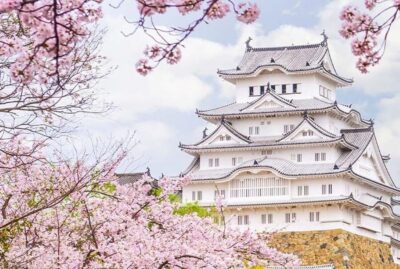
Himeji Castle, Arima Onsen & Mt. Rokko Day Tour
Read our review →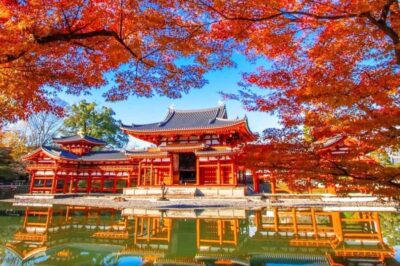
Nara and Uji Day Trip with Deer Park and Hot Spring
Read our review →
Private Tour to Fuji/Hakone – Onsen, Art, Nature
Read our review →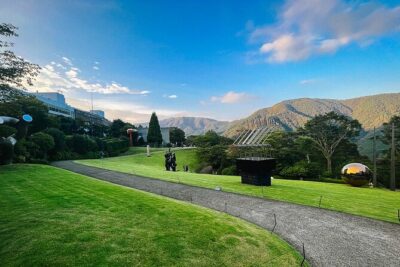
Mt. Fuji, Hakone Private Tour from Tokyo – Onsen, Arts and Nature
Read our review →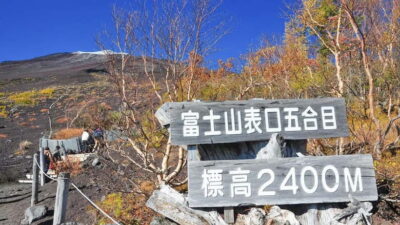
From Fukuoka: Mount Aso, Kurokawa Onsen, and Shrine Tour
Read our review →
Private Nagano 1-Day Tour:Snow Monkeys,Zenko-ji,Obuse,Sake,Onsen
Read our review →
Mt Takao Tour with Ramen and Tattoo-Okay Hot Spring
Read our review →Browse the lists this tour appears in