
Review · JAPANESE ONSEN TOURS
2 Hour Onsen Calligraphy Experience
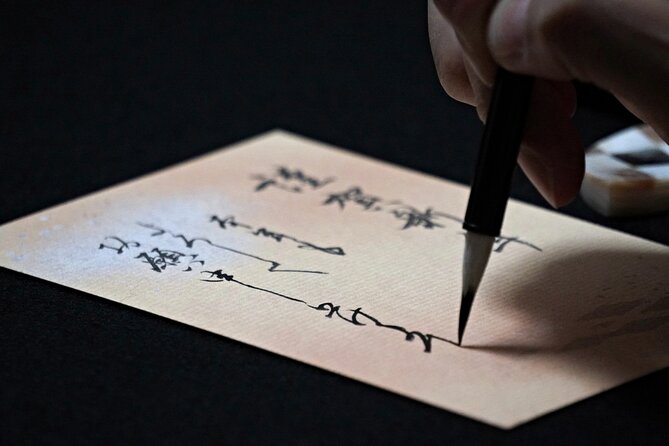
A brush, a bowl of hot spring water, and two quiet hours. That unusual mix makes this Hakone activity more than a standard calligraphy lesson. You prepare your ink with actual onsen water, learn basic brushwork from an experienced teacher, and create a piece on Japanese paper or a round hand fan. I especially like the peaceful ryokan setting and the fact that you take home something you made yourself. The main consideration is the price: at $60 per person, this is best for people who value a focused cultural activity, not a quick sightseeing stop.
Hakone is famous for hot springs, but this experience lets you work with that local tradition rather than simply visit a bath. I also like the small group size, capped at eight people, since the teacher can watch your brush technique and offer help. The session is indoors and lasts about two hours, so it will not fill an entire day, but you will need to arrange your own transportation to the meeting point in Hakone-Yumoto.
Key points to know before booking
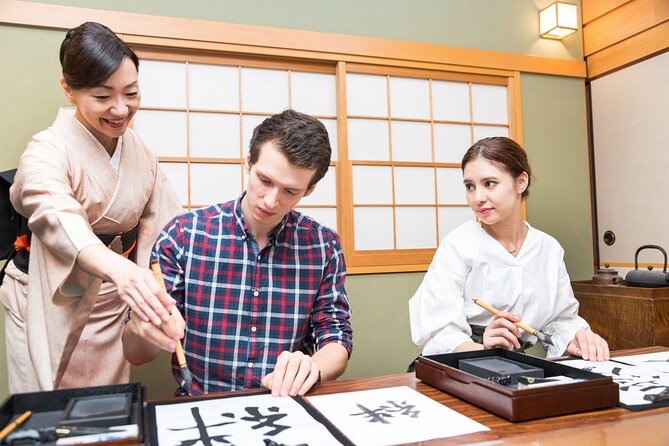
- Onsen water becomes part of your ink: You prepare the sumi ink with water from the ryokan’s hot spring, giving the lesson a clear Hakone connection.
- You make a real keepsake: Choose traditional Japanese paper or create artwork on an uchiwa, the classic round hand fan.
- The setting is part of the experience: You write inside a historic ryokan, with the quiet air, water sounds, and scent of ink helping you focus.
- Beginners receive patient instruction: The teacher explains how to hold and control the brush, so previous calligraphy experience is not needed.
- The group stays small: A maximum of eight participants allows for personal guidance without making the activity feel private or overly formal.
- Tea and materials are included: You receive the supplies, a take-home bag, Japanese tea, the uchiwa, and the indoor venue fee.
Why onsen water changes a simple calligraphy lesson
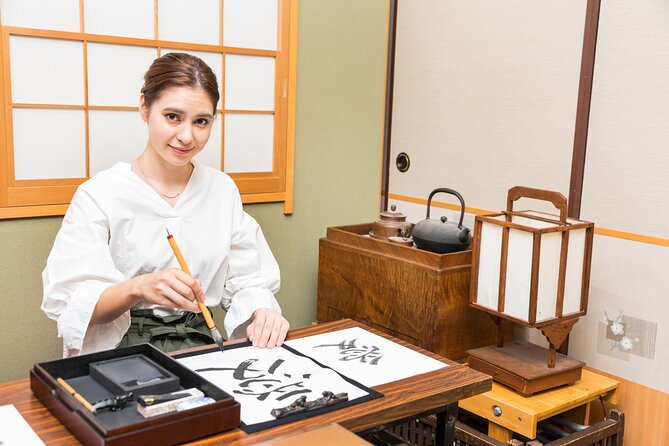
At first glance, this sounds like a basic brush-writing class. The special part is the ink preparation. You use actual hot spring water from the inn, connecting your artwork to Hakone’s most famous local tradition.
That small step gives the activity a sense of place. You are not simply practicing characters in a generic classroom. You are working in a ryokan and using water associated with the town’s springs. The experience also includes a short explanation of Hakone’s hot spring traditions, so the cultural background comes before the brushwork.
The water itself may have a faint scent. One participant described noticing a gentle difference in the ink compared with ordinary calligraphy materials. Do not expect the water to transform you into a master, but it does make the process more memorable. The scent, the paper, the brush, and the sound of water outside all help create a slower pace.
This is a good example of a cultural activity that does not rely on a long lecture. You learn by doing. The explanation gives meaning to the materials, then the rest of the session lets you focus with your hands.
More Onsen Tours in Japan:
- From Osaka: Himeji Castle, Arima Onsen & Mt. Rokko Day Tour
★ 4.6 · 339 reviews - From Tokyo: Private Tour to Fuji/Hakone – Onsen, Art, Nature
★ 5.0 · 116 reviews - Mt. Fuji, Hakone Private Tour from Tokyo – Onsen, Arts and Nature
★ 5.0 · 79 reviews
Arriving at the ryokan in Hakone-Yumoto
The meeting point is at 655 Yumoto, Hakone, Ashigarashimo District, Kanagawa 250-0311. The location is near public transportation, but transportation to and from the meeting point is not included, so allow enough time to find the ryokan before the scheduled start.
The activity begins and ends at the same place. That makes planning easier, especially if you are combining it with other sightseeing around Hakone. You do not need to arrange a separate drop-off after the class.
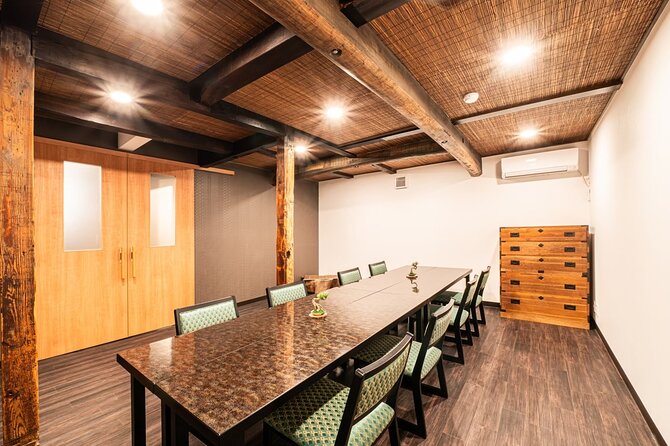
The setting matters here. This is held in an indoor space at a historic hot spring inn, not in a busy modern studio. Past participants describe the room as calm, with the sound of water outside and the scent of ink in the air. That atmosphere is not decoration. It helps you settle down before you begin.
I would arrive without rushing. Calligraphy rewards a steady hand, and arriving breathless from a tight schedule is not the best way to start. If you are visiting Hakone for its hot springs, this activity fits naturally into a day centered on the town’s bathing culture.
The opening explanation gives the brushwork a local meaning
The session starts with an introduction to Hakone’s hot springs and their cultural importance. This portion appears to be brief, but it gives the activity a useful frame.
Without that context, mixing ink with onsen water could feel like a clever gimmick. With it, the material becomes part of the lesson. You understand why the water was chosen and how the workshop relates to the place around you.
You will also get an introduction to Japanese calligraphy. If you are new to the art, the teacher explains the basic approach in a calm and encouraging way. The aim is not to test your Japanese language skills or expect you to know the correct strokes in advance.
Some of the work may involve older character styles. One participant enjoyed writing characters from the past and felt that using a brush made the old forms feel more immediate. This can be especially appealing if you enjoy historical crafts, traditional design, or the visual shape of Japanese writing.
The class is not described as an advanced study of calligraphy styles, so experienced practitioners should keep expectations reasonable. It is a guided cultural activity, not a formal certification course or a long-term skills program.
Learning to hold the brush without getting tense
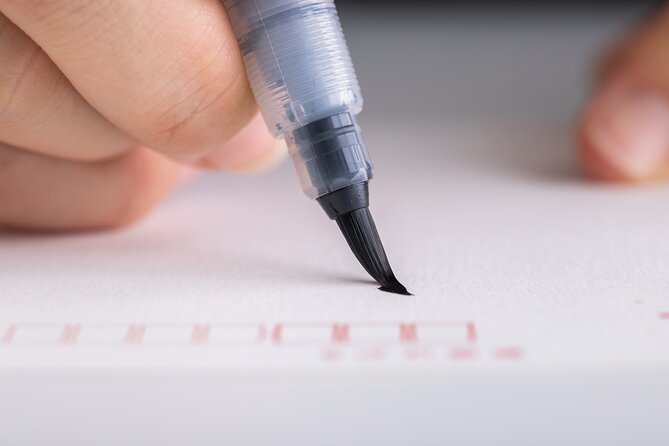
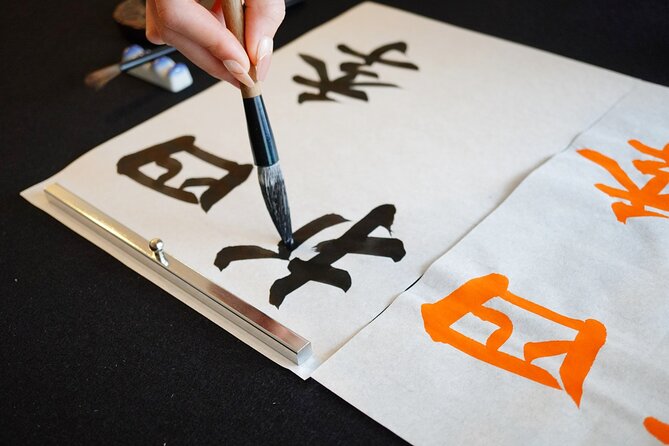
For many people, the brush is the first challenge. A pen can be pushed and pulled across a page with little thought. A calligraphy brush responds to pressure, angle, speed, and the amount of ink it holds.
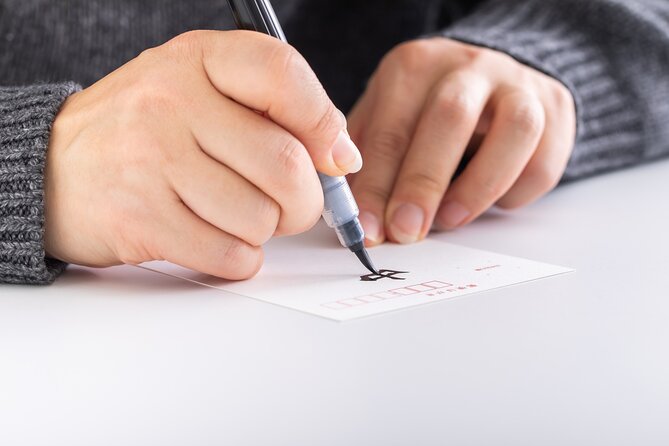
The teacher guides you through how to hold the brush and helps you work through the first characters. That personal attention is important for beginners. Several people found they could concentrate without feeling pressured, even when writing characters for the first time.
You may feel a little nervous at the start. That is normal. The class is built around practice, not perfection. The quiet room and patient instruction give you time to adjust your hand before working on the final piece.
I like that the experience leaves room for both concentration and companionship. Friends can attend together, and the group setting may help ease the tension of trying something unfamiliar. At the same time, a maximum of eight people keeps the activity from turning into a crowded demonstration.
If you are attending with a lively group, do not assume the class will become noisy or casual. The atmosphere encourages people to settle into the task. That may be a welcome change of pace during a full day of sightseeing.
More Two-Hour Experiences in Japan:
- 2 Hours Hiroshima Hot Spring Tour
★ 5.0 · 3 reviews - Marrakech: 2-Hour Traditional Moroccan Hammam Experience
★ 4.5 · 2,653 reviews - 2-Hour Deep Blue Hot Springs in Warrnambool
★ 4.5 · 160 reviews - Agadir : 2-Hour Hammam and Massage Combo Experience
★ 4.0 · 66 reviews
Creating your work on paper or an uchiwa fan
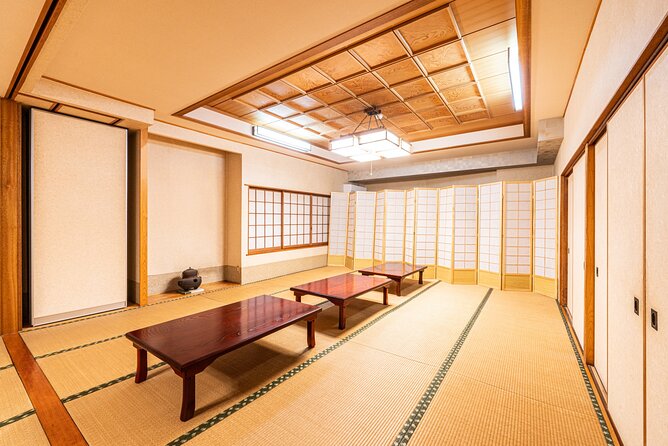
The main creative choice is your surface. You can write on traditional Japanese paper, or you can use an uchiwa, the round hand fan associated with Japan’s warmer months.
The fan is a particularly useful souvenir because it is both decorative and practical. It also gives your finished work a different shape from a normal sheet of paper. If you want something to display in your room, the fan may have more visual impact.
Traditional paper offers a more classic calligraphy format. It lets the brushwork take center stage and may appeal to you if you want a simple piece that resembles the work produced in a traditional lesson.
You receive one uchiwa as part of the experience, along with the other calligraphy supplies. A take-home bag is also provided, which is helpful because wet or newly finished work needs careful handling. The finished piece is not just a digital memory or a photograph. You carry it home as a physical reminder of your time in Hakone.
The teacher looks at each person’s work and offers guidance along the way. That does not mean every final piece will look polished. Calligraphy is still a skill, and your first attempt may show uneven lines or uncertain strokes. That is part of the charm. The goal is to create something personal while learning how the brush behaves.
The ryokan atmosphere is a major part of the value
The strongest reason to book this activity is not simply the finished fan. It is the mood of the room.
The old inn provides a quiet setting. You may hear water from outside, notice the smell of ink, and find that the normal pace of sightseeing fades for a while. The setting gives you permission to stop checking the clock every few minutes.
That calm has practical value. Calligraphy requires attention, and the room helps you focus on the movement of the brush. Some people find that they write more confidently than expected because the surroundings reduce distractions.
The experience also comes with complimentary Japanese tea. Tea will not take up much of the two hours, but it fits the ryokan setting and gives the session a pleasant pause. It is a small inclusion that helps the activity feel complete rather than like a paid lesson with supplies placed on a table.
You should not book this expecting a hot spring bath to be the main event. The activity uses onsen water for the ink, and it takes place at an onsen ryokan, but the listed experience is calligraphy. One person enjoyed visiting nearby hot springs as part of the wider Hakone outing, but bathing is not listed among the included features.
Is $60 a fair price for two hours?
At $60 per person, this is not the cheapest cultural activity in Japan. The value depends on what you want from your Hakone day.
The fee includes all calligraphy materials, onsen water for preparing the ink, instruction from an experienced teacher, the uchiwa, a take-home bag, Japanese tea, the cultural explanation, and the indoor venue fee. You are also paying for the setting and the small group format.
If you only want to try writing one or two Japanese characters, the price may feel high. If you want a guided activity with a clear connection to Hakone, a finished souvenir, and time away from crowded sightseeing spots, the cost is easier to justify.
The group discount may help if you are attending with friends or family, though the exact discount is not specified. Ask about the available rate when booking rather than assuming a fixed percentage.
This is also a good rainy-day option. The class takes place indoors and does not depend on clear views or outdoor conditions. Since the activity lasts about two hours, it can fit neatly between other plans without consuming your whole day.
Who will enjoy this experience most
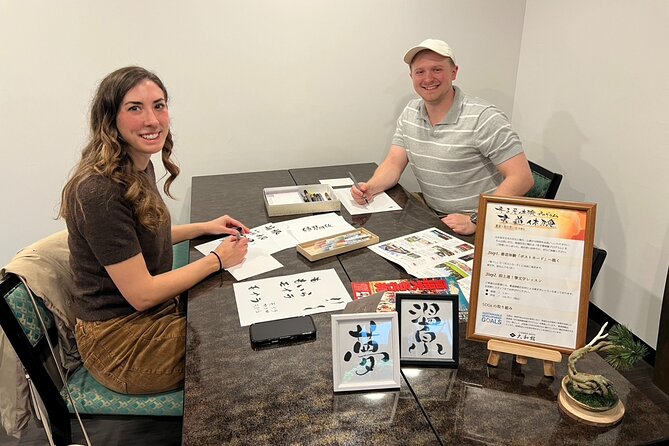
I would recommend it most strongly to first-time calligraphy students, couples, friends, and families looking for a hands-on cultural activity. You do not need to read Japanese or have artistic training. The teacher’s guidance is designed to help beginners get started.
It also suits people who prefer quiet activities. If you enjoy crafts, traditional arts, tea, old inns, or meaningful souvenirs, the workshop offers more than a quick photo stop.
The experience may be less suitable if you want a fast-paced tour, a large amount of sightseeing, or a detailed advanced lesson in Japanese calligraphy. Two hours is enough to learn the basics and make a piece, but not enough to develop strong technical skill.
Children and older participants are not specifically discussed in the information provided, so families should confirm suitability when booking. Most people can participate, and the activity is near public transportation, but the provider does not give detailed accessibility information.
Booking, timing, and a few practical details
The activity is normally reserved well ahead of time, with an average booking lead of about 129 days. That suggests you should plan early if your Hakone dates are fixed, especially if you want a particular time.
Confirmation is provided when you book, and the experience accepts mobile tickets. The maximum group size is eight. Gratuities are not included, but they are optional and left to your discretion.
You can cancel for a full refund if you do so at least 24 hours before the start time. Changes or cancellations made within 24 hours are not accepted for a refund, and the cut-off follows local time in Japan.
Wear something comfortable and easy to manage around ink. The supplied information does not state a dress code, but calligraphy involves brushes and liquid ink, so sensible clothing is a good idea.
My verdict: book it for the setting, not just the souvenir
This is a thoughtful choice for a Hakone day. The best parts are the use of real onsen water, the quiet historic ryokan, and the patient instruction that helps beginners relax. The fan or paper artwork gives you a lasting souvenir, while the tea and cultural explanation round out the two-hour session.
At $60, it is a special-interest activity rather than a bargain. I would book it if you want to slow down, try a traditional craft, and connect your artwork to Hakone’s hot spring culture. I would skip it if you are looking mainly for bathing, major sightseeing, or a low-cost introduction to Japan.
For the right person, the value is in the stillness: brush in hand, water nearby, and enough time to make something that could not have been produced anywhere else.
FAQ
Where does the Onsen Calligraphy Experience take place?
It takes place at 655 Yumoto, Hakone, Ashigarashimo District, Kanagawa 250-0311, Japan, inside an indoor space at a historic hot spring ryokan.
How long does the experience last?
The activity lasts approximately two hours.
What is included in the price?
The price includes all calligraphy materials, onsen water for preparing the ink, one uchiwa Japanese round paper fan, a take-home bag, instruction from an experienced calligraphy teacher, cultural information about Hakone’s hot spring traditions, complimentary Japanese tea, and the indoor venue fee.
Do I need previous calligraphy experience?
No. Beginners can participate, and the teacher provides guidance on the basics, including how to hold the brush.
What can I create during the activity?
You can create your work on traditional Japanese paper or on an uchiwa, a classic round Japanese hand fan.
Is transportation included?
No. Transportation to and from the meeting point is not included. The activity ends back at the meeting point.
How many people can join the group?
The maximum group size is eight participants.
Can I cancel for a refund?
Yes. You can receive a full refund if you cancel at least 24 hours before the experience start time. Cancellations or changes made less than 24 hours before the start time are not accepted for a refund.
Just added around Japan
- Japanese Head Onsen and Scalp Massage Retreat in Tokyo★ 4.5 · 2 reviews
- Mt Fuji Small Group 1 Day Tour Kawaguchi and Yamanaka with Pickup★ 5.0 · 4 reviews
- Tokyo Local Tattoo Friendly Public Bath Experience★ 5.0 · 4 reviews
- Mt. Fuji Tours to Lake Kawaguchi and Yamanaka Onsen English Guide★ 4.5 · 4 reviews
- Mt. Fuji to Lake Kawaguchi, Lake Yamanaka and Onsen Day Tour★ 4.5 · 3 reviews
- Onsen Spa in Tokyo and Asakusa Bar Hopping with Local Guide★ 5.0 · 3 reviews
- Tattoo-friendly open-air Onsen & drink★ 5.0 · 25 reviews
- Private Tour to Snow Monkey, Zenkoji Temple & Hot Springs Nagano★ 4.0 · 2 reviews
Japanese Onsen Tours, compared.
Himeji Castle, Arima Onsen & Mt. Rokko Day Tour
Read our review →
Private Tour to Fuji/Hakone – Onsen, Art, Nature
Read our review →
All-Day Pass to Yunomori Sathorn Onsen Bath and Spa
Read our review →
Mt. Fuji, Hakone Private Tour from Tokyo – Onsen, Arts and Nature
Read our review →
From Fukuoka: Mount Aso, Kurokawa Onsen, and Shrine Tour
Read our review →
Private Nagano 1-Day Tour:Snow Monkeys,Zenko-ji,Obuse,Sake,Onsen
Read our review →Browse the lists this tour appears in