
Review · HOT SPRING HIKING TOURS
Mount Rinjani: 3D/2N Trekking to Summit, Lake and Hot Spring
Rinjani rewards effort with unforgettable views. This three-day trek combines tropical forest, crater camping, Segara Anak Lake, and natural hot springs before the final climb to the summit. I like the way the route gives you several different sides of Mount Rinjani, not just a quick push to the top. I also like that experienced porters carry the cooking and camping equipment, leaving you to focus on walking.
The main catch is the workload. You may walk eight to nine hours per day, and the summit route is steep, slippery, and demanding. The $150 price is appealing for a guided trek with meals, water, camping gear, poles, and porters, but you must add the national park fee, your own hiking equipment, and any transport after the trek.
- Three major Rinjani experiences: forest trails, Segara Anak Lake, and the summit sunrise all fit into one route.
- Senaru to Sembalun: you begin in Senaru Village and finish at Sembalun Village, so the trek crosses two important starting points.
- A demanding final climb: summit morning begins after a light breakfast and requires a good level of fitness.
- Camping equipment included: tents, sleeping bags, mattresses, a toilet tent, and cooking equipment are supplied.
- Porters make the price useful: they carry food, water, cooking gear, and camping equipment.
- Plan for extra costs: the national park fee is IDR 200,000 per person per day, and a headlamp is not included.
Why This 3D/2N Rinjani Route Works
Mount Rinjani is not a one-note mountain. This route lets you walk through dense forest, camp beside the crater, reach a large volcanic lake, soak in hot water, and then climb toward a sunrise above Lombok.
That variety is the best reason to choose three days instead of a shorter summit-only outing. You get time for scenery and rest stops, although the schedule still moves at a serious pace. The trek is not a gentle sightseeing walk with a mountain view at the end. You need to be comfortable walking long distances and handling rough ground.
I also like the practical setup. An English-speaking guide leads the group, while professional porters carry the tent, cooking equipment, food, and drinking water. Each person receives three liters of mineral water per day. That is a major help on a route where carrying every item yourself would make the climb much harder.
The service has earned a 4.8 rating from 12 reviews, with the strongest praise directed at the guides and porters. One important detail comes through clearly: the staff support is a big part of the experience. Still, good support does not remove the physical challenge. You remain responsible for your own clothing, footwear, headlamp, and daily pack.
Day One: Senaru Forest and the First Crater Camp
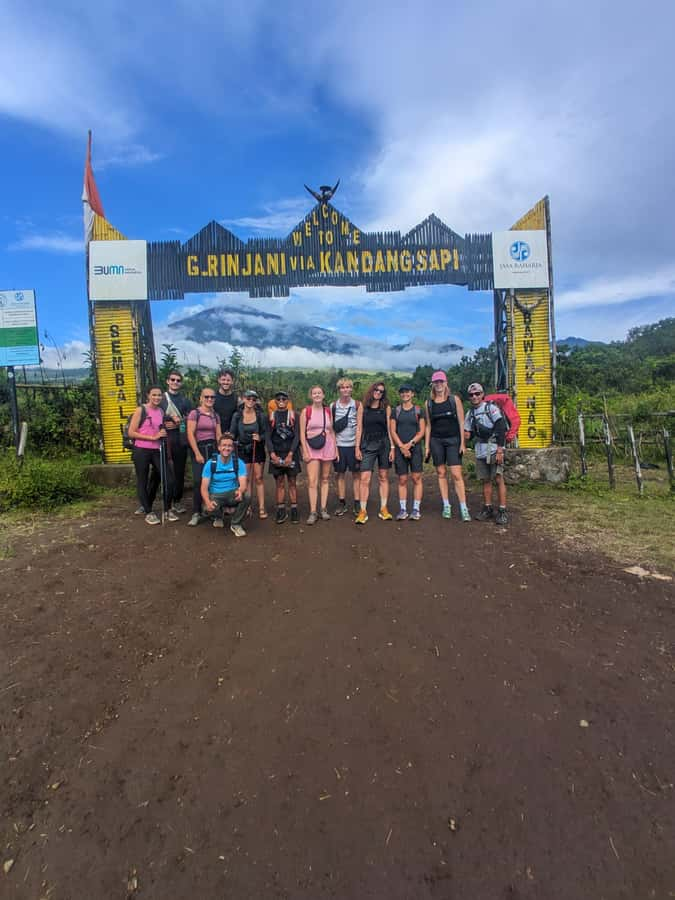
After pickup in Senaru or Sembalun, you travel to Senaru Village to begin the walking section. A briefing takes place at the meeting point before the trek, giving you a chance to clarify the route and prepare your gear.
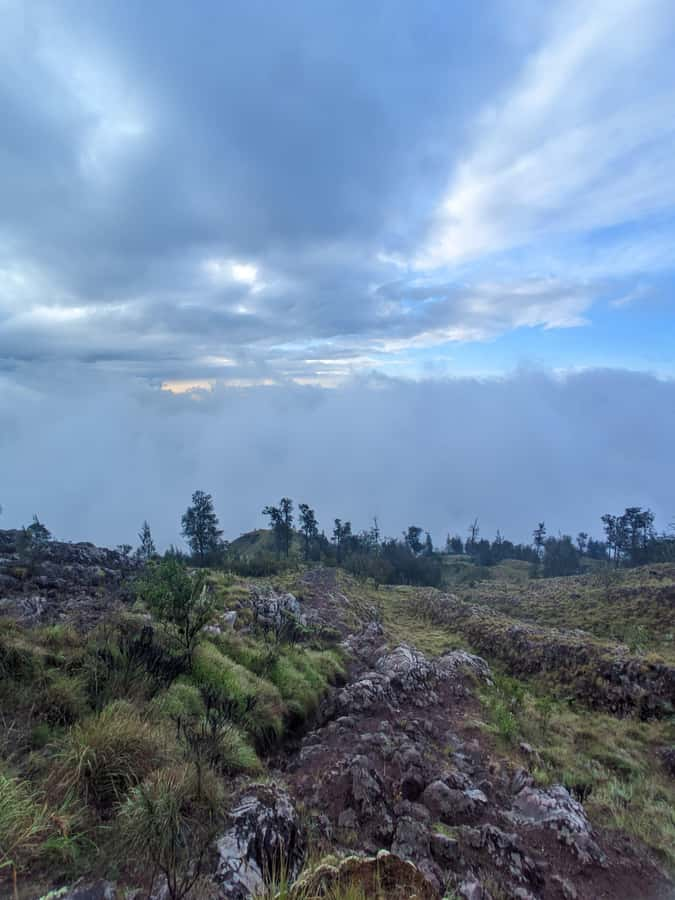
The first day follows a forest trail toward Senaru Rim. You walk through dense tropical growth, with plantation areas and large trees along the way. This is the cooler and more shaded part of the route, which helps during the early stages of a long climb.
Keep watch for black or brown monkeys during rest stops. Wildlife sightings are never guaranteed, but the possibility adds interest to what could otherwise feel like a steady uphill grind. The breaks also give you time to eat snacks and adjust your pack before the higher sections.
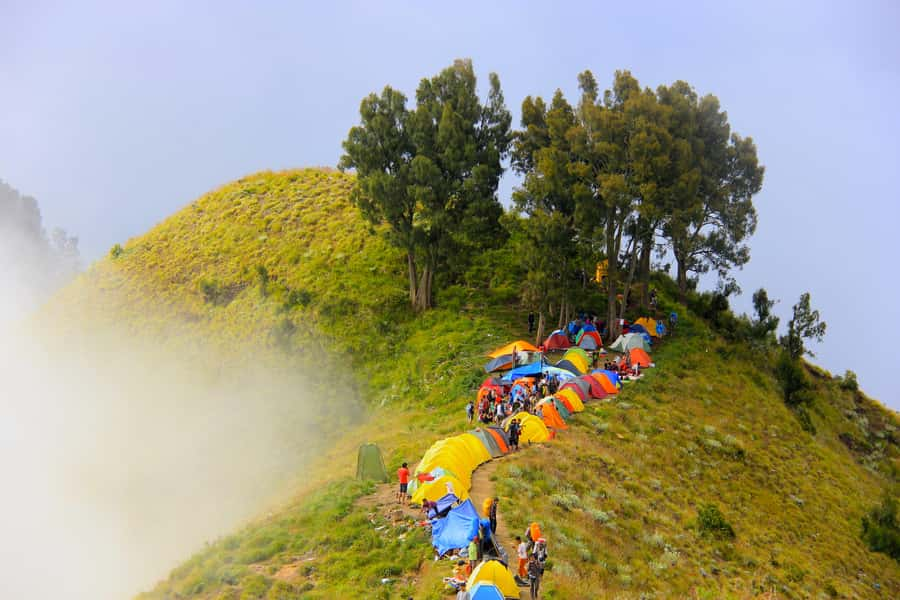
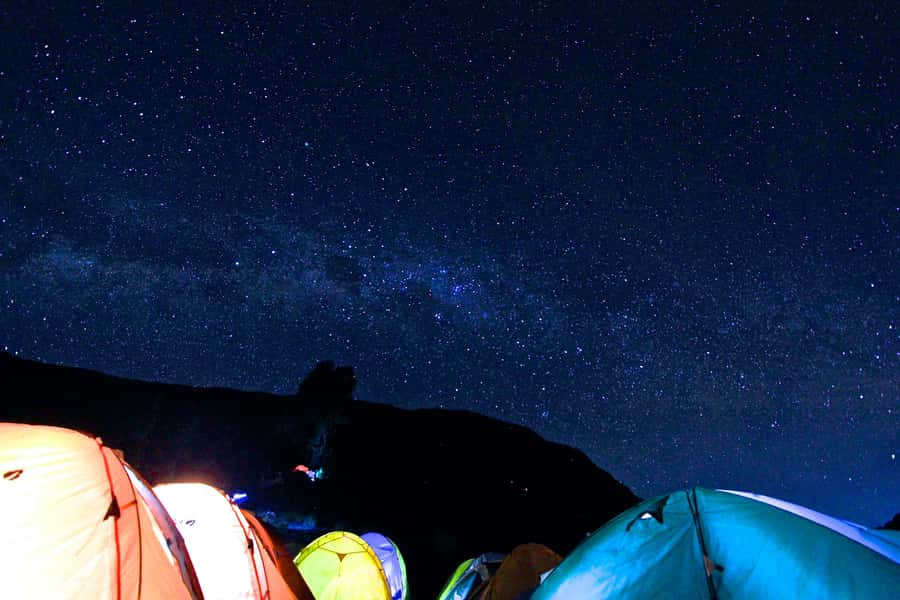
The day ends at Senaru Rim, where the porters set up camp. You sleep in a tent under the stars rather than in a mountain lodge. That sounds romantic, and it can be, but camping also means basic facilities and a simple night outdoors. The supplied toilet tent, sleeping bag, and mattress make the arrangement more manageable.
Your first night matters because it sets the tone for the whole trip. You are already on the mountain, away from normal road access, and the following day includes both a descent to the lake and a climb toward another crater rim. Rest well and keep your clothing dry.
More Hot Spring Hikes in Indonesia
- Bali: Mount Batur Sunrise Guided Hike and Natural Hot Spring
★ 4.8 · 9,284 reviews - Mount Batur Sunrise Hike and Natural Hot Spring Option
★ 5.0 · 1,927 reviews - Private Tour Mount Batur Sunrise Trekking and Natural Hot Spring
★ 5.0 · 431 reviews
Day Two: Segara Anak Lake and the Hot Spring Stop
Day two begins with a hot breakfast before you leave Senaru Rim. The trail takes you down toward Segara Anak Lake, one of the main reasons to choose this route.
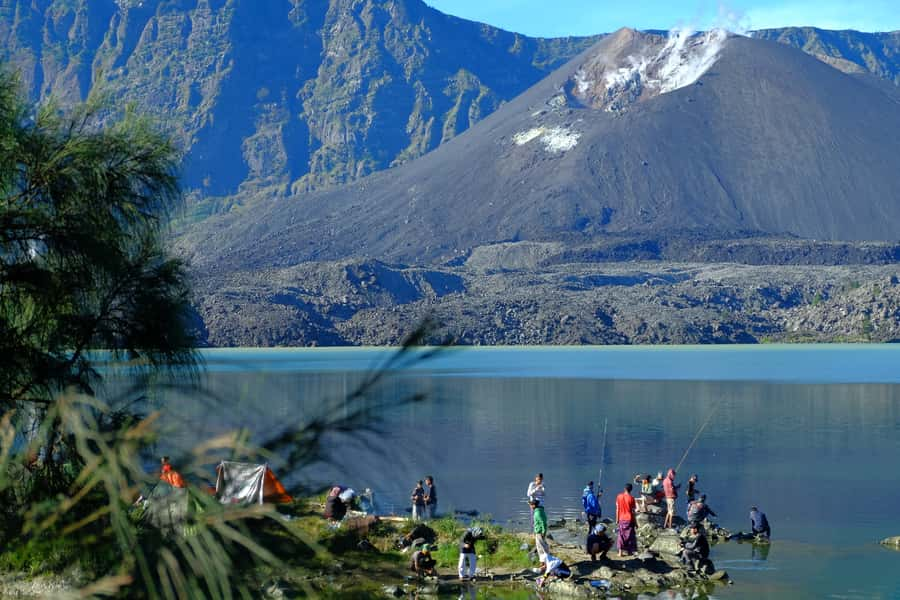
The lake gives the trek a dramatic change of mood. After the forest and crater camping, you reach open views around the water and have time to pause beside it. Lunch is served near the lake, so this is not just a quick photo stop. You get a proper break before the next demanding section.
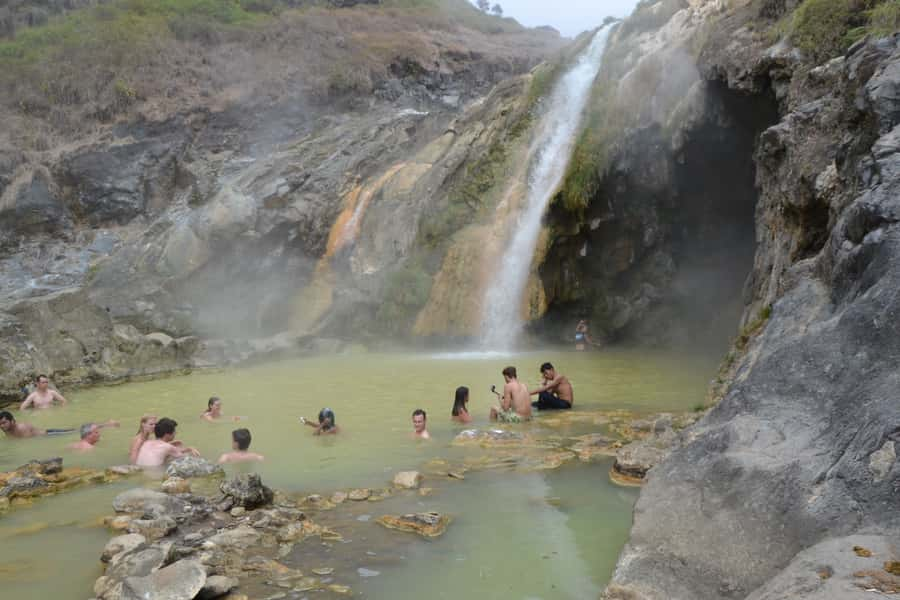
A natural hot spring near Segara Anak Lake is included in the day’s plan. Soaking your legs in warm water can feel especially welcome after the first day and the descent to the lake. The stop is also a good example of what makes this trek more interesting than a direct summit attempt. You are not only collecting altitude. You are seeing the mountain’s volcanic features at close range.
The hot spring is described as having healing qualities, but you should treat it as a natural bathing stop, not a medical treatment. Bring suitable clothing and keep your personal items secure. The supplied information does not specify changing facilities, so pack with a basic outdoor setup in mind.
After lunch, you climb toward Sembalun Crater Rim. This section is important to understand before booking. Day two is not a relaxed lake day followed by an easy camp. You descend, stop at the lake and hot spring, then climb again toward your evening camp.
At Sembalun Crater Rim, you watch the sunset and spend the night. The changing light gives you a second major viewpoint before summit morning. It also places you closer to the final climb, though the early start and steep terrain still make the third day the hardest part.
Day Three: Sunrise at the Summit
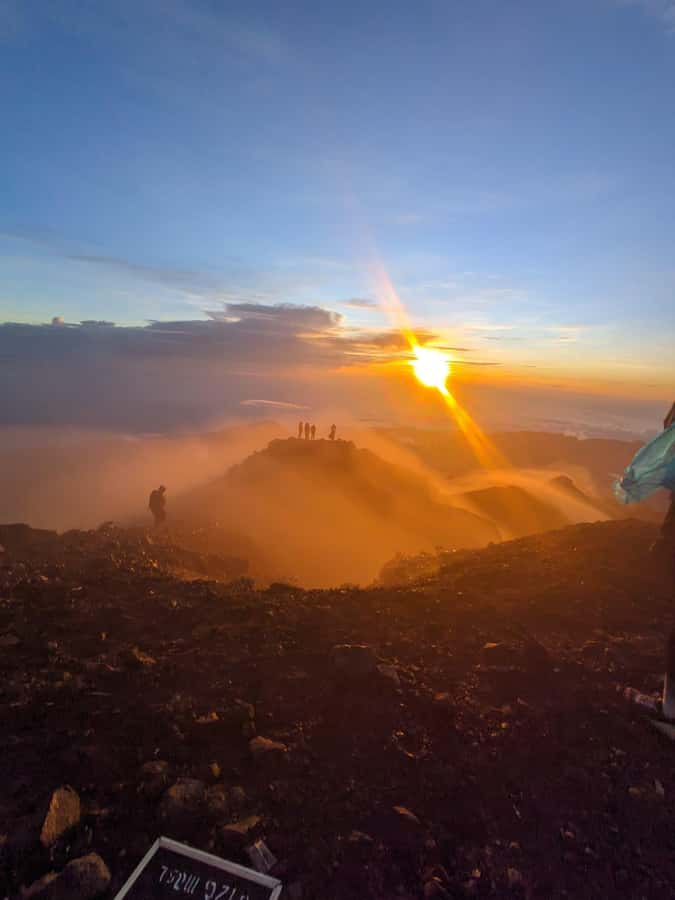
After a light breakfast, you begin the summit push. The schedule is designed around sunrise, so expect an early start and a long, serious climb in darkness or low light.
This is where the trek demands its best effort. The route is described as steep, slippery, and challenging, and the required fitness level is not a formality. You need to walk long distances and stay steady on uneven ground. The final ascent may test your legs, balance, and patience more than the first two days.
A headlamp or hand torch is not included, so you must bring one. This is one of the most important packing points in the entire description. A phone light is a poor substitute on a dark mountain trail, especially when you also need both hands for balance or trekking poles.
At the summit, you can look across Lombok Island, toward Bali, to Mount Tambora in Sumbawa, and down toward Segara Anak Lake. The sunrise is the payoff for the early alarm and hard climb. You may also see the four Gili Islands from the high viewpoint, adding a memorable island-to-island perspective.
After the summit, you trek down to Sembalun Crater for a hot breakfast and a rest. This recovery stop is useful because the descent after a summit attempt can be hard on tired knees. You then continue to Sembalun Village, where the organized activity ends and you arrange your next transfer.
The finish is not back at the original starting point. You begin from Senaru and end at Sembalun, so plan your onward transport carefully. Transfers after the trek are not included.
What the $150 Price Really Covers
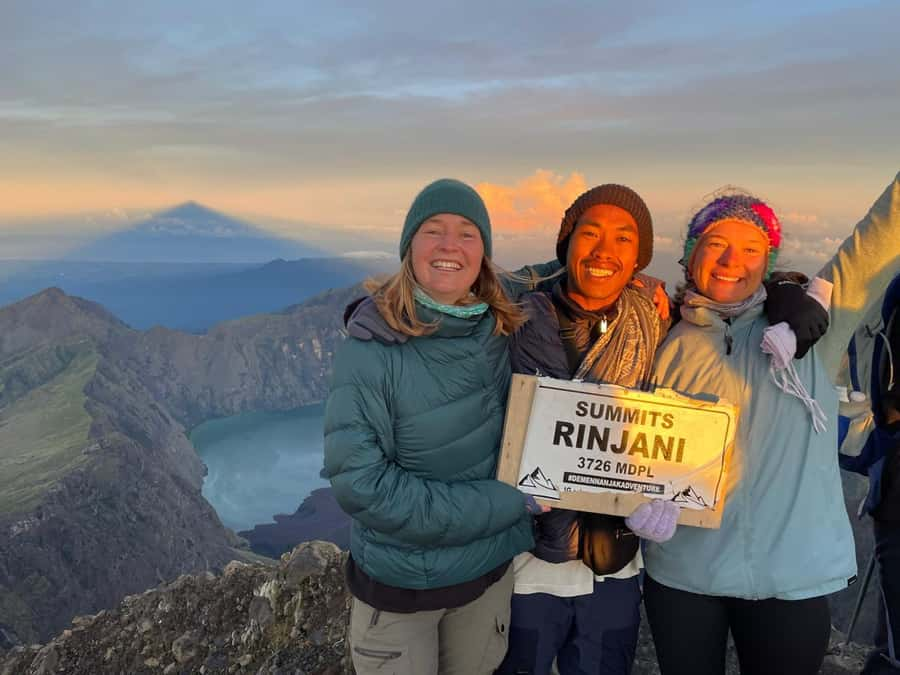
At $150 per person, this is a strong package for a three-day mountain trek. The value comes from the amount of support included: an English-speaking guide, professional porters, food, three liters of drinking water per person per day, tents, sleeping bags, mattresses, a toilet tent, gloves, and trekking poles.
You are not paying only for a walking guide. The porters carry cooking gear and camping equipment, and the team prepares hot meals during the trek. For a route lasting three days and involving two camps, that practical support makes a real difference.
There are extra charges to budget for. The national park entrance fee is IDR 200,000 per person per day. Since the trek lasts three days, that equals IDR 600,000 per person if the fee applies for each trekking day. Confirm the current payment arrangements before departure, since park charges can change.
You also need to pay for a night in Senaru or Sembalun before the trek if your schedule requires it. Transport after the trek is not included, and an extra porter for your own luggage costs more. Your daily pack, trekking shoes, long pants, and headlamp are also your responsibility.
That makes the price good rather than all-inclusive. If you already own suitable outdoor gear, the package offers a lot. If you need to buy shoes, clothing, a lamp, and other equipment from scratch, your real cost will be higher.
Same water, a different kind of day:
- Bali/Mount Batur: Private Sunrise Jeep Tour & Hot Spring
★ 4.8 · 3,528 reviews - From Ubud: Mount Batur Shared Jeep Sunrise & Hot Spring Tour
★ 4.8 · 1,842 reviews - Mount Batur Sunrise Jeep Tour with Optional Activities
★ 5.0 · 1,555 reviews - Bali: Shared Mount Batur Jeep Sunrise with Hot Springs
★ 4.9 · 1,332 reviews
Guides, Porters, and Daily Comfort
The guide and porter team receive the most positive attention in the available feedback. The English-speaking guide is there to lead the route, while porters handle the heavy shared equipment and cooking supplies.
That arrangement allows you to carry a smaller daily pack, but do not confuse a small pack with no pack. You still need your personal items, water, warm layers, camera, and anything you need during the day. The supplied three liters of water per day helps, but it also confirms that hydration is a major concern on this trek.
Food is included, with hot breakfast specifically mentioned on the second and third mornings. Meals are prepared with the supplied cooking equipment. The exact menu is not provided, so bring any personal snacks you know you will want during long walking days.
Camping remains basic. You receive a tent, mattress, sleeping bag, toilet tent, and toilet paper. Gloves and trekking poles are included, which is useful on steep or slippery sections. You should still bring comfortable clothes and proper trekking shoes because included poles cannot compensate for poor footwear.
Who Should Book This Trek
I would recommend this experience to you if you want a full Rinjani experience rather than a quick summit attempt. It suits people who value several kinds of scenery, enjoy camping, and are prepared for long days on foot.
You should have a good level of fitness and be able to walk long distances. The minimum age is 10, but age alone does not determine suitability. Anyone joining needs to be in good health and comfortable with a steep mountain route.
This trek is not suitable for people who suffer from mountain sickness or height phobias. It is also not designed for babies, with babies under one year specifically excluded, or for people over 95 years old. Alcohol and drugs are not allowed, and alcoholic drinks are not allowed in the vehicle.
The warning about extreme weather also matters. The supplied information refers to trail closures from January through March in a past year, ending at the end of March 2018. Because that date is old, you should check current park conditions and seasonal closures before booking. Mountain access can change with weather and official safety decisions.
What to Pack and What Not to Forget
Bring a camera, comfortable clothes, gloves if you prefer your own pair, and proper climbing or trekking gear. Trekking shoes and long pants are not included, so treat them as essential rather than optional.
Pack a headlamp or hand torch. This is the clearest omission from the package and especially important for the pre-sunrise summit climb. A small daily pack is also not supplied.
The activity information lists goggles and a downloaded app among suggested items. It also mentions a child safety seat, although the trek itself requires a good level of fitness and is not suitable for very young children. Follow the practical gear advice first: shoes, warm clothing, light, water storage, and a manageable pack.
You can cancel up to 24 hours in advance for a full refund, and the reserve-now, pay-later option keeps your plans flexible. Check availability for the actual starting time, since the summit schedule depends on the three-day program.
Should You Book the Mount Rinjani 3D/2N Trek?
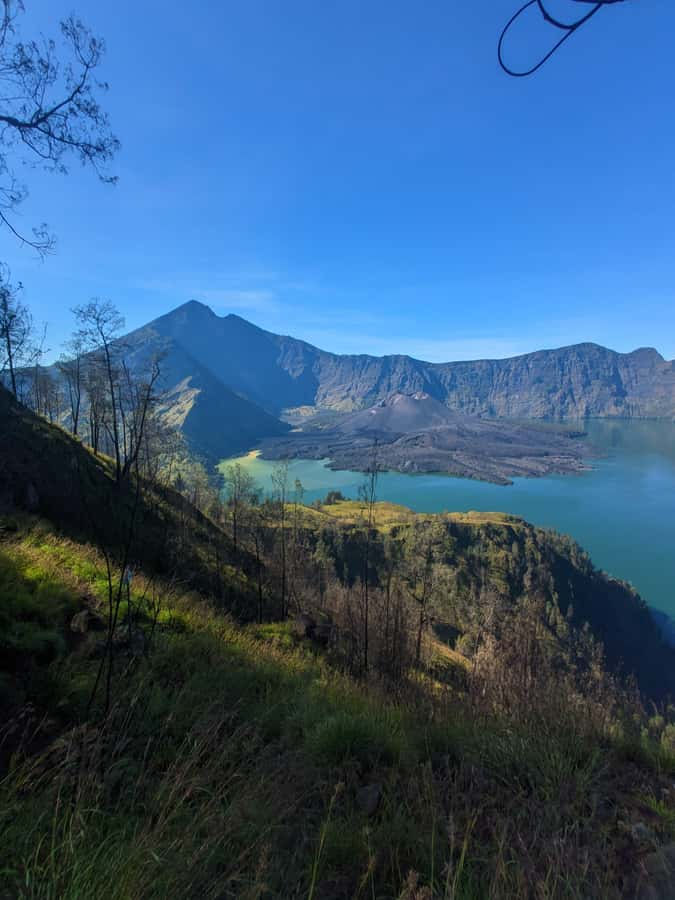
Book this trek if you want lake, hot spring, crater camping, and summit sunrise in one demanding route, and if you appreciate having porters handle the camp and cooking equipment.
Skip it if you want a gentle mountain outing, dislike basic camping, or are not ready for eight to nine hours of walking per day. The $150 price is good for the included support, but remember the park fee, pre-trek lodging, onward transport, headlamp, footwear, clothing, and possible extra porter.
For a fit hiker who wants more than a summit photograph, this is a well-rounded way to see Mount Rinjani. The guides and porters are a major strength, while the steep final climb is the part you need to take most seriously.
FAQ
How long is the Mount Rinjani trek?
The trek lasts three days and two nights.
Where does the trek begin?
The walking route begins in Senaru Village after pickup and a briefing at the meeting point.
Where does the trek end?
The activity ends at Sembalun Village and then back at the meeting point arrangement. Transfers after the trek are not included.
Is the summit included?
Yes. The third day includes an early hike to the summit to watch the sunrise.
Is Segara Anak Lake included?
Yes. Day two includes a hike to Segara Anak Lake, lunch near the lake, and a visit to a nearby natural hot spring.
What equipment is provided?
The package includes a tent, toilet tent and paper, sleeping bags, mattresses, gloves, trekking poles, cooking equipment, food, and drinking water.
Is a headlamp included?
No. You need to bring your own headlamp or hand torch.
How fit do I need to be?
You must be in good health, able to walk long distances, and ready for a steep, slippery, and challenging route. The activity is not suitable for people with mountain sickness or height phobias.
Just added around Indonesia
- Volcano, Hot Spring, Mud Bath & Tea plantation all included★ 5.0 · 5 reviews
- Mount Batur Sunset/Sunrise Jeep Tour & Natural Hot Springs★ 5.0 · 5 reviews
- Ubud: mount.batur sunrise jeep with breakfast and hot spring★ 5.0 · 6 reviews
- Ubud: Mount Batur Jeep Sunrise, Hot Spring in one day★ 4.6 · 5 reviews
- Sunrise Trekking / Hike Mount Batur Private & Natural Hot Spring★ 5.0 · 12 reviews
- Sunrise / Sunset Jeep Tour Mt. Batur Kintamani & Hot Spring★ 5.0 · 12 reviews
- Private Mount batur Hiking and Natural Hot Springs★ 5.0 · 23 reviews
- Mount Batur Sunrise Trek with Natural Hot Spring – All Inclusive★ 5.0 · 3 reviews
Hot Spring Hiking Tours, compared.
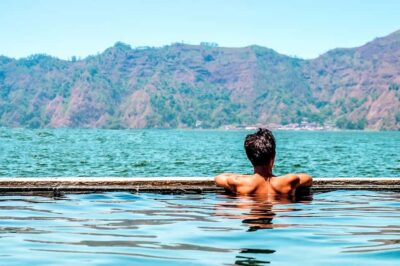
Mount Batur Sunrise Guided Hike and Natural Hot Spring
Read our review →
Mount Batur Sunrise Hike and Natural Hot Spring Option
Read our review →
Private Tour Mount Batur Sunrise Trekking and Natural Hot Spring
Read our review →
Mount Batur Sunrise Hike, Breakfast & Hot Spring
Read our review →
National Park Hike & Finnish Smoke Sauna Experience with Campfire Lunch
Read our review →
Mount Batur Sunrise Hike with Breakfast & Hot Spring
Read our review →
Montanejos Hiking Tour & Thermal Pools from Valencia
Read our review →Browse the lists this tour appears in