
Review · HOT SPRING HIKING TOURS
From Cusco: 7 Lagoons of Ausangate Trek with Hot Springs
The Andes start before breakfast. I like the chance to see Ausangate’s seven turquoise lagoons in one demanding day, and I like that the price includes transport, breakfast, lunch, and a guide. The main catch is the altitude: this is not a gentle photo walk, and you need decent fitness and a sensible approach to mountain travel.
You leave Cusco at about 4:30 AM and return around 6:30 PM, so this is a very long day. I also appreciate the chance to meet local animals such as llamas, alpacas, and vizcachas, but the cold, thin air can make the route much harder than the distance suggests.
The best advice is to prepare for a serious high-altitude hike, not just a pretty social-media outing. A recent booking from Colombia praised guide Ozuna Baby for staying alert and helping people who needed support, while also warning that some hikers may need to pay for a horse if the climb becomes too much.
Key points at a glance
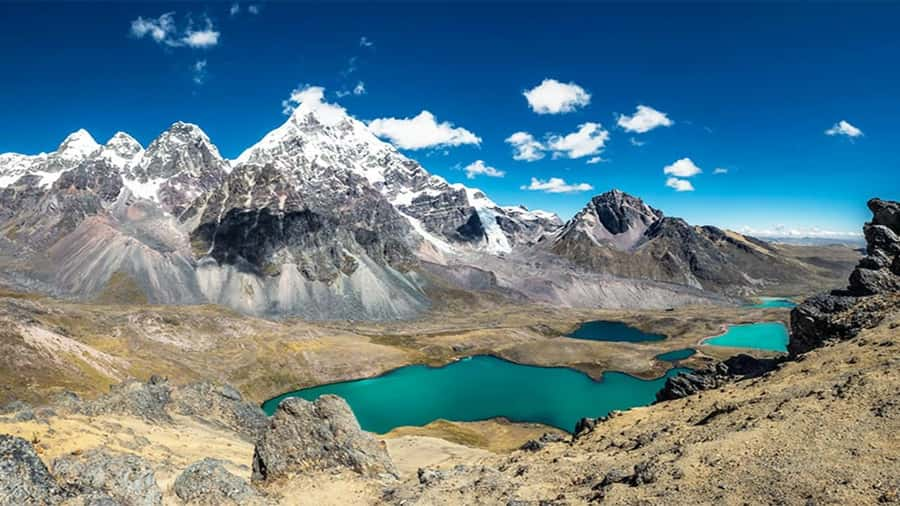
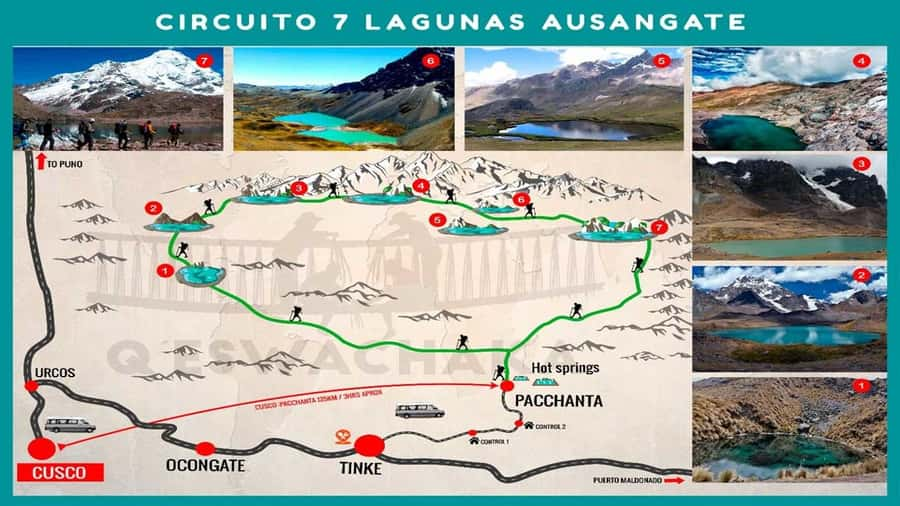
- Seven lagoons above 4,600 meters: Azulcocha, Otorongo, Oq’ecocha, Pucacocha, Pachaspata, Alqacocha, and Q’omercocha each sit at a different altitude.
- Pacchanta hot springs: The warm pools offer a welcome rest after the hike, with time to relax before lunch.
- A 4:30 AM start: The early pickup allows time for breakfast in Pacchanta and a full day in the Ausangate area.
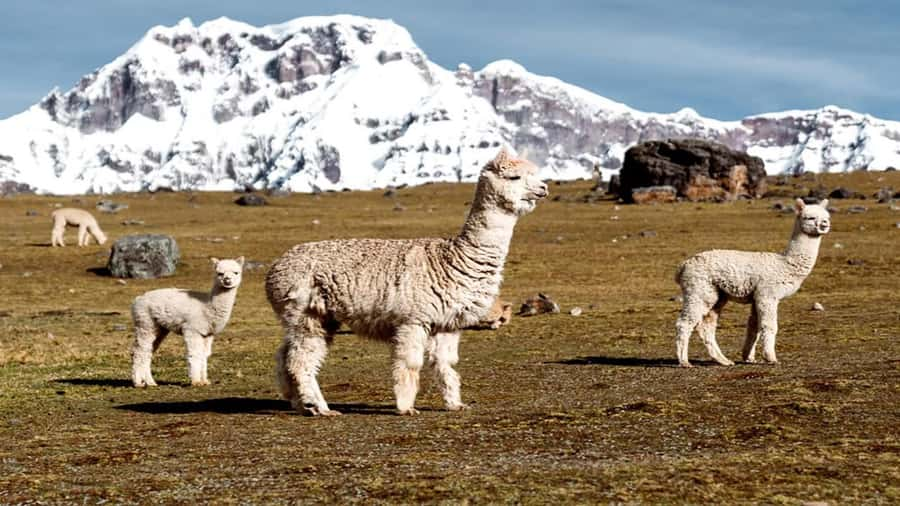
- High Andean wildlife: You may see llamas, alpacas, vizcachas, and, if conditions are right, an Andean condor.
- A demanding route: The tour is rated moderate, but altitude can make it feel considerably harder.
- Good value at $43: Transport, breakfast, a typical lunch, and a guide are included, although entrance fees and personal costs are extra.
Why the Ausangate region feels different from Cusco
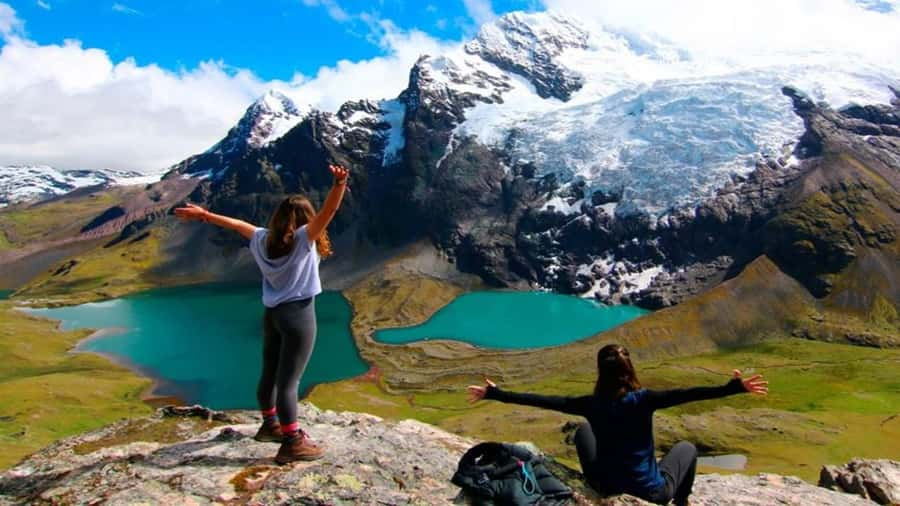
Cusco gives you churches, Inca walls, and busy streets. Ausangate gives you open mountain country, snow-covered peaks, grazing animals, and water in shades of blue and green. The change is sharp. By the time you reach the high valleys, the city feels very far away.
Ausangate is one of the major sacred mountains of the Cusco region. In Inca belief, the mountain and nearby lakes help generate the masculine energy that fertilizes Pachamama, or Mother Earth. Water from the high country is also linked to the Willkamayu, the River of Stars, which Western observers know as the Milky Way.
You do not need to be an expert in Andean religion to value this setting. The stories give the scenery a human meaning. These are not simply attractive pools beside a mountain. They are part of a living cultural world connected to herding, pilgrimage, weather, water, and seasonal life.
The Chillca community is known for llama and alpaca herding and for protecting this high country. The area also forms part of the wider Path of the Apu Ausangate, a longer mountain route with lodges and tambos such as Machuracay Tambo. This one-day visit gives you a brief look at that world without committing to a multi-day trek.
More Hot Spring Hikes in the world:
- Bali: Mount Batur Sunrise Guided Hike and Natural Hot Spring
★ 4.8 · 9,284 reviews - Mount Batur Sunrise Hike and Natural Hot Spring Option
★ 5.0 · 1,927 reviews - Private Tour Mount Batur Sunrise Trekking and Natural Hot Spring
★ 5.0 · 431 reviews
The 4:30 AM departure from Cusco
Pickup is available from several central locations, including Cusco Plaza Hostel, Plaza San Francisco, Limacpampa, Plazoleta de San Blas, and Avenida El Sol. Confirm your exact meeting point and be ready early. At 4:30 AM, a few minutes of confusion can feel like a full expedition.
The drive to Pacchanta takes about two hours. That is useful travel time, but it is also part of the physical cost of the day. You are not simply hiking for a few hours and returning to Cusco fresh. You will spend much of the day in transport, at altitude, or on your feet.
Breakfast in Pacchanta gives you a chance to eat before the climb. This matters because you need fuel for the uphill sections, and there may not be many convenient places to buy food later. Bring snacks anyway, since the included meals may not cover every moment when you feel hungry.
The road journey also provides your first broad views of the Ausangate area. Have your warm layers close at hand rather than buried in a bag. Mornings can be very cold, and the mountain weather may change quickly.
Seven lagoons, seven different stops
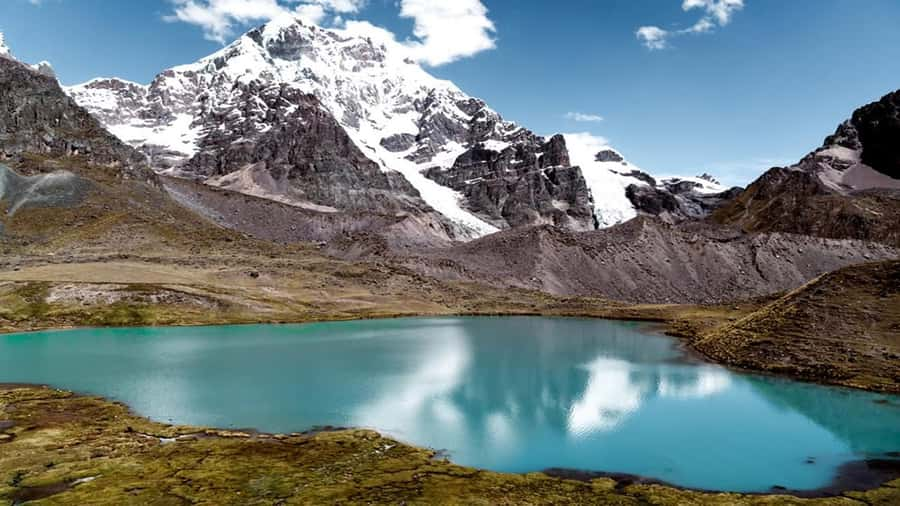
The main hike takes you through the group of seven lagoons. The tour description gives a hiking period of about two hours in the main Ausangate area, followed by about an hour at another stop with free time and scenic views. Exact walking speed and time at each pool will depend on the group and conditions.
Here are the lagoons you are scheduled to see:
- Azulcocha Lagoon: About 4,618 meters above sea level.
- Otorongo Lagoon: About 4,620 meters.
- Oq’ecocha Lagoon: About 4,631 meters.
- Pucacocha Lagoon: About 4,670 meters.
- Pachaspata Lagoon: About 4,867 meters.
- Alqacocha Lagoon: About 4,752 meters.
- Q’omercocha Lagoon: About 4,666 meters.
The names are useful, but the altitude figures matter more for your body. Pachaspata reaches nearly 4,900 meters, and even fit people can feel breathless, light-headed, or unusually tired at that height. Walk slowly, drink water, and do not treat the group pace as a personal challenge.
The colors of the water are one of the main rewards. Depending on light, cloud, and the mineral content of the water, the pools can appear turquoise, blue, green, or gray. The snowy Ausangate mountain provides the powerful backdrop, but the open terrain also makes the route feel exposed. There is little shelter from wind and cold.
You will have time for photographs, but use your camera with some restraint. Stop, breathe, and look around before rushing to the next viewpoint. The best part of this outing is not collecting seven quick pictures. It is seeing how the pools sit among bare slopes, snow, grazing animals, and the huge scale of the Andes.
Wildlife along the high trail
Llamas and alpacas are part of daily life in this region, not staged attractions. You may see them grazing or moving with local herders. Their presence helps explain why communities such as Chillca remain tied to these mountains.
Vizcachas may also appear. These small Andean animals are related to chinchillas and are often associated with rocky ground. They are not guaranteed, so keep your eyes open without expecting a wildlife tour.
An Andean condor is another possibility. The description only says you may see one if you are lucky, which is the right expectation. Bring binoculars if you have them, but do not count on a close view. The mountain scenery remains the main event.
A few more places to soak around the world worth a look
- Budapest: Széchenyi Spa Day Ticket with Optional Upgrades
★ 4.3 · 23,911 reviews - Krakow–Zakopane: Cable Car, Chocholow Baths, Cheese & Vodka
★ 5.0 · 10,720 reviews - Reykjavik: Sky Lagoon Entrance Pass With 7-Step Spa Ritual
★ 4.8 · 6,166 reviews - From Reykjavik: Golden Circle, Kerid, & Secret Lagoon Tour
★ 4.8 · 6,009 reviews
Returning to Pacchanta for hot springs
After the lagoon circuit, you return to Pacchanta. This is where the hot springs become especially valuable. A warm soak can ease cold hands, tired legs, and the general stiffness that comes from walking at high altitude.
You have free time at the pools, followed by a typical lunch. The order gives you a useful recovery period before eating, though you should not rely on the hot springs to erase the effects of overexertion. If you feel unwell from altitude, tell the guide rather than simply trying to sweat it out.
The hot springs are also the part of the day that makes this tour feel more balanced. Without them, the experience would be almost entirely uphill walking and mountain viewing. With them, you get a slower pause and a chance to appreciate Pacchanta as more than a starting point.
Bring a swimsuit if you plan to use the pools, although the supplied information does not specify changing-room arrangements. Keep cash available for personal expenses because ATMs may not be available in the area.
What the $43 price really covers
At $43 per person, this is an attractive price for a full-day excursion from Cusco. You receive hotel pickup, transport, breakfast, a typical lunch, and an English or Spanish-speaking guide. For a high mountain outing, having transport organized is a major benefit. You avoid arranging separate taxis, meals, and road transfers.
The value is strongest if you want a structured visit rather than an independent trip. The route is remote enough that transport and local guidance simplify the day. A guide can also help the group handle the altitude, keep the schedule moving, and provide context about Ausangate and local traditions.
The price is not all-inclusive. Entrance fees are excluded, as are personal purchases, snacks, extra drinks, and dinner. Those omissions are not unusual, but they mean you should carry cash and keep a little room in your budget.
There is also a practical cost in time and energy. You give up most of a day, start before dawn, and may return to the Plaza Regocijo in Cusco around 6:30 PM. I would consider the price good for the transport and meals, but only if you are comfortable with the demanding schedule.
The altitude is the serious part
The route is described as moderate, yet the altitude changes that label. The highest lagoon is around 4,867 meters, far higher than Cusco. You can be reasonably fit and still find the air difficult.
The supplied advice recommends altitude sickness pills. Discuss medication with a medical professional before your trip rather than taking anything casually. If you already have altitude sickness, this is not a suitable outing.
You should also avoid booking this hike immediately after arriving in Cusco if possible. The tour data does not set a required acclimatization period, so I cannot give you a fixed number of days. I can say that arriving rested and allowing your body time to adjust is sensible.
The experience is not suitable for pregnant women, people with back problems, people with altitude sickness, or people with a low level of fitness. The same warning applies if you dislike cold weather, long road journeys, or walking in thin air.
A horse may be an option if the climb becomes too hard, according to the practical advice from the May 2025 booking. Do not treat that as a promise that horses will always be available or included. Bring money in case you need this kind of help.
What to pack for a cold mountain day
Wear comfortable shoes with good support. The route is a trek, not a paved sightseeing walk, and you want secure footing while moving between the lagoons.
Warm clothing is essential. Add a hat, sunscreen, water, and snacks. The sun can feel strong at high altitude even when the air is cold, so pack for both conditions.
A camera is worth bringing, but protect it from moisture and sudden weather changes. Keep your water and snacks easy to reach. You do not want to stop repeatedly to unpack a bag during the uphill sections.
Smoking is not allowed during the activity. The tour also advises carrying cash because there may be no ATMs. Those are small points, but both can affect your comfort once you are away from Cusco.
Guide support and the pace of the day
The guide is one of the most important parts of this trip. At high altitude, a guide does more than point out scenery. The guide helps organize the group, explain the area, and notice when someone needs assistance.
A verified booking from May 28, 2025, gave special praise to Ozuna Baby, who reportedly stayed attentive throughout the excursion and offered timely help to people who needed it. That is exactly the kind of support you want on a route where conditions can change from exciting to exhausting.
The available information does not specify group size, so you should not assume a private outing. Ask about the group arrangement if that matters to you. A larger group can mean a slower pace and less flexibility, while a smaller group may feel more personal.
The tour is offered in English and Spanish. If you want detailed cultural explanations, make sure the language you need is confirmed when you book.
Qoyllur Rit’i and the living culture of Ausangate
The northern side of Ausangate is tied to Qoyllur Rit’i, a major Quechua pilgrimage held before Corpus Christi. The name means star snow. Thousands of Quechua pilgrims travel toward the Lord of Qoyllur Rit’i at the Sinakara temple, a rock painting.
This pilgrimage is recognized on the Representative List of the Intangible Cultural Heritage of Humanity. The one-day lagoon trip does not promise attendance at the festival, so do not book it expecting a religious event. Still, knowing this background changes how you see the mountain.
Ausangate is not only a scenic stop. It is a sacred place, a herding area, and a source of stories about water and the stars. You can respect that meaning without needing a long lecture. Listen to your guide, avoid treating local life as a prop, and give the landscape your attention.
Who should book this one-day trek?
I would recommend it to hikers who want a strong taste of the Ausangate region but do not have time for a multi-day route. It suits people who value dramatic scenery, local wildlife, simple regional food, and the comfort of organized transport.
It is also a good fit if you want a clear reward at the end of a hard morning. The Pacchanta hot springs and lunch give the day a welcome second half.
I would not choose it for a relaxed family outing, a casual photo stop, or a first activity immediately after landing in Peru. Pregnant people, anyone with current altitude sickness, and anyone with serious back problems should skip it.
If your fitness is limited, you may still consider it only after discussing the route with the operator and planning for the possibility of horse support. The review information is clear on one point: this route is not simply something to reserve because the photos look good.
Should you book the 7 Lagoons of Ausangate trek?
Book it if you want big mountain scenery and understand that the seven lagoons come with real altitude, cold, and effort. At $43, the included transport, breakfast, lunch, and guide make the cost attractive, while the hot springs add comfort to a physically demanding day.
Skip it if you are not acclimatized, dislike long early starts, or have health and fitness concerns listed in the safety guidance. The best preparation is simple: sleep well, dress warmly, carry water and snacks, bring cash, and take the climb slowly.
For the right person, this is a memorable introduction to Ausangate, with much more substance than a quick viewpoint stop. Just respect the mountain first, and let the turquoise lagoons be the reward.
FAQ
How long does the tour last?
The activity lasts one day. Pickup begins at about 4:30 AM, and the return to Cusco is expected around 6:30 PM.
What is included in the price?
The price includes hotel pickup, transport, breakfast, a typical lunch, and a tour guide.
Are entrance fees included?
No. Entrance fees are not included, so you should carry cash for this and other personal costs.
Which languages are available for the guide?
The tour is offered with a live guide in English or Spanish.
How high are the seven lagoons?
The lagoons range from about 4,618 meters to about 4,867 meters above sea level. Pachaspata is the highest of the seven listed lagoons.
Is the trek difficult?
The trek is described as moderate, but the high altitude can make it feel much harder. People with a low level of fitness or altitude sickness should not take this tour.
What should I bring?
Bring comfortable shoes, warm clothing, a hat, a camera, snacks, sunscreen, and water. Cash is also recommended because ATMs may not be available.
Can I cancel the booking?
You can cancel up to 24 hours in advance for a full refund. The reserve now and pay later option is also available.
Just added around the world
- Krakow: Zakopane & Hot Springs Shared Trip★ 5.0 · 2 reviews
- Zermatt: Private Night Spa with Finnish Sauna★ 5.0 · 2 reviews
- From Krakow: Zakopane, Quad & Buggy Thermal Baths Tour★ 4.9 · 31 reviews
- Zakopane: Snowmobiles (or Quads), Thermal Pools & Tasting★ 5.0 · 4 reviews
- From Krakow: Zakopane City Tour with Thermal Baths★ 4.9 · 8 reviews
- Zakopane: Extreme Quad Ride & Highlander BBQ + Thermal Pools★ 5.0 · 2 reviews
- From Krakow: Zakopane Tatra Mountains & Hot Springs Tour★ 3.0 · 29 reviews
- From Krakow: Hot Springs and Zakopane with Gubałówka★ 4.7 · 25 reviews
Hot Spring Hiking Tours, compared.
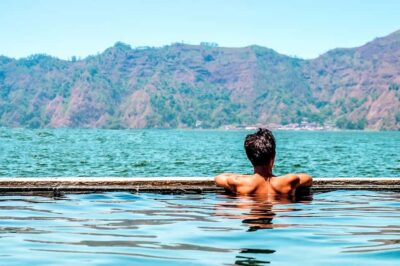
Mount Batur Sunrise Guided Hike and Natural Hot Spring
Read our review →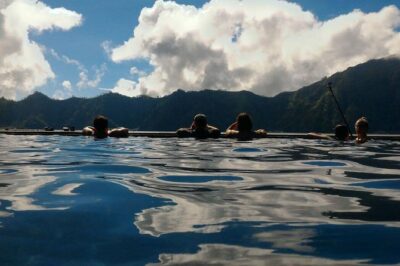
Mount Batur Sunrise Hike and Natural Hot Spring Option
Read our review →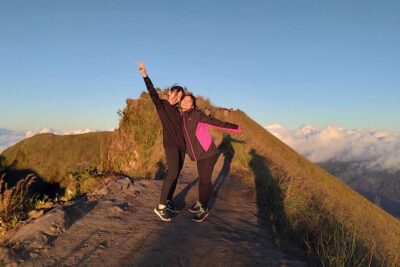
Private Tour Mount Batur Sunrise Trekking and Natural Hot Spring
Read our review →
Mount Batur Sunrise Hike, Breakfast & Hot Spring
Read our review →
National Park Hike & Finnish Smoke Sauna Experience with Campfire Lunch
Read our review →
Mount Batur Sunrise Hike with Breakfast & Hot Spring
Read our review →
Montanejos Hiking Tour & Thermal Pools from Valencia
Read our review →Browse the lists this tour appears in