
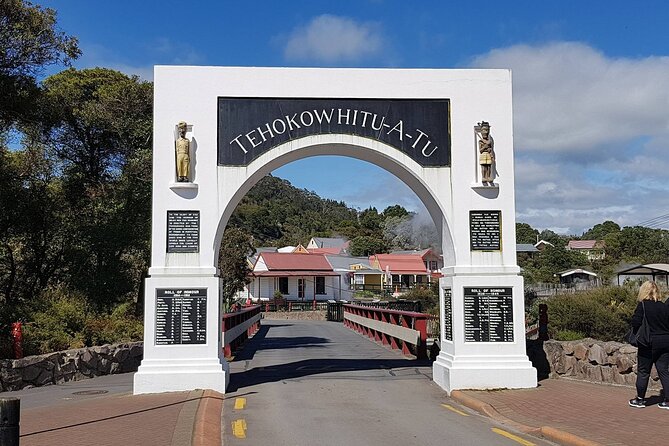
Review · TAURANGA HOT SPRINGS
Rotorua Geothermal Living Maori Village Tour Whakarewarewa 6.5hours Tour
Geothermal steam rises beside daily life. This 6.5-hour outing from Tauranga takes you to Whakarewarewa, a working Māori village where bubbling springs, hot pools, and cooking vents are part of ordinary life. I especially like the local village guide, who explains the setting from personal experience, and the small minibus format, which feels far more manageable than a large cruise coach.
The Māori concert, including the haka, adds real energy after the walking tour. The main drawback is the road time: Whakarewarewa is roughly 75 to 80 minutes from the port each way, and some sightseeing stops are drive-bys rather than proper visits. If you want a relaxed day with plenty of time at every attraction, this schedule may feel tight.
Key points before you book
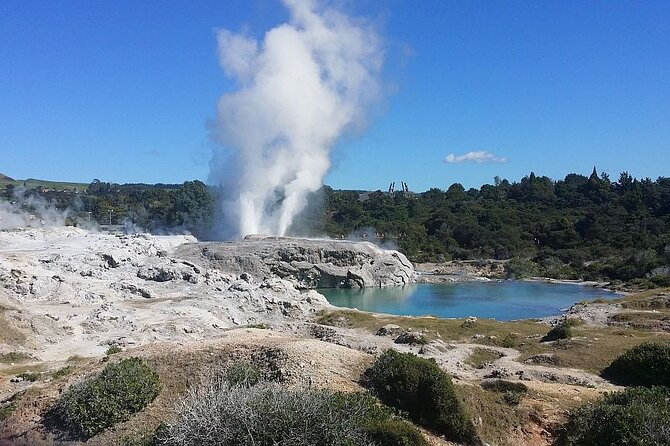
- Whakarewarewa is a working village: You see how residents use geothermal heat for cooking, bathing, and daily life.
- The cultural performance lasts about 30 minutes: Singing, dancing, and a warrior demonstration lead to the famous haka.
- A hangi-style light lunch is included: Food is cooked using the area’s natural geothermal heat.
- The trip is designed for cruise passengers: Port pickup and return are included, with departure times adjusted around ship movements.
- The minibus holds no more than 20 people: That usually allows more conversation with your guide than a large coach.
- The route includes more than Rotorua: You pass Lake Rotorua, Government Gardens, Mount Maunganui, Tauranga, and the kiwifruit-growing area around Te Puke.
Why Whakarewarewa feels different from a standard Māori show
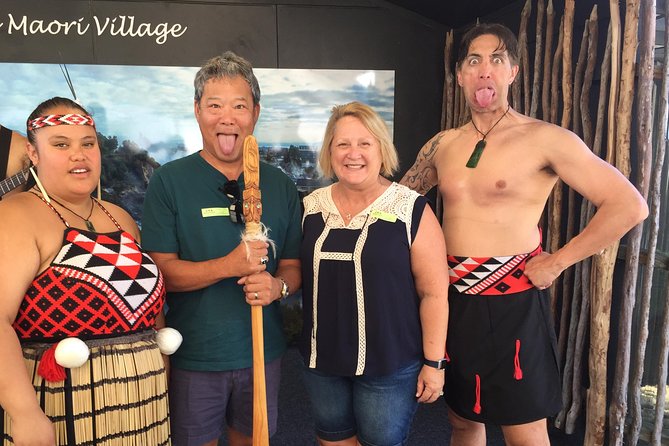
Rotorua has many geothermal attractions and Māori cultural programs. This outing combines both, but its main strength is that Whakarewarewa is presented as a place where people live, not simply a set built for visitors.
A Māori resident leads the village portion. Guides have described growing up there, living among the hot pools, or having close ties to the community. That personal connection changes the visit. Instead of seeing a geyser and moving on, you learn how people adapted to a difficult environment over many generations.
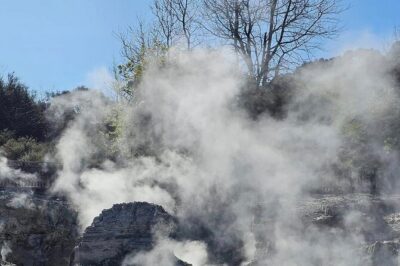
The geothermal ground is not just scenery. Steam rises from vents, pools bubble beside paths, and the smell of sulphur hangs in the air. You may get used to the scent after a while, but it is part of the experience. This is Rotorua in its most direct form, with the earth making itself impossible to ignore.
Your guide explains how geothermal heat is used for cooking and other household tasks. You can also see lunch prepared in the traditional hangi style. The supplied meal is described as a light lunch, so do not expect a large restaurant feast. Its value is in the connection between the food and the place where it is prepared.
The walking portion lasts about two hours, including the geothermal sights and village explanation. Wear shoes you can walk in comfortably, and keep your camera ready. You will want pictures of the steaming pools and the geyser, but stay at the safe viewing distance given by the guides.
A few more places to soak around New Zealand worth a look
- Rotorua: Wai-O-Tapu Geothermal Park Entry Ticket
★ 4.6 · 2,601 reviews - Rotorua: Hell’s Gate Outdoor Mud Spa & Guided Walk
★ 4.7 · 1,140 reviews - Rotorua Rafting: Kaituna River Rafting Experience-Free Sauna
★ 4.9 · 401 reviews
Seeing Pohutu geyser without chasing an eruption
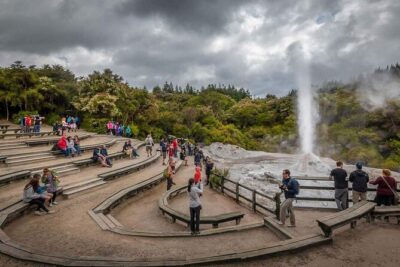
Pohutu is one of the major visual rewards of the visit. It erupts naturally during the day, so you are not watching a machine follow a fixed show schedule. That gives the moment a little more suspense.
The tour does not promise a precise eruption time. You view the geyser from a safe distance while your village guide explains the geothermal area. The timing may work in your favor, but you should not book this trip solely because you expect a specific eruption at a specific minute.
The broader setting matters just as much. Steam, hot water, and the smell of sulphur surround the paths. If you have only seen geothermal features behind fences in a city park, Whakarewarewa feels more immediate. You are seeing them alongside homes and community life.
The cultural concert and the haka
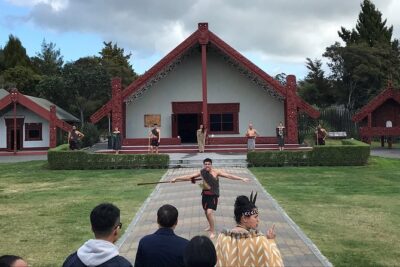
The cultural performance lasts about 30 minutes and includes singing, dancing, and warrior demonstrations. The haka is the part most people anticipate, but the full presentation gives it context and balance.
The performance is not meant to replace the village walk. The walk explains how the community lives; the concert gives you a more formal presentation of Māori song, movement, and welcome. The combination works well because you first learn about the place, then see a performance connected to Māori culture.
Several guides have been praised for keeping the day lively and informative. Richie, Jack, Peter, Brian, Alistair, Grahame, Charlie, and Saskia are among the named guides associated with particularly strong outings. The quality of the day depends partly on who leads your minibus, but the repeated praise points to a company with experienced local staff.
The one caution is that the village may combine groups at the site itself. The minibus generally carries 12 to 20 people, but the local attraction can sometimes join several groups for the village walk. One party reported a group of about 50 and found it hard to hear the guide. This is not guaranteed to happen, but it is worth knowing if you choose small-group tours mainly for quiet access.
The road from Tauranga to Rotorua
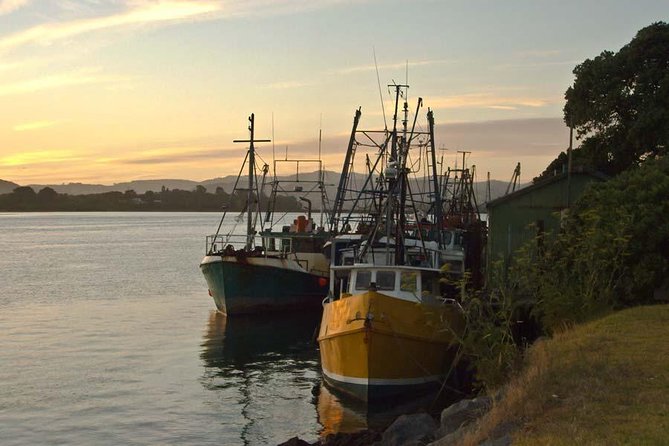
The drive is not filler. You travel inland from Tauranga through changing scenery, passing forests, lakes, orchards, and the kiwifruit-growing country around Te Puke.
The journey takes about 75 to 80 minutes each way, according to the operator’s explanation. A minibus must follow the speed limits, so you should allow most of the day for the outing. That road time is the price of reaching Rotorua from a Tauranga cruise port.
Your guide provides commentary along the way. Jack has been praised for being both amusing and well informed about the area. Richie, a former school principal, is known for explaining Tauranga and local culture clearly. Brian has also received praise for handling different ages and needs at a steady pace.
These details matter because a long drive can either feel like wasted time or part of the tour. Here, the guide’s commentary and countryside views help make the transfer useful. Still, if you dislike extended minibus rides, the distance should be your main consideration.
Same water, a different kind of day:
- Polynesian Spa Rotorua: Deluxe Lake Spa Hot Spring Bathing
★ 4.5 · 358 reviews - Geothermal Mineral Baths Experience: Pavilion Pools for 12+
★ 4.5 · 296 reviews - Polynesian Spa Rotorua: Deluxe Lake Spa Hot Spring Bathing
★ 4.5 · 227 reviews - Hanmer Springs Thermal Pools & Spa
★ 4.5 · 218 reviews
Lake Rotorua and Government Gardens
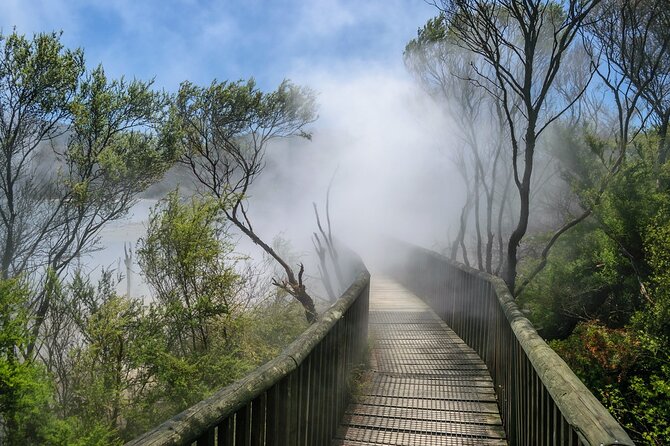
Lake Rotorua is a short sightseeing stop, listed at about 15 minutes. The lake is the central focal point of the city, and it gives you a quick sense of Rotorua’s setting before or after the village visit.
Do not expect a long lakeside walk. This is a photo and orientation stop, not a full lake excursion. Weather can affect how much you see, so bring a hat and sunscreen even if the morning begins cool.
Government Gardens receives about 10 minutes. The gardens are associated with an impressive Elizabethan-style building that once served as New Zealand’s first health spa and now houses the Rotorua Museum. The visit is mainly a brief look rather than a museum entry or extended garden tour.
One point to keep clear: much of the Rotorua city sightseeing is done from the vehicle. A past passenger liked the route but wished the tour stopped more often at lookouts and gardens, since photos are harder through a minibus window. That is a fair criticism. The schedule gives you a broad introduction, not an in-depth city tour.
Rotorua city, Tauranga, and Mount Maunganui
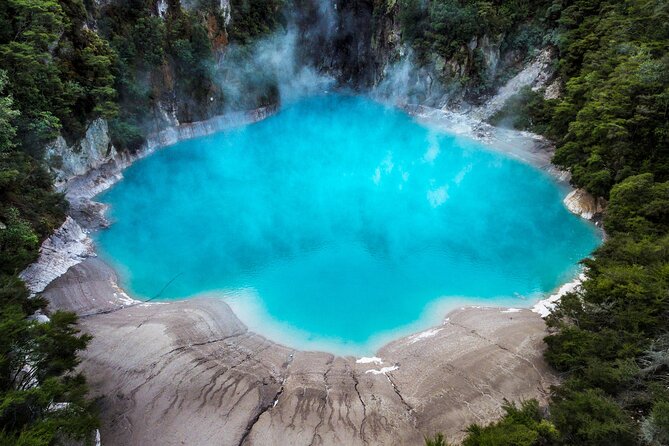
The itinerary allows about an hour to show you Rotorua city. The exact balance between driving and stopping can depend on traffic, timing, and the ship’s schedule. Your guide points out local sights, but you should not assume free time for shopping or independent exploring.
On the return or departure route, about 30 minutes is allocated to Tauranga. The city is one of New Zealand’s fastest-growing centers and is home to the country’s largest port. This portion helps connect the excursion to the place where your ship is docked.
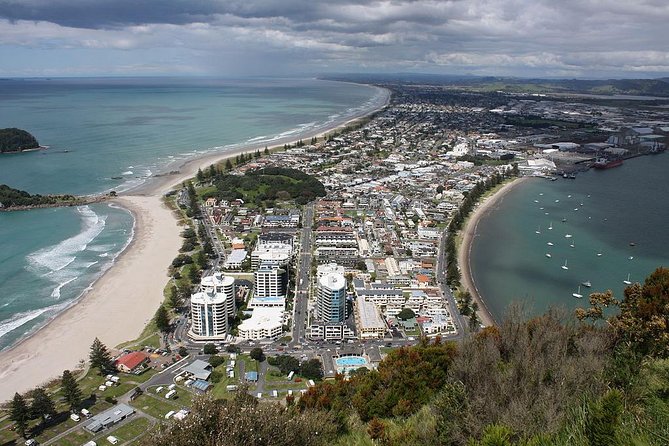
Mount Maunganui receives another drive-through segment of roughly 30 minutes. You pass through one of the area’s best-known and most expensive beach suburbs, with the coast and beaches providing a sharp contrast to Rotorua’s steaming inland ground.
These sections are useful if this is your only day in the region. You get a wide sample of the Bay of Plenty, but you do not get deep time in any one city. Think of the tour as a regional overview anchored by a substantial cultural visit.
Te Puke and the kiwifruit country
The route also passes through Te Puke, known for producing much of New Zealand’s kiwifruit. The surrounding region produces about 85 percent of the country’s crop, so the orchards are not a random roadside sight. They are a major part of the local economy.
The exact stop length is not specified, and it may be a drive-through view or a brief roadside stop. Some outings include a quick chance to buy kiwifruit or see more of the growing area if time permits, but you should treat that as an extra rather than the main promise of the tour.
This is a good example of how the excursion differs from a single-attraction visit. You are not only going to Rotorua and returning. You get a sense of the towns, farms, coast, and forests that link Tauranga with the geothermal center.
What the $166.93 price buys you
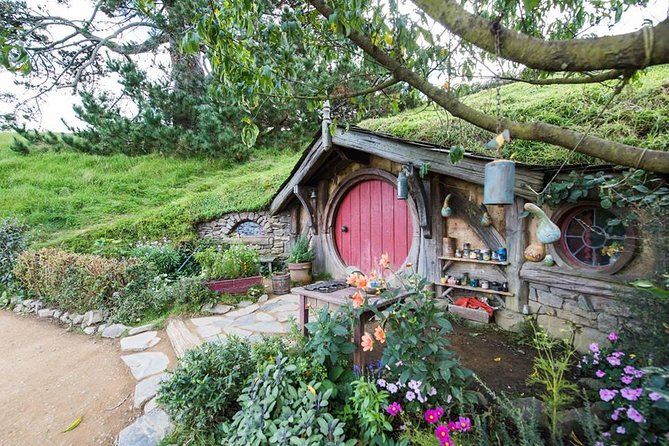
At $166.93 per person, the cost is not low, but the package includes several useful pieces: port pickup and return, an air-conditioned vehicle, an experienced guide, admission to Whakarewarewa, the cultural performance, and a light hangi-style lunch.
For a cruise passenger, the port transfer has real value. You do not need to arrange a separate taxi, rental car, or connection to Rotorua. The operator also adjusts departure times around early or late ship arrivals and departures, with the confirmed time sent after booking. That flexibility matters on a port day.
The small vehicle is another part of the value. With a maximum of 20 people, the guide can usually answer questions and adjust the commentary more easily than on a 50-seat coach. Several outings have used groups of around 12, which is a comfortable size for a long day.
The price makes less sense if you mainly want a short Rotorua city visit or a quick geyser photo. You are paying for the transport distance, guided village experience, cultural performance, and cruise-port planning. If those are your priorities, the fare is reasonable. If you want independent time in Rotorua, a self-drive or city-based visit may suit you better.
Timing, weather, and what to bring
The tour lasts about 6 hours and 30 minutes, though the exact departure time is confirmed after booking. Cruise schedules can change the start time, so check your email and reconfirm the advised departure. You should check in 15 minutes before that time.
The tour runs in all weather conditions unless the operator cancels because conditions are unsafe. Dress in layers, and bring a hat and sunscreen. Rotorua can feel cool beside open geothermal areas, then warmer in the vehicle or during the walking portion.
Rain will not make the geyser disappear, but it can make outdoor walking less comfortable. Practical clothing matters more than dressing up for the concert. You are spending time outdoors, walking through an active geothermal area, and moving between a minibus and several stops.
The tour has a maximum of 20 people, but the village portion may occasionally be combined with other groups. If hearing every word of the village explanation is crucial to you, stay near the guide and ask questions when the group pauses.
Who will enjoy this day most
I would recommend this outing to cruise passengers who want a cultural experience with a strong sense of place. It works particularly well for families and mixed-age groups because the day includes scenery, a performance, geothermal sights, food, and a moving story rather than one long lecture.
It also suits people who prefer a guide to handle the driving and timing. The trip covers a lot of ground, and you do not have to navigate from Tauranga to Rotorua or worry about returning to the ship.
The tour is less suitable for anyone who wants long walks, museum time, or several extended photo stops. The village gets the main attention. Lake Rotorua, Government Gardens, Rotorua city, Tauranga, Mount Maunganui, and Te Puke are supporting stops.
You should also be comfortable with sulphur smells, steam, uneven outdoor paths, and a long round-trip drive. Most people can participate, but the company advises dressing for the weather and checking the timing carefully.
Should you book the Whakarewarewa tour?
Book it if you want the most meaningful part of the day to be a living Māori community, not just a geothermal lookout. The village guide, geothermal cooking, hangi-style lunch, and haka create a clear connection between the land and the people who live there.
I would choose this over a large cruise-line coach if a smaller group is available. The port pickup removes hassle, and guides such as Jack, Brian, Richie, Peter, Alistair, Grahame, Charlie, and Saskia have helped make the long drive worthwhile.
Skip it if your ideal day requires slow sightseeing and plenty of time at every stop. The road to Rotorua is long, and the city and garden visits are brief. For most cruise passengers, though, the mix of authentic village life, natural geothermal power, and Māori performance makes this a strong use of one Tauranga port day.
FAQ
How long does the Rotorua Māori village tour last?
The experience lasts approximately 6 hours and 30 minutes.
Where does the tour start and end?
The listed meeting point is 1 Salisbury Avenue, Mount Maunganui 3116, New Zealand. The activity ends back at the meeting point, and port pickup and drop-off are included.
Is lunch included?
Yes. A free light lunch prepared in the hangi style is included.
What happens at Whakarewarewa?
You take a guided tour of the living Māori village, see geothermal springs and steaming areas, learn how residents use the environment, view Pohutu geyser from a safe distance, and attend a Māori cultural performance.
How long is the cultural performance?
The Māori singing, dancing, and warrior demonstration lasts about 30 minutes and includes the haka.
Will the tour run in bad weather?
The tour operates in all weather conditions, but if it is canceled because of poor weather, you will be offered another date or a full refund.
Can I cancel for a full refund?
Yes, if you cancel at least 24 hours before the experience start time. Cancellations or changes made less than 24 hours before departure are not refunded or accepted.
Just added around New Zealand
- Whakarewarewa: Self-Guided Geothermal Trails★ 4.5 · 41 reviews
- West Auckland: Sunset with Thermal pool & Wine Tasting★ 5.0 · 3 reviews
- WAI-O-TAPU Geothermal, Rotorua – Group Day Tour Ex Auckland★ 4.3 · 4 reviews
- Te Puia Geothermal, Kiwi and Māori Art★ 3.5 · 3 reviews
- Wai-O-Tapu Geothermal Valley, & Hot River★ 5.0 · 4 reviews
- Private, via beaches, Kiwi farm to Rotorua 8 lakes & Geothermal★ 5.0 · 20 reviews
- Hells Gate Geothermal, Mud & Sulphur Spa★ 4.0 · 7 reviews
- Waimangu Geothermal Valley & Lake Rotomahana Tour – 7hrs★ 5.0 · 32 reviews
Tauranga Hot Springs, compared.
Rotorua Geothermal Wonderland Tour – Departs Tauranga
Read our review →
Boutique tour , Mt Maunganui, NZ farm, Rotorua lakes/geothermal
Read our review →
Waimangu Geothermal Valley & Lake Rotomahana Tour – 7hrs
Read our review →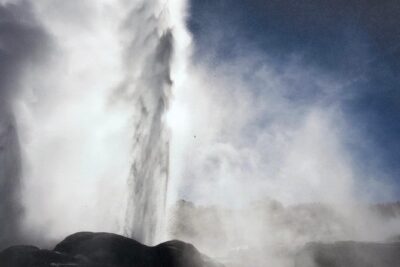
Private, via beaches, Kiwi farm to Rotorua 8 lakes & Geothermal
Read our review →
Browse the lists this tour appears in